Showing posts with label Kisiljevo. Show all posts

Tuesday, 14 October 2014

Habsburg maps of Kisolova and Frey Hermersdorf online


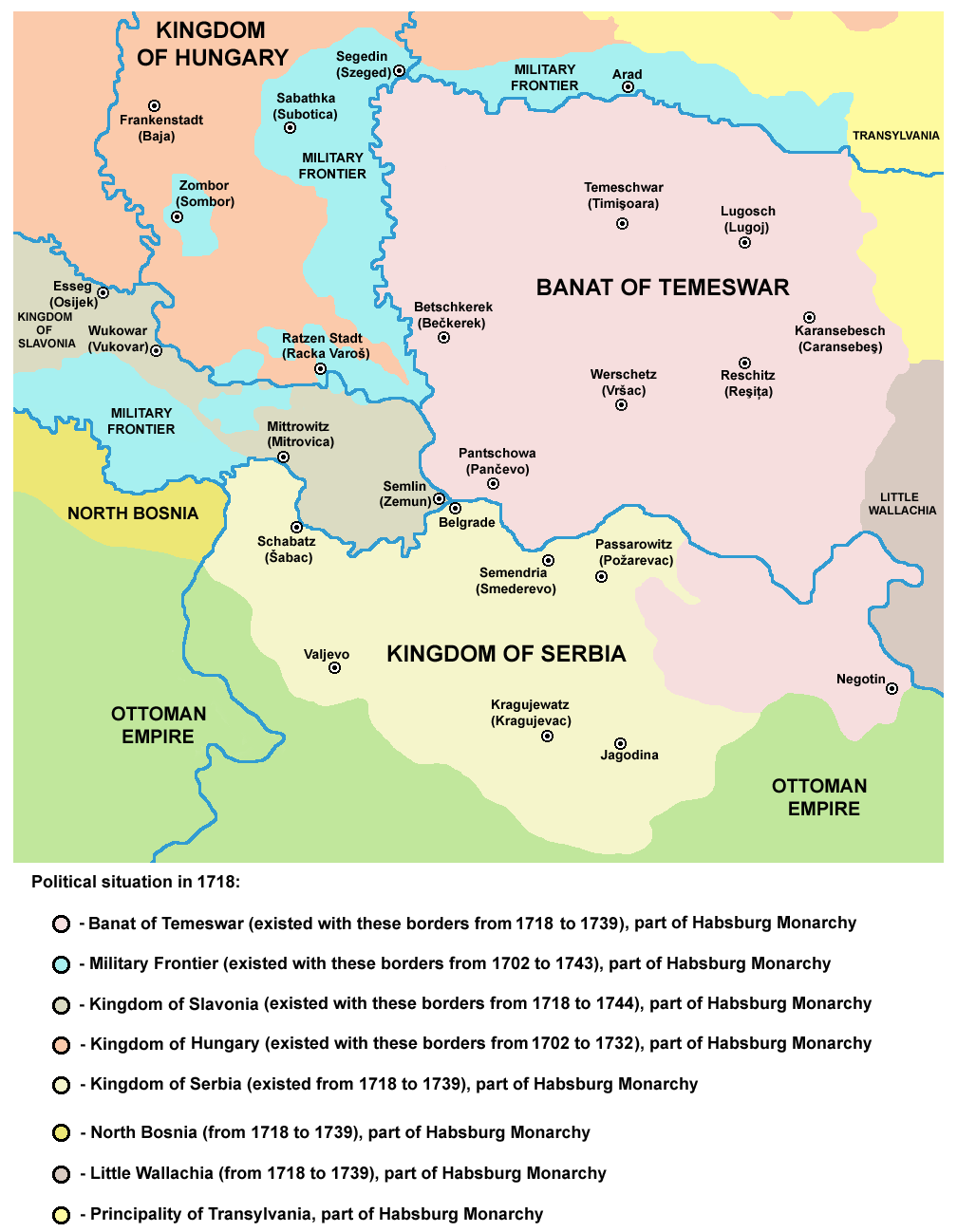
Thanks to an international co-operation between a number of archives, including the Austrian State Archives, historical maps of the Habsburg Empire are now available in both 2D and 3D as layers on top of current Google Earth maps. The maps are searchable, so you can seek out a number of places that are e.g. relevant to the history of vampires and posthumous magic, including those shown below: Kisolova, the site of the first 'vampire case' concerning a certain Peter Plogojowitz, and Frey Hermersdorf, the site of an instance of magia posthuma that was investigated by the court physicians Johannes Gasser and Christian Wabst, described and analyzed by Gerard van Swieten, before prompting Empress Maria Theresa's decree concerning magia posthuma and other superstitions.

Historical Maps of the Habsburg Empire is an excellent resource worth investigating.


Monday, 4 August 2014

A Horrible Incident, a Delightful Find


The 2013 Dracula exhibition in Milano, Dracula e il mito dei vampiri, recently moved East, opening in a new reincarnation at the National Museum of History in Taipei, Taiwan. As one can see in the videos above and below, the exhibition elaborates along the lines of the Milanese exhibition, while also including e.g. Asian vampire comics. Despite the macabre subject, the exhibition is promoted in a humorous and family friendly way, and I am sure that the very young visitors shown in the youtube videos were in for a treat.

What, however, is of particular interest here is a reproduction of what appears to be the cover of a pamphlet that the museum has posted on Facebook. The pamphlet is the very rare Entsetzliche Begebenheit, Welche sich in dem Dorff Kisolova / ohnweit Belgard in Ober-Ungarn / vor einigen Tagen zugetragen, a reprint of Provisor Frombald's report about the purported vampire Peter Plogojowitz in the Serbian village Kisiljevo, at the time referred to as Kisolova (note also the misspelling of Belgrade).

This pamphlet is so rare that Schroeder, Hamberger et al only knew the title, because Stefan Hock back in 1900 in his literatury study of the vampire, Die Vampyrsagen und ihre Verwertung in der deutschen Literatur, mentions it in a note, himself referring the reader to the Austria from 1843, i.e. Austria oder Österreischischer Universal-Kalender für das gemeine Jahr 1843, as his source. The Austria contains a transcript of the pamphlet, but here, finally, of all places, a reproduction of the cover turns up not only on Facebook, but also in the youtube video above!

Neither a place of printing nor a more exact date of publishing than the year appears on the cover.

For more on the pamphlet, see this post from 2013.


Monday, 21 April 2014

In search of Georg Tallar and other borderland vampire investigators

'While the belief in returning dead and the ritual/social practices related to it had already had a many-centuries-old, established tradition, it was the special relations of the borderland region [in the Southern parts of the Habsburg empire] which made them visible and problematized them for different officials of the state administration. At the same time, these same relations posed considerable difficulties for these functionaries to fulfil their respective tasks by essentially leaving them alone, baffled in the face of strange phenomena, which they nevertheless had to interpret and react to. Focusing foremost on medical experts in some form of state-service, the present essay seeks to map the power-relations of different parts of this distressing but exciting world, to which western culture’s perpetual fascination with vampirism owes its existence.'

As has so often been pointed out on this blog, despite western culture’s fascination with the subject very little has been written in English on the key events of 'vampire history', and for that reason it is very welcome to be able to point to the ’essay’ in question, which is in fact a M.A. thesis by one Adam Mezes. Supervised by Laszlo Kontler and Gabor Klaniczay, Mezes submitted his thesis, Insecure Boundaries: Medical experts and the returning dead on the Southern Habsburg borderland, at the Central European University History Department last year.

Situated in Budapest, Hungary, the History Department of the CEU according to its web site is 'the only transnational, English-language graduate school in Europe that is accredited both on the continent (in Hungary) and in the United States', it 'provides an excellent academic gateway to the history of Central, Southeastern, and Eastern Europe,' and 'offers one of the few programs in the world that effectively enables students to study comparatively the Habsburg, Romanov, and Ottoman Empires and their successor states, engaging with a variety of social, political, and cultural issues.' Its staff is multinational and multilingual, and among them we find Professor Laszlo Kontler who has a background in the European intellectual history of the early modern period and the Enlightenment. Kontler is the author of A History of Hungary: Millennium in Central Europe and the forthcoming Translations, Histories, Enlightenments: William Robertson in Germany, 1760-1795. Professor Klaniczay is affiliated with the Medieval Department of the CEU and author of, among many other papers and books, an influential article from 1987 on the Decline of Witches and Rise of Vampires in 18th Century Habsburg Monarchy that has featured prominently in the succeeding literature on 18th century witchcraft affairs.

In his thesis, Mezes focuses on the context of the vampire investigations of the 18th century, in particular those in Serbia (Kisiljevo and Medvedja) and those investigated by Georg Tallar in Banat and Oltenia. Briefly mentioning a few books on the subject, Mezes states that: 'It is visible from this brief literature overview that considerably more attention has been paid to the findings of the medical reports than to the authors themselves. The factors which influenced the way they constructed their own role and formulated their reports have not been researched in depth. Taking the studies mentioned last as a departing point, the present essay makes an attempt at applying a magnifying glass on this frontier-region and investigate the specific spheres of power and authority which shaped the formulation of the reports on vampirism. The exact mapping of these relations is a valid task, because much confusion exists even in the above mentioned literature dealing specificially with the topic of politics and vampires. It seems that basic, factual matters have to be cleared, otherwise the scholarly gaze on vampirism and state will remain hazy.'

Mezes is particularly interested in vampirism as 'a problem of ordering for Habsburg statecraft', because it was in the 18th century that various ways of governance and policing were explored and implemented in order to centralize and uniform the control of the authorities. In the borderland areas to the South, a direct control based on central institutions was employed, which had the effect that what was going on locally among the common people became more visible to the central authorities.

So Mezes describes the organization and development of the Militärgrenze, the military frontier in the Southeastern parts of Habsburg territory, including the military and governmental structure of Serbia in the short period that it was under Habsburg occupation. He also goes into detail with regards to the frontier's function as a plague cordon, the setting up of special quarantine stations where people were to be confined until one could be sure that they were not potential carriers of the plague miasma, and the order to report suspicious infection cases directly to the Aulic War Council.

Source: Wikimedia

Mezes correctly identifies Kisilova from Frombald's report with present day Kisiljevo, and points out the differences between Kisiljevo and Medvedja in the military and governmental structure of Serbia at the time. Kisiljevo being a cameral village, and not a Hayduk village like Medvedja, the investigations of purported cases of vampirism were handled differently in these two villages. Mezes also discusses the curious circumstances related to the copy of Frombald's manuscript and other information on the case in the Viennese archives.

All this is a nice and clear exposition and synthesis of information most of which can be found in various books on the subject and on the Militärgrenze, but that is certainly not the case when it comes to the part of the thesis on Georg Tallar. Here Mezes carries out a detailed analysis and comparison of both the printed book and the original manuscript to learn more about this 'enigmatic figure', Tallar, his investigation of vampire cases and the reason why a publisher decided to print the book some thirty years after the report was written.

Tallar was part of a commission consisting of himself, a theologian, and a physician, the latter according to Mezes possibly the Protomedicus Paul Adam Kömovesch (actually: Kômûves) who is recorded to having singlehandedly investigated one case of vampirism. Mezes suggests that, perhaps, the three did not actually work together, which could perhaps explain why it was Tallar and not the Protomedicus who wrote the report. On the other hand, Mezes notes that in the manuscript there are sections of a more religious character, which are so different from the otherwise sceptical voice of Tallar, that he thinks they may originate from the hand of the (unknown) theologian: 'Every now and then, there appears a voice in the text – albeit faintly and awkwardly – which addresses issues of demonic activity and morals and their consequences.'

These parts of the manuscript were omitted when the Viennese publisher Johann Georg Möβle prepared the text for printing. In his foreword Möβle claims that he stumbled upon the manuscript by accident, but Mezes finds this improbable.

Although dated 1756, Tallar may have written it in 1753: 'hypothetically, it might be conjectured, that Tallar handed in his report to the Banat Provincial Administration in 1753, right after he finished his investigation, just as his fellow-commissioner, Kömovesch did. Then, when the Hermsdorf-scandal popped out, the central administration wanted to collect materials about vampirism and asked the Banat Administration to send all documents they have on the issue. This scenario would explain why the report is dated 1756: it was written on it when the Aulic Treasury (Hofkammer) received the document three years after the report was actually finished.'

So what prompted Möβle to publish the report some thirty years later in 1784? Mezes convincingly conjectures that news of another vampire investigation got to Vienna that year, and that the authorities once again searched their archives for material on vampires, found Tallar's manuscript, and asked Möβle to publish it. Mezes lists a number of works published by Möβle that supports his theory that Möβle not only catered for 'the public's hunger for curiosities,' but was in fact also publishing books that would serve as instructive 'governmental messages.'

As for the vampire case that prompted the publication, Mezes writes: 'In our opinion (though again, further investigation is needed), the publication of the report has something to do with another vampire scandal, one which secondary literature does not yet know of (in fact neither do we). What points nevertheless in this direction is a royal statute of Joseph II., dates 1784.11.02., in which the king warns the Orthodox Church to take active part in the fight against vampire-beliefs.'

Mezes refers to an entry in Franz Xavier Linzbauer's voluminous Codex Sanitario-medicinalis Hungariae (a book that contains other source material on vampire investigations) concerning the practice among some people of the Orthodox faith of leaving corpses unburied ('in aperta tumba') for fear of bloodsuckers ('Wampier'), a practice that may cause epidemics illnesses to spread, so the authorites found it necessary to reiterate its stance.*

Franciscus Xav. Linzbauer: Codex Sanitario-Medicinalis Hungariae Tomus III. Sectio I, p. 122 (Buda, 1853)
Apart from the theological omissions mentioned above, Mezes finds that Möβle was fairly loyal to the text of the manuscript, although he made some changes like removing Tallar's references to the local authorities that appointed him to the commission: 'By doing so, Möβle severed important roots which linked the report to its original circumstances, and at the same time managed to elevate the report to a more general level of the enlightenment fighting the forces of darkness, be they superstitions or illnesses.'

Obviously, this is highly interesting work, particularly on Tallar's investigations and the interest in vampires of the late 18th century Enlightenment. Certainly a well-written and well-researched thesis, it earned Mezes a Hanak Prize at the History Department of the CEU, and as it is written in English, it also offers those who are unable to read the German language literature on the subject a glimpse of what they are missing out on.

Thanks to Jonathan Ferguson for notifying me of this work.

*) The contemporary review of the printed edition of Tallar's report that I quoted in an earlier post, was published 'Wien am 17ten Hornung, 1784', i.e. in Vienna on February 17 1784, and if that is correct, Möβle published Tallar's report several months before the royal statute.

Monday, 17 March 2014

Peter Plogojowitz unearthed

The extraordinary Terra X documentary Dracula: Die wahre Geschichte der Vampire, that aired on German ZDF in October last year, is now available on Blu-ray in both 3D and 2D. Although primarily a gimmick, the 3D works reasonably well, e.g. in the Prunksaal of the Austrian National Library. As a bonus, the disc includes a National Geographic documentary on the archaeological find of Irish 'vampire skeletons'.

Both documentaries are readily available on youtube, where another interesting Terra X documentary can currently be found: Draculas Schatten: Fahndung im Reich der Finsternis from 1995, which includes a retellinig of the Peter Plogojowitz/Petar Blagojewic incident and an interview with Dr. Christian Reiter who talks about anthrax as the possible cause of the deaths in Kisiljevo.


Saturday, 2 November 2013

A visit to Kisiljevo

Author James Lyon recently visited Kisiljevo in Serbia with ABC News in search of Peter Plogojowitz.


Monday, 25 March 2013

From Ovid to Fred Vargas

From Ovid to Vargas, the March issue of the French Le Magazine Littéraire minutely traces the metamorphoses of the vampire over more than forty, lavishly illustrated pages of articles by Claude Lecouteux, Jean Marigny, Daniel Sangsue, Jacques Sirgent and a host of other writers and scholars. Mostly concerned with the development of the fictional vampire, there is also room for historical and mythological aspects of the topic. Lecouteux writes about the vampire from Kisiljevo to Sozopol, and Maialen Berasategui outlines the 18th century vampire debate. The issue also contains a theme on Romanian authors and some extracts from Søren Kierkegaard’s recently published journals.

A thorough review of the vampiric contents can be found on vampirisme.com.

Wednesday, 27 February 2013

Austria or Serbia?

Roxanne Hellman and Derek Hall's Vampire Legends and Myths published in a series of books about the supernatural in 2012 by Rosen Publishing is a very attractive book about vampires aimed at adolescent readers. It is attractive because of a variety of colour illustrations from a broad range of places and sources, a selection that reflects an unusual variety of topics, which however are somewhat marred by a lack of precision. E.g. Kisiljevo or Kisilova is described as 'an Austrian village' and the text is accompanied by a nice photo of what looks precisely like that: a village in Austria instead of a village in Serbia. At the same time, Peter Plogojowitz is clearly characterized as 'a Serbian peasant'. It is, however, still a joy to flick through the pages of this book to study a great number of photos from Romania and other places around the world.

Kisilova: 'an Austrian village'
The Morava river, and Kosovo, 'in the vicinity of which Arnold Paole was seemingly troubled by a vampire'
Voltaire and Empress Maria Theresa
'Gerard van Swieten, whose investigations put an end to vampire hysteria in Austria' (sic)

Wednesday, 23 January 2013

In Search of Peter Plogojowitz’s Grave


James Lyon, author of the excellent novel Kiss of the Butterfly, has kindly sent me this report from his recent visits to Kisiljevo. Click on the photos to see them in greater detail.

On 9 December 2012, and again on 17 January 2013, I visited the village of Kisiljevo, Serbia, the site of the first known recorded use of the word “vampire” in history, the famous case of Peter Plogojowitz from 1725. Given that Niels has already written a number of excellent posts on the topic, I write on the assumption that the reader is familiar with the case.

The purpose of the visit was two-fold: to discuss local legends of the Peter Plogojowitz case with residents, and to see if it was possible to identify the site of Peter Plogojowitz’s grave. Due to heavy snowfall on 9 December that restricted access to the graveyard, that visit was limited to interviews only. On 17 January, I returned to the graveyard after the snows had melted.

The village president, Mirko Bogičić, and author James Lyon
Although I spoke with a number of very friendly Kisiljevo residents, most were hesitant to discuss Peter Plogojowitz, and all referred me to the village (mesna zajednica) president, Mirko Bogičić, a man in his mid-50s who is also the custodian of records for the nearby municipality of Veliko Gradište, which is located further east along the Danube. Mr. Bogičić turned out to be a very warm and intelligent gentleman, who was well-versed in local history and folklore, and who is in the final phase of publishing a book on the history of Kisiljevo. He lives in a household with four generations under the same roof, a common practice in the region.

Kisiljevo used to be a river port on an arm of the Danube, but is today located on the banks of a 14-kilometer long artificial lake (Srebreno Jezero) that was dammed off in 1971 to prevent flooding along the southern banks of the river. Today the lake is a popular summer tourist resort in Serbia. Kisiljevo itself, however, has not profited from this tourism, the town’s population continues to decline, and a number of homes are abandoned and falling apart, due to lack of upkeep. Although the 2002 census listed the town as having 704 residents, that number appears optimistically high.

An abandoned home in the town centre, 
with death notices on the telephone pole 
in the foreground
Mr. Bogičić took great pride in his hometown and noted that it was first mentioned in the 14th century during the time of Serbian Prince Lazar (who lost his head at the Battle of Kosovo Polje in 1389), and again in the Ottoman census of the Branicevo district (Braničevski Defter 1467). At that time, Kisiljevo was a large and economically powerful town, with more than double the number of households of nearby Požarevac (Passarowitz). He also recounted the local legend of the origins of the town’s name, which dated to the time of the Great Plague.

In Kisiljevo, there is no surname of Plogojowitz, and no such surname exists among the South Slavs. The locals all refer to him as Petar Blagojević, and until recently there was still a Blagojević family in the village, so one must assume that Imperial Provisor Frombald used a Germanized spelling of the name in his report. The following material is transcribed from a recording I made on 9 December.

Mr. Bogičić said that “Petar Blagojević isn’t the only vampire. Here among us in Serbia, vampires are frequently spoken of. The Vlahs say ‘Drakulj’… Vojvoda Tsepes was a legendary figure, the way Kraljević Marko is with us, as a man who was dangerous in battle against the Turks. But he didn’t have vampire characteristics, such as were seen in Petar Blagojević.”

Bogičić mentioned that two women visited him from Berlin [?! sic] with photocopies of Frombald’s original report, which he could not read, as they were in a language which he assumed was German. He noted that under the Treaty of Passarowitz (Požarevac) the north of Serbia belonged to Austria and the seat of regional administration was in Veliko Gradište. But when it came to details about the Petar Blagojević case, neither he nor the other local residents appeared to have passed on much in the way of folklore about the events of 1725. Rather, it appeared as though much of the information regarding the Blagojević case was of relatively recent origin.

The Other Kisiljevo Vampire: Ruža Žapunjica

Bogičić, however, did raise an interesting point of local folklore regarding an entirely different vampire. “People also speak about an old woman who became a vampire, at least 100 years after Petar Blagojević. The old people say that an old woman, whose name was Ruža [Rose], turned into a vampire. She had the nickname of Žapunjica… The old folks called her Ruža Žapunjica, no one knows what the nickname means. She became a vampire. My great-grandmother remembered those times. She [Ruža] would make incidents in the middle of the day. She would bang around houses, climb up into the attic and begin to make noise in the middle of the day. She would throw things around in the attic of the house, and people could hear sounds, but when they went up to the attic, they couldn’t see anyone. But this was quite some time after Petar Blagojević, because my great-grandmother as a child had seen this and heard it from her parents. Those houses no longer exist; they were torn down.”


Bogičić continued: “One person – and this is very important -- saw her after she died in the early evening on the steps in front of one of the houses, even though she had long since died. That old man who saw her, died a few years ago at the age of 93. He said that he had seen Ruža Žapunjica, even though she had died over 100 years earlier, and he repeated this on television, that he had seen her figure and silhouette on the steps. This was in the 1930s, when he was a young man in his 20s, before the war. So Petar wasn’t the only one.”

The village church
“People usually don’t like to talk about that. As children we grew up on the stories of the older people about those unbelievable, unusual nighttime events, but the only incident that was actually written down was the one of Petar Blagojević. You know we have this church in our village that was built in 1825. Those people in the village who are close to the Church, who are Orthodox Christians, don’t like it when people speak about Petar. They don’t want it glorified and say that we’re speaking against Christianity. But this is something that has nothing to do with Christianity, or belief in God, or attending church, or our Orthodox customs now.” Bogičić mentioned some famous Serbian historical figures who were born in Kisiljevo, noting regretfully: “But these things are much less known, because it is truly the vampire that jumps out from Kisiljevo. Not a single church council has ever questioned or denied the vampirism that was then around”.

Death Rituals

Bogičić shared with me a number of local customs surrounding death. When a person dies, they keep a lit candle next to the body from the moment of death until the body is placed in the casket. The body is kept in the home, and someone is next to it 24 hours a day. In olden times, gold coins were placed over the eyes of the deceased, but today they use regular coins. This is so the deceased will have money for the next life. Prior to placing the body in the coffin, they conduct several ceremonies against evil spirits. These include burning incense and then igniting a small amount of gunpowder in the bottom of the coffin. The graveyard is always in a better location than the village, because they don’t want anything to disturb the dead. The Danube used to flood Kisiljevo before they built the dams, and the village graveyard is up on a high bluff overlooking the Danube.


Searching for Petar’s Grave

On 17 January 2013 I visited the Kisiljevo graveyard with Mr. Bogičić. The graveyard is located on a bluff high above the banks of Srebreno Jezero and offers a panormaic view over the lake and the island between the lake and the Danube.

Bogičić explained that that graveyard was divided into three parts. The first part consisted of the oldest graves, which predated the late 18th century. This section was entirely overgrown and the grave markers were not easily recognizable as such. The stones consist of roughly-hewn thin stone slabs made of greenish rock from a quarry further west along the Danube near Ram. None of these slabs appeared to have any trace of engravings on them, and Bogičić said that prior to the late 18th century the gravestones were not engraven with names. This is the portion of the graveyard where Petar Blagojević would have been buried. As a result, it is not possible to ascertain which grave is his. I should add, that it is impossible to ascertain which grave belongs to which family, and as a result, no one has cared for the graves.

From the oldest part of the graveyard
The second part consists of graves from the latter half of the 18th century onward, when grave markers were carved into recognizable shapes, such as crosses, or tombstones with rounded edges and engravings. This portion of the graveyard is in better shape, as people are still able to identify a gravestone with a particular family, and members of that family will continue to care for it.


The third portion of the graveyard dates largely from the early 20th century and consists of modern – sometimes elaborate – gravestones and family burial plots, usually outlined by small concrete walls about ten centimeters high. In many cases, families have taken the old pre-20th century gravestones and fixed them in concrete in the modern family burial plot.

Modern gravestones with old gravestones embedded in concrete in front of the family burial plot
In the modern part of the graveyard, I came across two plots for the Blagojević family. Bogičić told me that there are no longer any Blagojevićs in Kisiljevo.

The Blagojevic family plot
As a parting gift, Mr. Bogičić kindly presented me with a bottle of his own home-made grape brandy, which he jokingly referred to as “vampire rakija”.

Conclusion

My overall impression is that local lore related to the Peter Plogojowitz incident of 1725 has been suppressed over time by the Serbian Orthodox Church; many people feel uncomfortable discussing the matter. It seemed that although everyone knew something had happened in the distant past regarding a vampire named Petar Blagojević, no one really knew the details outside of what has been uncovered by more modern scholarship. Unlike the village of Zarožje, where local inhabitants were well versed in the legend of Sava Savanović, Kisiljevo residents seemed more aware of Ruža Žapunjica and less of Petar Blagojević. Interestingly, the characteristics associated with some of Ruža's behavior – while similar to a poltergeist – are not at all unusual for vampires in South Slavic folklore. The state of the grave markers in the old part of the graveyard is such that it seems unlikely anyone will ever be able to identify with absolute certainty the actual grave site of Petar Blagojević.

James Lyon is currently working on a sequel to The Kiss of the Butterfly.

Text and photos © James Lyon.

Saturday, 5 January 2013

A terrible incident ...

The fourth annual edition of Austria, an Austrian universal calendar or almanac for the year 1843, contains a wealth of information for erudition and entertainment, including a short article on vampires by one J. P. Kaltenbaeck. The main part of this short article reproduces the text of a leaflet from 1725 entitled Entsetzliche Begebenheit, welche sich in dem Dorff Kisolova, ohnweit Belgrad in der Ober-Ungarn, von einigen Tagen zugetragen, published without a place of printing.

The text itself is not identical with, but overall very close to the version of Frombald's report from Kisiljevo reprinted in the Wienerisches Diarium on July 21 1725. As the Diarium was closely connected to the Viennese court, one would suppose that the report was first published in the Diarium and then made available as a flyer or leaflet, even though the title of the flyer claims that the incident happened only days before the printing.

Copies of such flyers are usually pretty scarce, as Kaltenbaech himself also notes: 'Der folgende Bericht ist einem fliegenden Blatte entnommen, das wohl jetzt zu den Seltenheiten gehören dürfte.' Personally, I cannot recall seeing any more recent writer dealing it with more than its title - until I was recently contacted by a reader of this blog, who kindly told me of an item that a Scottish dealer of antiquarian books had for sale a couple of years ago:

Kayserl Provisor in Gradicker District.: Entsetzliche Begebenheit, welche sich in dem Dorff Kisolova ohnweit Belgard in Ober-Ungarn vor einigen Tagen zugertragen. 1725. n.p., n.d. single sheet folded , pp.4, 20 x 16 cms., Gothic type , sl. worn at edges and with a few small marginal tears not affecting text, light age staining. Not noted in Caillet and not traced in any major search engine. Concerns the celebrated case of Peter Plogojowitz, an alleged vampire. See Paul Barber : Vampires, Burial, and Death. pp.5-9

And the price? £350.

I contacted the dealer who informed me that it had been bought by another dealer, and he was unable to tell me anything about its whereabouts. So either that other dealer has sold it on, probably at a price substantially higher than £350, or it awaits a buyer somewhere willing to part with a nice sum.


Apart from the leaflet, Frombald's report appears to have attracted only limited interest. It was reprinted in  the so-called Breslauische Sammlungen under the title 'Abentheuerliche Begebenheit mit einem vermeyntlich wieder gekommenen Todten' where it is noted that it is taken from the public gazettes in Holstein: 'in den öffentlichen Holsteinischen Gazetten', but no one seems to have identified these periodicals or perhaps flyers. Apart from discussing the substance of the report itself, Michael Ranft's De masticatione mortuorum in tumulis is dealt with. Ranft himself was himself inspired by the report from Kisiljevo to write his dissertation, as he read of it in a Leipzig journal, cf. e.g. Aribert Schroeder's Vampirismus from 1973.

Sunday, 26 February 2012

An Uncertain Place: Highgate, Kisiljevo and Medvedja


Vampire history very infrequently turns up in fiction, and as I only sporadically inform myself about fictional vampires, and by the way have never been a fan of crime fiction, the vampiric connection in Un lieu incertain (An Uncertain Place) by Fred Vargas somehow slipped under my radar. Fortunately, a reader recently mentioned it, so I have picked up and read the 2008 novel in the Danish translation, Et uvist sted.

Definitely a page-turner, although I personally find that the gallery of more or less eccentric characters smacks a bit too much of a crime fiction cliché, this novel in the series about Commissaire Adamsberg takes him and his colleagues to Highgate Cemetery in London and to a small village on the Danube in Serbia, Kisiljevo, on the trail of a murderer who literally destroys his victims. The plot not only involves the infamous 'Highgate Vampire', but also the famous 18th century vampires Petar Blagojevic/Peter Plogojowitz from Kisiljevo and Arnold Paole from Medvedja, as well as their ancestors. What kind of sense this combination makes, if any, you should read the novel to learn, because I am not going to spoil the fun by giving it all away here.

Fred Vargas herself is actually a French historian and archaeologist called Frédérique Audoin-Rouzeau, who became a successful author of crime fiction in the mid 1990's. Some of the Adamsberg novels have been made into a TV series, Collection Fred Vargas, including Un lieu incertain as shown in the youtube video below. This episode, unfortunately, is not yet available on DVD.


'An example of modern legend-building,' according to English Wikipedia, the Highgate Vampire case, to the extent one can actually call it that, has taken on a life of its own, in particular on the internet. Because of the legend-building, perhaps even cult surround the subject, it is probably difficult to be certain what actually happened in 1969 and 1970 when a 'vampire hunt' purportedly took place in the famous cemetery.

Fred Vargas couples this incident with another legendary occurrence in the old part of the cemetery, the one initiated by poet and painter Dante Gabriel Rosetti when in 1869 he had the corpse of his late love, Elizabeth (Lizzie) Siddal (also visit this site devoted to her), dug up from its grave in Highgate Cemetery to obtatin the one and only copy of a book of poetry that he had left buried in her hair. Rossetti's operation is told in Felix Barker and John Gay's Highgate Cemetery: Victorian Valhalla (1984):

'Much secret preparation took place in which [Dante Gabriel Rossetti] enlisted the help of a young man called Howell who, as well as being Ruskin's secretary, had a talent for conspiracy. Through Howell, Rossetti obtained the Home Secretary's permission for an exhumation, and on a night early in October 1869 'the ghastly business', as Rossetti called it, was carried out. The deed was done by the light of lanterns and the warmth of a small bonfire watched by Howell, a solicitor and a Camberwell doctor. The receipted bill of two guineas for the workmen is still in existence. Rossetti could not bring himself to be present. Full of self-doubts he waited alone at Howell's house in Fulham.

When the coffin was opened, it was said that Lizzie's pale beauty remained unimpaired, and someone - it was probably Howell - carried back the message that her lovely hair had retained its colour and had grown in death. The vital manuscript, discovered to be intact, was eased gently from her face. After being disinfected and dried by the doctor, it was conveyed to Rossetti.'


The preservation of Lizzie, and particular the claim that her hair had grown in death, is of course reminiscent of the phenomena related to vampirism, the 'vampire state' reported about in the early 18th century from both Kisiljevo and Medvedja.

Imperial Provisor Frombald's 1725 report from Kisiljevo, which today is only known in a copy in the Viennese archives, is well-known from a contemporary newspaper, the Wienerisches Diarium, reprinted and translated in a number of journals and books, and the inspiration for the young Michael Ranft's first edition of his De masticatione mortuorum in tumulis from 1725, commenting on the similarly titled book by Philip Rohr published in 1679. Frombald's report is the oldest known use of the word vampire as spelled that way (the copy actually has: 'vanpiri').

The occurrences in Kisolova, i.e. Kisiljevo, concerning the vampire Peter Plogojowitz (probably Petar Blagojevic) are recounted in English on Wikipedia. In An Uncertain Place, the villagers in Kisiljevo are today familiar with the vampire story, and one can still locate the grave of Plogojowitz, but this is mere fiction, because Serbian media have been unable to locate any local information on this contender to the title of the world's first vampire.

In that respect Plogojowitz plays a central role in defining 'vampirism', so it is important to point out that the people who said there were haunted by Plogojowitz did not complain of bloodsucking but of being suffocated by him as he lay on top of them. Furthermore, his wife said Plogojowitz had come to her to retrieve his shoes (Oppanki = opanci, according to Wikipedia: Opanak are 'traditional peasant shoes' worn in Southeastern Europe). As Peter Kremer has pointed out, this is the well-known motif of a deceased returning as a revenant to retrieve something that he requires to rest in peace after death, in this case his shoes.


View Larger Map


Source for this map: Wikipedia

The exhumation and examination of Plogojowitz' corpse, including his penile erection, forebodes the large scale examinations carried out seven years later in Medvedja in the Southern part of Serbia under Habsburg military control. Commissaire Adamsberg doesn't visit this village, but Arnold Paole, probably Arnaut Pavle, contender for the title as the world's most famous and influential vampire, also plays a role in An Uncertain Place. Oddly, Vargas places Medvedja in the Branicevo District, not very far from Kisiljevo, but I am not aware of any Medvedja in that area.

For more information on this, the most famous incident in vampire history, see my post on the Visum et Repertum, as well as other posts on this blog.

This vampire case also turns up in a work of popular fiction, as German author Markus Heitz includes it in his 2006 novel Kinder des Judas.


View Larger Map

Thursday, 21 July 2011

Serbian vampires close-up!

This Serbian documentary provides an exceptional look at some of the places related to vampire history and legends in Serbia, including Kisiljevo and Medvedja. As I do not understand the language, I cannot tell you much about what they are actually saying, but names of places and persons, like e.g. Petar Blagojevic (i.e. 'Peter Plogojowitz'), are easy to recognize. Part two also includes some (split screen) clips from the old Leptirica film.

It is pretty ridiculous to see a guy trying to locate the grave of Blagojevic using a pendulum, and I had to smile when I saw Flückinger portrayed as an old man writing the Visum & Repertum. But I find it very nice to see Serbians reclaiming the vampire. After all this is where it started. Without the vampires - or at least the villagers worried about vampires - of Kisiljevo and Medvedja we would hardly be talking about vampires today.


The 'first' vampire

Anthony Hogg, in a comment to a recent post, asks: Who was the first vampire? Giure Grando, Peter Plogojowitz, or perhaps the vampires mentioned in Mercure Galant as quoted by Calmet.

As I wrote in an earlier post, there is a museum dedicated to Giure (or: Jure) Grando, commemorating him as the first vampire. As it says here: 'Jure Grando (1656) was the first classical Vampire to be mentioned in documented records.' Still, I would myself refer to Peter Plogojewitz (or however you prefer to spell his name) as the 'first' vampire, because that term is used in Provisor Frombald's report from Kisiljevo.

As for bloodsucking, well, most of these revenants tend to either strangle or by other means affect the living, and blood itself generally first turns up on the corpses that are exhumed, and it is then interpreted as blood drawn from the unfortunate victims of the revenant. But some kind of bloodsucking is actually mentioned in connection with the Mercure Galant article on the Polish Upiertz that Hogg also refers to in his comment. Still, the term 'vampire' is apparently not used, although Calmet claims that the articles 'parlent des oupires, vampires ou revenants'. There appears to be an excerpt from the 1693 issue in question on the web site of this author of a book on vampires, i.e. here, and it actually says that this Demon draws blood from the body of a living person or of cattle.

A Google search, of course, provides a number of other answers like Cain, Lilith, Vlad Tepes, George Bush...

Thursday, 17 March 2011

What if ...

What if Flückinger had not been sent to Medvedja in 1732? Or if the Visum et Repertum had attracted no attention but had just been another report stored at the Hofkammerarhiv in Vienna?

As we know, Michael Ranft was so intrigued by reading of the supposed vampire Peter Plogojowitz that he presented his own De masticatione mortuorum later in 1725, but otherwise few people seemed to take note of it.

It did, however, attract a bit of attention at the Academia Naturæ Curios. in Breslau (Wrocław in Poland), the publisher of the so-called Breslauische Sammlungen, a major scientific journal of the early 18th century. Founded by Johann Kanold, it was originally published in Breslau, but later on in Leipzig and Budziszyn (Bautzen).

In 1727 the volume containing information on the Summer quarter of 1725 was published, and among other both enlightening and entertaining articles, e.g. ‘von einem See-Manne’, of a merman, it contains an Article 19: ‘Abentheuerliche Begebenheit mit einem Vermeyntlich wieder gekommenen Todten’. The dead man who was presumed to return was Peter Plogojowitz as referred to in a ‘gazette’ containing the report from Kisiljevo in Northern Serbia: ‘Copia eines Schreibens aus dem Gradisker District in Hungarn M. Aug. 1725’.

The document is followed by an analysis to prove that the incident stems from superstition, oversight and rashness (‘Diß ist abermals eine Begebenheit vom Aberglauben, Inadvertenz, und rachgieriger Ubereilung’), which argues in a forensic fashion that was to be used in several texts on the subject after the incidents at Medvedja in 1732. A short review of Ranft’s original dissertation is also provided, and a reference is given to a previous issue on examples of masticating dead from Poland and Prussia (‘Von dem Polnischen Upiertz oder sich selbst fressenden Todten und der daraus entstandenen Furcht for Pest- und Vieh-Sterben’).

I think it is fair to say that if Glaser and Flückinger had not reported from Medvedja in 1732, this would have been about as much attention the Serbian vampire had received.

Saturday, 5 February 2011

Unheimliches Wien

A couple of days ago I read a proof of my paper for the proceedings of the 2009 conference on vampirism and magia posthuma in Vienna, so the book should be on its way within a not too distant future.

At the conference Peter Mario Kreuter mentioned an article in the German magazine Merian about the Hofkammerarchiv in Vienna. I recently got hold of a copy of this special issue on Vienna from July 1999 which contains six pages on the archive:

Wie konnte Grillparzer einen Vampir auf dem Friedhof finden? Und mit einem Kaiser in der Hand aus dem Gleichgewicht geraten? Die Antworten stehen im Wiener Hofkammer-Archiv.

Franz Grillparzer was Direktor from 1832 to 1856 of the archive in Johannesgasse 6, that 'smells of wood and dust and old paper'.

'Eines der Kennzeichen eines Archives ist seine gnadenlose Gleichgültigkeit, die der eines Lexikons um nichts nachsteht: In einem Regal finden sich die schönsten, eisblumenhaften Spitzenmuster aus Böhmen, während sich schon der folgende Akt mit dem Vampyrismus auseinandersetzt: "Nachdem die Anzeig beschehen, daß Arnont Pavle, der sich durch einen Fall vom Heuwagen den Hals gebrochen, bei Lebzeiten von der Erden eines Vambygrabes gegessen und sich mit dessen Blut beschmiret und deswegen nach seinem Thode vervambyret und würklich auch vier Personen zu Tode brach habe. Umb dies Übl einzustellen seind wir auf den Fridhoff gangen, um die verdächtigen Gräber öffnen zu lassen. Der Pavle wurde ausgegraben und dabei gefunden, daß er ganz unverwesen seye, auch ihme das frische Blut zu denen Augen, nasen, Mund und Ohren herausgeflossen, auch ihme neue Nägel an Händen und Füßen gewachsen. Weillen nun die Leuth daraus gesehen, daß er ein wirklicher Vambyr seye, so haben die denselben eine Pfahl durch das Herz geschlagen, wobei er einen Grächazer gethan, dann ihme den Kopf heruntergeschlagen und sambt dem Körper verbrennet.... Andere Tote, wo die Leiber so verwesen, wie es sich auf einen rechtmäßigen Leichnamb gehört, wiederumb in Ihre Gräber gelegt worden." (Ärztlicher Visitationsbericht, mit vier Zeugen, Hofkammer-Archiv Wien), steht darunter.'

Apropos of Vienna, last year a book on the more horrific sides of Vienna was published: Unheimliches Wien: Gruselige Orte, Schaurige Gestalten, Okkulte Experimente by Robert Bouchal and Gabriele Lukacs (Pichler Verlag), fully illustrated with a lot of gloomy photos and including a chapter revenants, prematurely buried and vampires. The vampire related parts focus on the places associated with Erzsébet Báthory and Eleonore Schwarzenberg, as well as the story of Gerhard van Swieten's involvement with vampires and magia posthuma. In this part some photos are included of the copy of the letter from Frombald on the Kisiljevo vampire case. Other parts deal with the Narrenturm and the Josephinum. So if you are going to or living in Vienna, this book could probably serve as a guide to some interesting sightseeing.


Some videos relating to the book can be found here.

Friday, 21 January 2011

Medvedja anno 1738

Changes in my personal life may allow me to spend a bit more time on this blog. Well, I better not make any promises, but there is a chance that I can devote more time to the subject of 'magia posthuma'. So, let me kick off this new year with a part of a map from 1738 of Serbia that shows the site of the most famous vampire case, Medvedja, near the Zapadna Morava river in central Serbia. Unfortunately, this scan of the map is not in high resolution, but in the figure below you can see the village at the top. The map below it shows the surrounding area of the Jagodiner District.


The same map also shows the Ramm District, the site of the first attested vampire case in Kisiljevo in 1725. Maybe I will return to that in a future post.

Tuesday, 5 January 2010

A unique tour of vampire sites and other remarkable places in Serbia

Predrag Djordevic, an experienced tourist guide in Serbia, has suggested that he can arrange a tour of vampire related sites as well as other exciting places in Serbia if an adequate number of people are interested.

The tour would probably last 4-5 days and could e.g. be in June or September of 2010. Those participating would have to arrange individual travel to and from Belgrade, but otherwise a tour by air conditioned bus would include:
• Sightseeing in Belgrade and information on the Belgrade Vampire
• Kisiljevo, Medvedja, and Kukljin, known from vampire history
• The mill related to the vampire Sava Savanovic
• 14th century Ljubostjinja monastery and other sights en route
• Pozarevac (Passarowitz) where the Habsburgs and Ottomans signed a peace agreement in 1717
• Conversations with locals on e.g. vampires
• Local food and wine
Depending on the interest and contributions, it is also possible to include a seminar, individual lectures or similar activities.

Djordevic and I have corresponded on the matter for some time, and we now need some feedback to gauge the interest in participating in a unique tour like the one suggested. Nothing is set, so your feedback will only state an initial interest and it will also allow you to provide additional suggestions. The date and price will very much depend on the number of participants, so no one who contacts me stating an interest in this tour has made any commitment whatsoever, only stated an interest!

This will probably be the first tour of its kind, so if we succeed in arranging it, those who participate will certainly be in for a unique experience, including exploring the actual places where vampire cases were investigated in the 18th century.

If you are interested, please contact me at niels@magiaposthuma.com as soon as possible, stating:
1) The number of people you write on behalf of
2) Whether June or September 2010 would be possible
3) If you would be interested in a seminar in conjunction with the tour
4) If you have any ideas or suggestions you would like to propose

Friday, 5 June 2009

Maps

I have been looking at a number of maps from the 18th century recently, and I noticed a nice online map of Northern Serbia around the time of the conquest of Belgrade in 1717. You will need a plugin for your browser to study the map.

The location of Medvedja, unfortunately, is just outside the map, but you can clearly see Gradiska and Ram in the vicinity of Kisiljevo by the Danube East of Belgrade. Then there is Ban(n)at, also the site of vampire cases as recorded by e.g. Ignaz von Born and Georg Tallar.

In the North Eastern corner you will find Lugos (Lugoj), the birthplace of Béla Ferenc Dezső Blaskó AKA Bela Lugosi.

Saturday, 31 January 2009

Ranft - then and now

As mentioned in an earlier post, I have a couple of times been contacted by descendants of some of the people who have played a role in the history of magia posthuma and vampires. Most notably, I was recently contacted by Richard Ranft who informed me that Michael Ranft was his 5th great-grandfather. Richard Ranft lives in England and informs me that 'one of Michael Ranft's great-great grandsons, Michael Walter George Ranft (1854-1893) was born in Leipzig but later on emigrated from Geneva to London, which is why I am English.'

He has also directed me to a genealogical web site, RootsWeb, where you can follow the Ranft family from the 1500's. If you take a look at the entry on Michael Ranft, you will probably be amazed to learn that not only was he a very productive author, he was also the father of no less than twelve (12) children! Apparently, his first wife, Johanne Sophie Vogt, died at the age of 26, so Ranft married Konstantia Maria Birkholz. (Actually, according to a contemporary biography, Johanne Sophie gave birth to five children, but one of them was still born. Two of Ranft's other children died very young, and another died in his youth).

Born on December 9th 1700 in Güldengossa, Michael Ranft was the son of the local pastor also named Michael Ranft (1670-1743). Obviously an intelligent child, Michael Ranft went to school at Chemnitz from 1712-19 before going to Leipzig where he became a Baccalareus in 1723 and a Magister in 1724. In 1725 he was inspired by the Kisiljevo (Peter Plogojowitz) vampire case to write his dissertation on the mastication of the dead.

Joining his father who had in the meantime become a pastor in Droysig for a short while in 1726, Ranft became a deacon in Nebra the following year. Here he was an industrious writer of biographies and genealogical works. During this period he wrote an expanded edition of his work on the mastication of the dead, which no one seemed to take serious until the advent of the 1732 Medvedja vampire case. The ensuing vampire debate prompted Ranft to write a third edition in 1734, translating the former editions to German, and commenting on the vast vampire literature of 1732-3.

In 1739 Ranft returned to Droysig to aid his ageing father, whom he followed in office upon the father's death in 1743. In 1749 he became pastor in Groß Stechau where he died in 1774.

Obviously, Ranft was an extremely productive author, and one biographer mentions 38 books in his Ranft bibliography. A couple of his books are available online like this one, but most of them will today mostly be of interest to specialists. Somehow, he got obsessed with the matter of the masticating dead, revenants and vampires, writing three editions of his dissertation on the subject, and even later on referred to it in his writings. Certainly, it is this obsession that has made his name known today, although for many years his books on the subject were only read by those who could find a copy at a library. Recent editions in German and French, and now an online edition, have, however, made his thoughts on the subject more accessible to a modern audience.

Tuesday, 30 September 2008

De strigis, quae non sunt...

While browsing a number of articles, I started re-reading the old paper by Tekla Dömötör De strigis, quae non sunt... (published in 1975 in Miscellanea Prof. Em. Dr. K. C. Peters). As a Dane, i.e. living in Scandinavia, I can't help being a bit amused when he notes that 'man sich während meiner Auslandreisen, besonders in Skandinavien immer für die ungarischen Vampire interessierte, und meine Antwort, daß nämlich im ungarischen Volksglauben keine Vampire-Gestalt lebe, immer mit der größten Bezweiflung empfangen wurde. In short, while traveling abroad, particularly in Scandinavia, people Professor Dömötör met always showed an interest in the Hungarian vampire, and always questioned Dömötör's claim that there was no such thing in Hungarian folk belief!

Dömötör quotes two chapters from Calmet, and notes concerning the Kisiljevo vampire case that the locations are located in (what was back then) modern Yugoslavia. He is, however, unable to locate 'Medreiga', at least there was no haiduk town with a name similar to that, but he provides us with some interesting information on the haiduks. He also mentions that names like 'Arnold Paul', 'Stanoska', 'Jotuitzó', and 'Millo' aren't Hungarian names.

Today it is well-known that this vampire case happened in Serbia, but much confusion originates from the references to 'Hungary' and certain other countries and locations in many books on vampires.

Sunday, 14 September 2008

A forgotten vampire case

I have been a bit quiet here lately, as I have been busy doing other things. But now I finally get around to mentioning that Nicolaus Equiamicus recently posted a forgotten vampire case from 1725, i.e. the same year as the Kisiljevo vampire case.

In early April of 1725 Johannes Ràcz de Mehàdia who was in charge of a district in Hungary, exhumed and examined the corpse of a dead person who while alive had been suspected of being a sorcerer. He found the corpse uncorrupted and with blood under its head. As the body had been buried for three months, he concluded that it must be that of a blood sucker (Bluthsauger). With the permission the Imperial Oberinspektor, Baron von Rebenstich, he dealt with the body in the accustomed manner, probably as is well known from the other vampire cases.

Quotes from the sources can be found via the above link.
Related Posts Plugin for WordPress, Blogger...