On several occasions, particularly on the periphery of the Habsburg Empire during the 17th and 18th centuries, dead people were suspected of being revenants or vampires, and consequently dug up and destroyed. Some contemporary authors named this phenomenon Magia Posthuma. This blog is dedicated to understanding what happened and why.
Showing posts with label internet. Show all posts
Saturday, 28 July 2012
'Vampire skeleton' still popular
As I pointed out when the 'vampire skeleton' from Sozopol in Bulgaria made the news, the number of visits to this blog exploded when people (particularly in USA) went in search of 'vampire skeletons'. Now a recent short news story on the subject on the National Geographic web site has attracted a lost of interest on Facebook, becoming the most shared news story in four months, according to novinite.com. As of writing, it has been shared 4.441 times and 10.692 people have 'liked' the story.
According to National Geographic, 'the skeleton's teeth [or rather some of them, ed.] had been pulled. Scholars believe the rod and tooth-pulling were techniques villagers used to prevent dead men from turning into vampires.'
Wednesday, 6 June 2012
A sudden burst of interest in 'vampire skeletons'

A news story about 'vampire skeletons' found in Bulgaria providing very little actual information, and suddenly - as the story circulated around the globe - the number of visits to this blog exploded. Apparently a lot of people were searching for information on those 'vampire skeletons' and found some of my posts on the subject, like Another 'vampire' skeleton found, Yet another Czech 'vampire' found, 'Vampire Skeletons', Revenants and vampire forensics and The Vampire Bites Back? interesting.
Sunday, 4 December 2011
An important exception
I recently mentioned Paul Barber's preface to the second edition of his Vampires, Burial & Death, as well as Rob Brautigam's Shroudeater site in another post. Paul Barber calls attention to that web site, while mentioning that 'theories sometimes crowd out the facts, especially on the Internet,' adding in a footnote:
'An important exception is Rob Brautigam, whose site (shroudeater.com) contains a valuable collection of material from many countries over many years. Brautigam has gone to great trouble to verify sources in the accounts he publishes there, some of which have evolved in moving from one book to the next. In one case (that of William Doggett) he demonstrates that a vampire was eventually inserted into a story that originally wasn't about vampires at all.' (p. v-vi)
Brautigam recently updated the site with a large number of 'cases', this time including an index by place name instead of by country alone, even indicating alternative names for various places.
I have only taken a brief look at some of the new entries. One of them concerns Marienburg and is placed in Poland. Curiously, Montague Summers in The Vampire in Europe refers this to Tyrol:
'In his chronicle under the year 1343 Sebastian Moelers relates that during a terrible visitation of the Black Death cases of vampirism were numerous in the Tyrol, and the Benedictine abbey of Marienberg was much infested, one at least of the monks, Dom Steino von Netten, being commonly reputed to have been slain by a vampire.' (p. 160)
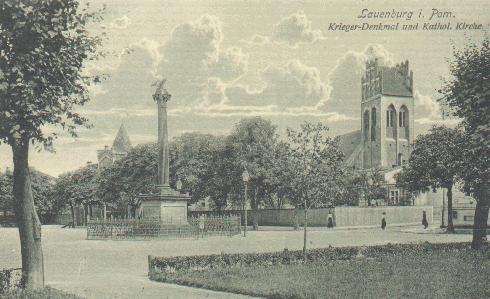
As is sometimes the case, the original source text is not easy to locate online, in this case Sebastian Möler's Prussian chronicle. Brautigam refers to a book from 1837 that clearly places the occurrence in Lauenburg (today Lębork), and not Marienburg (today Malbork), both near Danzig (Gdansk) in Northern Poland. I found a bit on it on p. 53-4 in Reinhold Cramer's Geschichte der Lande Lauenburg und Bütow (1858) (see below), which clearly shows that this has to do with a dead person's corpse that keeps turning up outside the grave, until it is forced to stay there by being punished with a sword and reminded of an oath taken by the deceased while alive. As such, it is certainly farfetched to claim that it is an example of a vampire per se. Unfortunately, Montague Summers's vampiric version set in Tyrol must be considered a figment of his (or charitably, perhaps someone else's) imagination, as Brother (not Dom) Steino von Retten died from the epidemic illness that he tried to flee, not because he had been 'slain by a vampire.'
As Cramer says, this story is so wonderful that it sounds more like a fairy tale than a true story, but must be considered one of the stories concerning Medieval miracula mortuorum that are recounted by various authors, including Dom Calmet.
Those interested in factual background information may find it worth taking a look at the appendices in Cramer's book.
Thursday, 22 July 2010
Are the dead happier than the living?
I have recently added a list of noteworthy texts on the right hand side of the blog. Most are books from the 17th and 18th centuries and most are in German, French or Latin. The majority are digitally scanned editions from various libraries and other providers, as these are most reliable (although the scans supplied by Google Books unfortunately often vary in quality from readable to unreadable). Also, most of the titles have been mentioned on this blog over the years, but I would like to draw attention to one exception: De miraculis mortuorum by Heinrich Kornmann published in 1610.
Beginning with the blood of Abel and other stories from the Old Testament, Kornmann collects a great number of tales and examples from the Bible and other literature on death, as well as beliefs and customs surrounding death. He also poses a few questions like e.g. 'Mortui an viventes feliciores?' in part 8, chapter 52): whether the dead are happier than the living?
Christian Friedrich Garmann who in 1670 published a book with the same title, accused Kornmann of indulging in nonsense ('quod varia admiscet exotica & incongrua, in recensendis fabulis & miraculis ab otiosis & nugacibus monachis excogitatis luxuriat nimiopere'). Still Garmann himself refers to Kornmann in his own writings on the masticating dead, as Kornmann e.g. writes about a woman who in death ate herself (De muliere mortua seipsam devorante, part 7, chapter 64).
Although Garmann was more sceptical than Kornmann, the verdict on Garmann himself was hard. Here according to Philippe Ariès in The Hour of Our Death:
(Garmann's ambigious approach to the question of the sensibility of the dead body) 'explains why Garmann was dismissed by the authors of medical biographies of the late eighteenth century - men almost modern in their thinking - as a credulous writer who believed the most absurd stories. It is true that he hesitates, not daring to make up his mind. Belief in the sensibility of the cadaver has the support of the people, and what we would call folklore, but scientists distrust the popular penchant for superstition. Garmann notes that there are a great many reliable observations in favor of this opinion, but he is cautious. When he tells an extraordinary story, he immediately adds a skeptical and rational commentary, but his reservations do not prevent him from giving all the details. This kind of prudence was a standard device for advancing controversial ideas while taking a minimum of risks.' (p. 356)
Back to Kornmann: He was, apparently, fascinated by miracula, so he also wrote a book about the wonders of the living: De miraculis vivorum, published in 1614 in Frankfurt. This book is fortunately also available online, if anyone should be interested. Here are lycanthropes, giants and various mythical beasts as well as many other wonders from the Bible and various other books.
Having Kornmann's collection of miracles of the dead at hand makes it easier to follow the thread to Garmann, Rohr, Ranft and so forth.
Beginning with the blood of Abel and other stories from the Old Testament, Kornmann collects a great number of tales and examples from the Bible and other literature on death, as well as beliefs and customs surrounding death. He also poses a few questions like e.g. 'Mortui an viventes feliciores?' in part 8, chapter 52): whether the dead are happier than the living?
Christian Friedrich Garmann who in 1670 published a book with the same title, accused Kornmann of indulging in nonsense ('quod varia admiscet exotica & incongrua, in recensendis fabulis & miraculis ab otiosis & nugacibus monachis excogitatis luxuriat nimiopere'). Still Garmann himself refers to Kornmann in his own writings on the masticating dead, as Kornmann e.g. writes about a woman who in death ate herself (De muliere mortua seipsam devorante, part 7, chapter 64).
Although Garmann was more sceptical than Kornmann, the verdict on Garmann himself was hard. Here according to Philippe Ariès in The Hour of Our Death:
(Garmann's ambigious approach to the question of the sensibility of the dead body) 'explains why Garmann was dismissed by the authors of medical biographies of the late eighteenth century - men almost modern in their thinking - as a credulous writer who believed the most absurd stories. It is true that he hesitates, not daring to make up his mind. Belief in the sensibility of the cadaver has the support of the people, and what we would call folklore, but scientists distrust the popular penchant for superstition. Garmann notes that there are a great many reliable observations in favor of this opinion, but he is cautious. When he tells an extraordinary story, he immediately adds a skeptical and rational commentary, but his reservations do not prevent him from giving all the details. This kind of prudence was a standard device for advancing controversial ideas while taking a minimum of risks.' (p. 356)
Back to Kornmann: He was, apparently, fascinated by miracula, so he also wrote a book about the wonders of the living: De miraculis vivorum, published in 1614 in Frankfurt. This book is fortunately also available online, if anyone should be interested. Here are lycanthropes, giants and various mythical beasts as well as many other wonders from the Bible and various other books.Having Kornmann's collection of miracles of the dead at hand makes it easier to follow the thread to Garmann, Rohr, Ranft and so forth.
Friday, 31 July 2009
Certain dead Bodies
This Digital Library of 18th and 19th Century Journals contains the March 1732 issue of The Gentleman's Magazine, which on page 681 reports 'That certain dead Bodies called Vampyres, had kill'd several Persons by sucking out all their Blood.' This was not the first British magazine to mention vampires, as The London Journal did that, but that is, I think, not yet available online. The article in that journal, a shortened and corrupted version of the Visum et Repertum, led to a political debate in several journals which was documented in the May issue of The Gentleman's Magazine. Unfortunately, one of the pages of this issue seems to be unavailable at the moment (I have notified the webmaster of this error), but one can still get a flavour of this debate on e.g. 'Political Vampyres'.'These Vampyres are said to torment and kill the Living by sucking out all their Blood; and a ravenous Minister, in this part of the World, is compared to a Leech or a Blood-sucker, and carries his Oppressions beyond the Grave, by anticipating the publick Revenues, and entailing a Perpetuity of Taxes, which must gradually drain the Body Politick of its Blood and Spirits.'
The article is reprinted in Gothic documents: A sourcebook 1700-1820 edited by E. J. Clery and Robert Miles (Manchester Univ. Press, 2000) which describes it this way:
'This item is from The Craftsman, a journal fiercely opposed to the Prime Minister Robert Walpole (father of the author of The Castle of Otranto). It rehearses the standard changes made against the Whig government, centring on financial corruption. In doing so, it incidentally displaces the opposition of credulity and scepticism with a materialist interpretation of the case reminiscent of Franco Moretti's well-known Marxist reading of Dracula. The piece could be regarded simply as an elaborate joke, but the reading of superstitious fictions as allegories of political oppression remained an option for early readers of Gothic.'
The supposed vampire Pavle of the Visum et Repertum here gets a new life of his own with a new name in a country far away from where he fell off a haywagon and died:
' Paul Arnold, who is call'd a Heyduke, was only a ministerial Tool, because it is said he had kill'd 4 Persons; whereas, if he had been a Vampyreof any Rank, we shou'd probably have heard of his Ten Thousands. It may be objected that his Body, after it had been buried 40 Days, was free from Corruption. It is the Mind, not the Body is the Author of all Wickedness; and a Man can no more carry his bad Qualities, than his Riches with him to the grave. His Corruption and the Fruits of it remains to stinck in the Nostrils of his Posteriority.'
The whole debate and the vampire's entry in English literature is minutely detailed in a chapter in another book on gothic fiction: Markman Ellis' The History of Gothic Fiction (Edinburg University Press, 2005), which I have mentioned here and here.
Saturday, 28 March 2009
The very best from Vienna, Austria
Gernot Hausar sent me an e-mail saying:
Dear Mr. Petersen,
I found your Blog and think that our elib.at focus on vampires might
also interest you. We provide OCR of source texts, scientific articles
and links about vampires in english and german.
Link: http://www.elib.at/index.php/Vampir_-_Themenkreis
The very best from Vienna, Austria,
Gernot Hausar
I actually knew about this site, but now that you have contacted me - and thanks for linking to my blog! - I might as well spread the message :-) Although in German, you don't really have to understand the language to use this resource for internet information about vampires!
Monday, 2 February 2009
For the fictionally inclined
I thought I ought to mention the celebration of Stoker's Dracula that is organized by the Dublin City Library Service this April. The extensive program should contain something for any Dracula buff :-)
Speaking of vampire fiction, I will take the opportunity to mention this French blog that I was informed about recently. Not really up my alley, but perhaps some of you would like to see it.
Tuesday, 25 November 2008
Magic Cube
This is a cubic presentation of links found on the internet when searching for magia posthuma on search-cube.
Friday, 19 September 2008
Internet resources
In a recent comment to one of my posts, Edward asks :
'Hello Niels,
do you remember the names of the books you referenced? Also, do you know where I could order them on line? I do read German therefore that would be no problem.
Here in the US we have difficulties finding decent European material for vampyre research because everything is oriented toward entertainment and serious research is relatively limited. I would appreciate if you could provide me with some websites or resources to find European texts.'
Edward, if you go through the contents of this blog you will find a number of links to resources and material that will be useful. However, I think it's time to make some sort of compilation of these resources, so although not an exhaustive list, here you will find links to a number of books, videos, audio files, web sites and more that is available online.
There are a few other web sites dedicated to the subject of vampires that do contain material of interest, see e.g. Dunkle Kulturgeschichte and Shroudeater. A relatively recent addition is the blog Diary of an Amateur Vampirologist.
The German Wikipedia contains some useful entries, including links to a collection of source material. This is actually a really good place to start, so I will refrain from listing these texts here. Other sources can be found at various library resources like the French Gallica, which includes Calmet's book on revenants and vampires. Zedler's Universal-Lexicon is a favourite, see e.g. the entry about Vampyren oder Blutsauger.
The Kakanien Revisited web site contains a comprehensive bibliography: Forschungsliteratur: Vampirismus. Kommentierte interdisziplinäre Auswahlbibliografie, and a number of papers (Sexualität Macht Tod: Prolegomena zu einer Literaturgeschichte des Vampirismus by Clemens Ruthner, Der Vampir, ein Fremder? Ethnische Minderheiten im Vampirglauben Südosteuropas by Peter Mario Kreuter, "Trag mich nach Südamerika". Schauplätze der osteuropäischen Vampirliteratur des 19. Jahrhunderts und ihre Konnotationen by Christoph Augustynowicz, and Süd/Osteuropäer als Vampire: Draculas Karriere vom blutrünstigen Tyrannen zum mythischen Blutsauger. Prolegomena zu einer Literaturgeschichte des Vampirismus II by Clemens Ruthner).
The Historicum web pages on the witch hunt also contain some useful resources, including a paper by Sabine Seidel on Hexen(vorstellungen) und Magie in Südosteuropa.
A couple of other papers available online that are worth reading are Jutta Nowosadtko's Der „Vampyrus Serviensis“ und sein Habitat: Impressionen von der österreichischen Militärgrenze and Constantin Rauer's Von der Aufklärung des Vampirismus zum Vampirismus der Aufklärung: Eine West-Östliche Debatte zwischen Einst und Heute.
I have also referred to some videos and audio files where a few people talk about vampires, including the above mentioned Jutta Nowosadtko on Vampire! Ein südosteuropäischer Beitrag zur internationalen Kulturgeschichte, the German historian Peter Mario Kreuter and Christian Reiter from the University of Vienna.
Most of the important books in German can be a bit hard to find, but you should be able to easily find a copy of Dieter Sturm and Klaus Völker's anthology Von denen Vampiren oder Menschensaugern on German Amazon or Ebay at a reasonable price.
Saturday, 22 March 2008
The Vampire: His Kith and Kin
Back in the Eighties and into the Nineties it was almost impossible to obtain a copy of Montague Summers's The Vampire: His Kith and Kin. For some reason, the follow up volume, The Vampire in Europe, was reissued a couple of times, but Summers's first book on the subject was extremely hard to find. Not so now, as it has been reissued and even first editions are available on ebay, but you can also read it online courtesy of Forgotten Books. OK, the Greek quotes look strange, but most modern day readers will probably skip them on their initial reading anyway.
Sunday, 4 November 2007
Apropos Ranft online
A few other relevant books are also available on the internet, and I have for a long time have intended to write more extensively about these resources, but I simply haven't got round to do so. Particularly, I have wanted to comment on the modern versions of some texts that have surfaced during the later years, i.e. the Ubooks edition of Ranft's Traktat, and the Hexenmond-Verlag edition of two 1732 books, but this will have to await some other occasion.
Ranft's Traktat online!
I have an old photocopy of Michael Ranft's 1734 Traktat von dem Kauen und Schmatzen der Todten in Gräbern which I have studied over the years. Before Calmet's Dissertations this was the only book that attempted to collect more or less all available knowledge on vampires and comment on the authors who had themselves commented on Ranft's Latin first edition.
I also have a modernized edition that was published in 2006 by Ubooks in Germany.
Now, however, the original has been scanned and made available to the public on the internet by Klassik Stiftung Weimar here, so everyone interested in our subject of magia posthuma and vampires can get to read - or at least take a look at - this important book!
Saturday, 25 August 2007
Internet resources II: Zedler's Universal-Lexicon
To finally continue pointing out interesting internet resources on Magia Posthuma and related subjects (here is my first post on the subject), I would like to mention the online edition of Johann Heinrich Zedler's famous Grosses vollständiges Universal-Lexicon which was published in 64 volumes in Leipzig between 1732 and 1750. The encyclopedia gives an interesting insight into many things that have a bearing on our subject of Magia Posthuma, vampires and other revenants. In fact, there is no entry on Magia posthuma, but there are several other kinds of Magia listed and explained: Magia Adamica, Magia artificialis, Magia dæmonica, Magia diabolica, Magia directa etc. Evidently this makes it possible to get some understanding of what was understand by Magia.

We can also read about the geography of Hungary (Ungarn), where the (changing) borders are listed along with the a list of areas that were originally ('in the days of old') part of Hungary: 'Siebenbürgen, Wallachey, Bulgarien, Thracien und Romanien, Servien, Bosnien, Dalmatien, Croatien und Sclavonien' (Transylvania, Wallachia, Bulgaria, Thracia, Romania, Serbia, Bosnia, Dalmatia, Croatia and Slavonia). In this 'old' sense of the name Hungary, the Serbian vampire cases can be attributed to Hungary, whereas it has often been pointed out that some of the vampires referred to as 'Hungarian' were not located in contemporary or modern Hungary.
And, of course, there are the long entries on vampires (Vampyren) and the mastication of the dead (Schmatzen der Toden), which according to the Zedler are closely related, although of Greek origin. Vampires are defined as ‘Todte menschliche Cörper, welche aus den Gräbern hervor spazieren, den Lebendigen das Blut aussaugen, und sie dadurch umbringen sollen.’ (Dead human bodies, which walk out of the graves and suck the blood of the living, thereby killing them). Both vampire cases from Serbia (Kisiljevo 1725 and Medvedja 1731-2) are described in detail, and various aspects of Greek Orthodox faith, Valvasor's mention of vampires/revenants etc. are related and discussed. There is even a rather detailed list of many of the 18th century works on vampires, so it is really a rather nice review that sums up a lot of what one might say about vampires in Leipzig some 10-15 years after the great vampire debate of 1732.
Furthermore, one can read a detailed bibliography of Michael Ranft (here called Ranfft), and there is the short entry on von Schertz which was shown in a previous post. In short, this is a wonderful source of information for anyone interested in the knowledge of 18th century.
Connoisseuers of the gothic will probably find it intriguing that the editor of the two first volumes of the Universal-Lexicon was Jacob August Franckenstein (1689-1733), and may consequently be interested in reading the entry about the ancient family Franckenstein or Frankenstein in volume 9.
On a more modern note, Jutta Nowosadtko who was mentioned in my previous post, has been involved in a project researching and writing about the Zedler lexicon, Zedleriana.
Wednesday, 1 August 2007
The Vampire Subculture
Although I usually steer pretty clear of the subject of 'vampire subcultures', I would like to point out that David Keyworth's paper The Socio-Religious Beliefs and Nature of the Contemporary Vampire Subculture (Journal of Contemporary Religion Vol. 17, No. 3 (2002), pp. 355-370) is an interesting and certainly unsettling introduction to the subculture of people who in some way identify with vampires, even to the extent of drinking human blood. Keyworth's paper covers various aspects, including the wealth of internet resources and the popular role-playing game Vampire: The Masquerade. He even mentions that there are Christian groups who are so opposed to the vampire subculture that they consider themselves 'vampire-hunters'!
Personally I feel no inclination or fascination for this subculture, but Keyworth's paper comes in handy for better assessing the background of those web sites that you stumble upon, when searching the net for information on Magia Posthuma and related subjects.
Friday, 18 May 2007
Internet resources
Like I stated in my welcome post to this blog, there are thousands of internet sites about vampires but I know of very few that are really useful for my purposes. There is, however, a great deal of material that can be useful, one example being the databases of libraries, another digitalized books.
Google's book search is often pretty confusing. A lot of the books are not fully available, and some of them have even been scanned so hurriedly that pages are missing. However, the general idea of establishing an online library of practically any book is ingenious and most welcome, and I have of course also been able to find interesting material using it.
A lot of libraries these days have their own online section of high quality digitalized books. The national library in my own country, the Royal Danish Library, has a number of digital facsimiles on their web site. One example is a Danish translation of a book on the dance of the dead, but you can also find the latin lext of the Gesta Danorum, and there is even a section on fabulous creatures. Unfortunately, a number of these resources are only available in Danish, so beware!
For the study of Magia Posthuma, other resources may prove more helpful. Here I will only mention one, the Gallica of the Bibliothèque nationale de France, but I will return to the subject in future posts.
Gallica is a very large collection of French books and texts. So you can e.g. find a digital facsimile of the Encyclopédie ou Dictionaire raisonné des sciences, des arts et des métiers with a definition of a vampire, and the text of the Lettres Juives ou Correspondance philosophique, historique et critique entre un juif voyageur et ses correspondans en divers endroits with its 137th letter on vampires by the Marquis d'Argent.
Of particular interest is the digital facsimile of Augustin Calmet's 1751 "nouvelle édition revûe, corrigée & augmentée" of Traité sur les apparitions des esprits, et sur les vampires, ou les revenans de Hongrie, de Moravie, &c. So with Gallica you can have the 1751 original text at your hand for reading or reference, which can come in very handy when you are studying the Magia Posthuma and e.g. wish to read Calmet's reference to de Schertz's book:
"Ces apparitions ont donné occasion à un petit ouvrage intitulé: Magia posthuma, composé par Charles Ferdinand de Schertz, imprimé à Olmuz en 1706. dédié au Prince Charles de Lorraine Evêque d'Olmutz & d'Osnabruch." (Tome II, p. 32f)
Google's book search is often pretty confusing. A lot of the books are not fully available, and some of them have even been scanned so hurriedly that pages are missing. However, the general idea of establishing an online library of practically any book is ingenious and most welcome, and I have of course also been able to find interesting material using it.
A lot of libraries these days have their own online section of high quality digitalized books. The national library in my own country, the Royal Danish Library, has a number of digital facsimiles on their web site. One example is a Danish translation of a book on the dance of the dead, but you can also find the latin lext of the Gesta Danorum, and there is even a section on fabulous creatures. Unfortunately, a number of these resources are only available in Danish, so beware!
For the study of Magia Posthuma, other resources may prove more helpful. Here I will only mention one, the Gallica of the Bibliothèque nationale de France, but I will return to the subject in future posts.
Gallica is a very large collection of French books and texts. So you can e.g. find a digital facsimile of the Encyclopédie ou Dictionaire raisonné des sciences, des arts et des métiers with a definition of a vampire, and the text of the Lettres Juives ou Correspondance philosophique, historique et critique entre un juif voyageur et ses correspondans en divers endroits with its 137th letter on vampires by the Marquis d'Argent.Of particular interest is the digital facsimile of Augustin Calmet's 1751 "nouvelle édition revûe, corrigée & augmentée" of Traité sur les apparitions des esprits, et sur les vampires, ou les revenans de Hongrie, de Moravie, &c. So with Gallica you can have the 1751 original text at your hand for reading or reference, which can come in very handy when you are studying the Magia Posthuma and e.g. wish to read Calmet's reference to de Schertz's book:
"Ces apparitions ont donné occasion à un petit ouvrage intitulé: Magia posthuma, composé par Charles Ferdinand de Schertz, imprimé à Olmuz en 1706. dédié au Prince Charles de Lorraine Evêque d'Olmutz & d'Osnabruch." (Tome II, p. 32f)
Subscribe to:
Posts (Atom)