I recently mentioned Paul Barber's preface to the second edition of his Vampires, Burial & Death, as well as Rob Brautigam's Shroudeater site in another post. Paul Barber calls attention to that web site, while mentioning that 'theories sometimes crowd out the facts, especially on the Internet,' adding in a footnote:
'An important exception is Rob Brautigam, whose site (shroudeater.com) contains a valuable collection of material from many countries over many years. Brautigam has gone to great trouble to verify sources in the accounts he publishes there, some of which have evolved in moving from one book to the next. In one case (that of William Doggett) he demonstrates that a vampire was eventually inserted into a story that originally wasn't about vampires at all.' (p. v-vi)
Brautigam recently updated the site with a large number of 'cases', this time including an index by place name instead of by country alone, even indicating alternative names for various places.
I have only taken a brief look at some of the new entries. One of them concerns Marienburg and is placed in Poland. Curiously, Montague Summers in The Vampire in Europe refers this to Tyrol:
'In his chronicle under the year 1343 Sebastian Moelers relates that during a terrible visitation of the Black Death cases of vampirism were numerous in the Tyrol, and the Benedictine abbey of Marienberg was much infested, one at least of the monks, Dom Steino von Netten, being commonly reputed to have been slain by a vampire.' (p. 160)
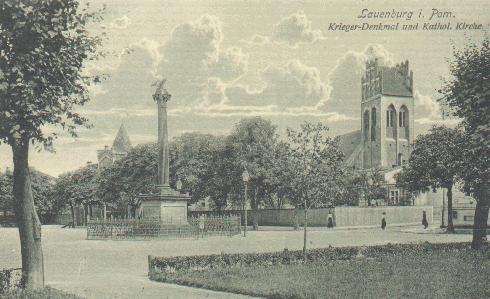
As is sometimes the case, the original source text is not easy to locate online, in this case Sebastian Möler's Prussian chronicle. Brautigam refers to a book from 1837 that clearly places the occurrence in Lauenburg (today Lębork), and not Marienburg (today Malbork), both near Danzig (Gdansk) in Northern Poland. I found a bit on it on p. 53-4 in Reinhold Cramer's Geschichte der Lande Lauenburg und Bütow (1858) (see below), which clearly shows that this has to do with a dead person's corpse that keeps turning up outside the grave, until it is forced to stay there by being punished with a sword and reminded of an oath taken by the deceased while alive. As such, it is certainly farfetched to claim that it is an example of a vampire per se. Unfortunately, Montague Summers's vampiric version set in Tyrol must be considered a figment of his (or charitably, perhaps someone else's) imagination, as Brother (not Dom) Steino von Retten died from the epidemic illness that he tried to flee, not because he had been 'slain by a vampire.'
As Cramer says, this story is so wonderful that it sounds more like a fairy tale than a true story, but must be considered one of the stories concerning Medieval miracula mortuorum that are recounted by various authors, including Dom Calmet.
Those interested in factual background information may find it worth taking a look at the appendices in Cramer's book.
On several occasions, particularly on the periphery of the Habsburg Empire during the 17th and 18th centuries, dead people were suspected of being revenants or vampires, and consequently dug up and destroyed. Some contemporary authors named this phenomenon Magia Posthuma. This blog is dedicated to understanding what happened and why.
Showing posts with label Miracula. Show all posts
Sunday, 4 December 2011
Thursday, 22 July 2010
Are the dead happier than the living?
I have recently added a list of noteworthy texts on the right hand side of the blog. Most are books from the 17th and 18th centuries and most are in German, French or Latin. The majority are digitally scanned editions from various libraries and other providers, as these are most reliable (although the scans supplied by Google Books unfortunately often vary in quality from readable to unreadable). Also, most of the titles have been mentioned on this blog over the years, but I would like to draw attention to one exception: De miraculis mortuorum by Heinrich Kornmann published in 1610.
Beginning with the blood of Abel and other stories from the Old Testament, Kornmann collects a great number of tales and examples from the Bible and other literature on death, as well as beliefs and customs surrounding death. He also poses a few questions like e.g. 'Mortui an viventes feliciores?' in part 8, chapter 52): whether the dead are happier than the living?
Christian Friedrich Garmann who in 1670 published a book with the same title, accused Kornmann of indulging in nonsense ('quod varia admiscet exotica & incongrua, in recensendis fabulis & miraculis ab otiosis & nugacibus monachis excogitatis luxuriat nimiopere'). Still Garmann himself refers to Kornmann in his own writings on the masticating dead, as Kornmann e.g. writes about a woman who in death ate herself (De muliere mortua seipsam devorante, part 7, chapter 64).
Although Garmann was more sceptical than Kornmann, the verdict on Garmann himself was hard. Here according to Philippe Ariès in The Hour of Our Death:
(Garmann's ambigious approach to the question of the sensibility of the dead body) 'explains why Garmann was dismissed by the authors of medical biographies of the late eighteenth century - men almost modern in their thinking - as a credulous writer who believed the most absurd stories. It is true that he hesitates, not daring to make up his mind. Belief in the sensibility of the cadaver has the support of the people, and what we would call folklore, but scientists distrust the popular penchant for superstition. Garmann notes that there are a great many reliable observations in favor of this opinion, but he is cautious. When he tells an extraordinary story, he immediately adds a skeptical and rational commentary, but his reservations do not prevent him from giving all the details. This kind of prudence was a standard device for advancing controversial ideas while taking a minimum of risks.' (p. 356)
Back to Kornmann: He was, apparently, fascinated by miracula, so he also wrote a book about the wonders of the living: De miraculis vivorum, published in 1614 in Frankfurt. This book is fortunately also available online, if anyone should be interested. Here are lycanthropes, giants and various mythical beasts as well as many other wonders from the Bible and various other books.
Having Kornmann's collection of miracles of the dead at hand makes it easier to follow the thread to Garmann, Rohr, Ranft and so forth.
Beginning with the blood of Abel and other stories from the Old Testament, Kornmann collects a great number of tales and examples from the Bible and other literature on death, as well as beliefs and customs surrounding death. He also poses a few questions like e.g. 'Mortui an viventes feliciores?' in part 8, chapter 52): whether the dead are happier than the living?
Christian Friedrich Garmann who in 1670 published a book with the same title, accused Kornmann of indulging in nonsense ('quod varia admiscet exotica & incongrua, in recensendis fabulis & miraculis ab otiosis & nugacibus monachis excogitatis luxuriat nimiopere'). Still Garmann himself refers to Kornmann in his own writings on the masticating dead, as Kornmann e.g. writes about a woman who in death ate herself (De muliere mortua seipsam devorante, part 7, chapter 64).
Although Garmann was more sceptical than Kornmann, the verdict on Garmann himself was hard. Here according to Philippe Ariès in The Hour of Our Death:
(Garmann's ambigious approach to the question of the sensibility of the dead body) 'explains why Garmann was dismissed by the authors of medical biographies of the late eighteenth century - men almost modern in their thinking - as a credulous writer who believed the most absurd stories. It is true that he hesitates, not daring to make up his mind. Belief in the sensibility of the cadaver has the support of the people, and what we would call folklore, but scientists distrust the popular penchant for superstition. Garmann notes that there are a great many reliable observations in favor of this opinion, but he is cautious. When he tells an extraordinary story, he immediately adds a skeptical and rational commentary, but his reservations do not prevent him from giving all the details. This kind of prudence was a standard device for advancing controversial ideas while taking a minimum of risks.' (p. 356)
Back to Kornmann: He was, apparently, fascinated by miracula, so he also wrote a book about the wonders of the living: De miraculis vivorum, published in 1614 in Frankfurt. This book is fortunately also available online, if anyone should be interested. Here are lycanthropes, giants and various mythical beasts as well as many other wonders from the Bible and various other books.Having Kornmann's collection of miracles of the dead at hand makes it easier to follow the thread to Garmann, Rohr, Ranft and so forth.
Sunday, 17 August 2008
But my interests lie elsewhere...
Following up on my recent autobiographical note, I should perhaps say a bit more about my current interest in the subject.
I have frequently stressed my interest as 'historical'. I find that it is important to place vampires and magia posthuma in time and space instead of in some Neverland reminiscent of the Transylvania of our fictional or 'symbolic' geography. The people who were afraid of revenants were 'real' people, and it was 'real' people who were doctors, military personnel, priests and other persons in authority who had to find a way to deal with this 'superstition'. Also, it was well-educated and learned people who were involved in debating the incorruptibility of the corpses exhumed and the illness that the supposed victims were suffering from. In my opinion, it is more fascinating to try to understand these people, their concerns, notions, theories, beliefs and fears, and why they spent time on this strange subject, than to perpetuate the vampire mythology of Stoker or Summers, cf. some old posts here, here, and here.
So one of my interests is simply to place vampires and 'posthumous magic' in a historical context by asking relatively simple questions like: What did it look like in 'Medvegia', when people were afraid of vampires in the winter of 1731-32? How were the people dressed? Who were they? What medical background did a field surgeon like Flückinger have? Oh, and where is 'Medvegia' anyway? So I've tried to find out about the Habsburg Militärgrenze, looked for books on soldiers and military uniforms from the 18th century, and have been reading about the development of medicine in those years, but still some of the questions are pretty hard to answer when you're not familiar with the history of those regions, and the amount of information available here in Denmark on the region and period is far from impressive. You can for instance not find a copy of the only modern biography of Charles VI (Bernd Rill: Karl VI. Habsburg als barocke Großmacht) in any Danish library, so I had to get it on loan from Sweden...
On top of such practical obstacles, even historians can have a hard time understanding e.g. the history of the Habsburg Empire, cf. the preface to Charles Ingrao's The Habsburg Empire 1618-1815. Certainly, there are other aspects of the relevant period of European period that is far from described and understood, but then it is intriguing to see how e.g. the research into the witch hunt has developed over the past few years. What is particularly interesting is to see how muddled the picture really is, and how the stereotypical mythology of the progress of enlightened rationality and secularism isn't in harmony with the actual historical development. But then that is one of the aspects that might whet one's appetite for figuring out was going on and why :-)
This particularly goes for the great vampire debate of 1732. Very few studies place this debate in the context of the contemporary scientific and philosophical discourses, and consequently it is hard for most people to get an understanding of why learned people found it necessary to discuss revenants and incorruptibility. I am grateful for the hard work laid down by people like Klaus Hamberger to help understanding the various theories and discussions, because it's frequently hard to understand the context of a past debate.
In this respect, I see the vampire debate as an interesting case for illustrating and understanding the developments in science and academia in those years, as well as in other aspects of society, in an era when science and society developed pretty rapidly. From a more theoretical point of view on the development of the sciences, it is also very interesting to see how phenomena are discriminated and organized in new ways, new theoretical frameworks built, allowing for new institutions and methods. Here the various ways to deal with the 'miracula mortuorum', including incorruptibility and tales of revenants, are an interesting and pretty pertinent example.
No doubt, a lot of interest has been given to some of these subjects over the past decades, e.g. on burial practices, cf. not only the well-known work by Philippe Aries, but later work like that found in the anthologies Körper ohne Leben: Begegnung und Umgang mit Toten edited by Norbert Stefenelli, and The Place of the Dead: Death and Remembrance in Late Medieval and Early Modern Europe edited by Bruce Gordon and Peter Marshall.
Another aspect that has been stressed in the later years, is the relation between vampires and the magia posthuma on one hand and the witchcraft beliefs on the other. Gabor Klaniczay has contributed to this understanding leaving an easily detectable fingerprint on the current understanding of the history of the witch hunt, cf. e.g. volume 5 of The Athlone History of Witchcraft and Magic in Europe: The Eighteenth and Nineteenth Centuries, but I believe that a better understanding of the magia posthuma in e.g. Moravia and Silesia is required, see e.g. the work of Karen Lambrecht, to fully link the history of magia posthuma with that of Central European witchcraft.
This way, the history of vampires and magia posthuma is probably also an interesting case for illustrating and understanding the 'decline of magic' and the development of the modern secular society.
In fact, the 'complete' synthesis of the current knowledge of folklore, archaeology, evidence of revenant beliefs and apotropaics, etc. with the documents and books on vampires and magia posthuma of the 17th and 18th centuries, in my opinion still requires some work. However, with the opening up of borders within Europe, and the easier access to books and archival material, it should be possible to fill in the gaps. So I'm pretty optimistic, and maybe that elusive 'vampire book to end all vampire books' that I mentioned in my recent post, will get published in the near future :-)
Due should of course be given to the people who have put in important work in the later years and have inspired me in my own endeavours. Some have been mentioned in this post, some elsewhere in previous posts on this blog.
I have frequently stressed my interest as 'historical'. I find that it is important to place vampires and magia posthuma in time and space instead of in some Neverland reminiscent of the Transylvania of our fictional or 'symbolic' geography. The people who were afraid of revenants were 'real' people, and it was 'real' people who were doctors, military personnel, priests and other persons in authority who had to find a way to deal with this 'superstition'. Also, it was well-educated and learned people who were involved in debating the incorruptibility of the corpses exhumed and the illness that the supposed victims were suffering from. In my opinion, it is more fascinating to try to understand these people, their concerns, notions, theories, beliefs and fears, and why they spent time on this strange subject, than to perpetuate the vampire mythology of Stoker or Summers, cf. some old posts here, here, and here.
So one of my interests is simply to place vampires and 'posthumous magic' in a historical context by asking relatively simple questions like: What did it look like in 'Medvegia', when people were afraid of vampires in the winter of 1731-32? How were the people dressed? Who were they? What medical background did a field surgeon like Flückinger have? Oh, and where is 'Medvegia' anyway? So I've tried to find out about the Habsburg Militärgrenze, looked for books on soldiers and military uniforms from the 18th century, and have been reading about the development of medicine in those years, but still some of the questions are pretty hard to answer when you're not familiar with the history of those regions, and the amount of information available here in Denmark on the region and period is far from impressive. You can for instance not find a copy of the only modern biography of Charles VI (Bernd Rill: Karl VI. Habsburg als barocke Großmacht) in any Danish library, so I had to get it on loan from Sweden...
On top of such practical obstacles, even historians can have a hard time understanding e.g. the history of the Habsburg Empire, cf. the preface to Charles Ingrao's The Habsburg Empire 1618-1815. Certainly, there are other aspects of the relevant period of European period that is far from described and understood, but then it is intriguing to see how e.g. the research into the witch hunt has developed over the past few years. What is particularly interesting is to see how muddled the picture really is, and how the stereotypical mythology of the progress of enlightened rationality and secularism isn't in harmony with the actual historical development. But then that is one of the aspects that might whet one's appetite for figuring out was going on and why :-)This particularly goes for the great vampire debate of 1732. Very few studies place this debate in the context of the contemporary scientific and philosophical discourses, and consequently it is hard for most people to get an understanding of why learned people found it necessary to discuss revenants and incorruptibility. I am grateful for the hard work laid down by people like Klaus Hamberger to help understanding the various theories and discussions, because it's frequently hard to understand the context of a past debate.
In this respect, I see the vampire debate as an interesting case for illustrating and understanding the developments in science and academia in those years, as well as in other aspects of society, in an era when science and society developed pretty rapidly. From a more theoretical point of view on the development of the sciences, it is also very interesting to see how phenomena are discriminated and organized in new ways, new theoretical frameworks built, allowing for new institutions and methods. Here the various ways to deal with the 'miracula mortuorum', including incorruptibility and tales of revenants, are an interesting and pretty pertinent example.
No doubt, a lot of interest has been given to some of these subjects over the past decades, e.g. on burial practices, cf. not only the well-known work by Philippe Aries, but later work like that found in the anthologies Körper ohne Leben: Begegnung und Umgang mit Toten edited by Norbert Stefenelli, and The Place of the Dead: Death and Remembrance in Late Medieval and Early Modern Europe edited by Bruce Gordon and Peter Marshall.
Another aspect that has been stressed in the later years, is the relation between vampires and the magia posthuma on one hand and the witchcraft beliefs on the other. Gabor Klaniczay has contributed to this understanding leaving an easily detectable fingerprint on the current understanding of the history of the witch hunt, cf. e.g. volume 5 of The Athlone History of Witchcraft and Magic in Europe: The Eighteenth and Nineteenth Centuries, but I believe that a better understanding of the magia posthuma in e.g. Moravia and Silesia is required, see e.g. the work of Karen Lambrecht, to fully link the history of magia posthuma with that of Central European witchcraft.
This way, the history of vampires and magia posthuma is probably also an interesting case for illustrating and understanding the 'decline of magic' and the development of the modern secular society.
In fact, the 'complete' synthesis of the current knowledge of folklore, archaeology, evidence of revenant beliefs and apotropaics, etc. with the documents and books on vampires and magia posthuma of the 17th and 18th centuries, in my opinion still requires some work. However, with the opening up of borders within Europe, and the easier access to books and archival material, it should be possible to fill in the gaps. So I'm pretty optimistic, and maybe that elusive 'vampire book to end all vampire books' that I mentioned in my recent post, will get published in the near future :-)
Due should of course be given to the people who have put in important work in the later years and have inspired me in my own endeavours. Some have been mentioned in this post, some elsewhere in previous posts on this blog.
Subscribe to:
Posts (Atom)
