Sunday, 14 August 2011

The Vampire & The Voivode

My toes tend to curl when I watch a lot of the documentaries on vampires or Dracula that turn up on TV, DVD or the internet. But I can now point to a documentary that is thoroughly worth watching if you are looking for a documentary on Bram Stoker, the genesis of his novel Dracula, the locations in the novel and similar themes. I am referring to Dracula: The Vampire & The Voivode that was made in 2008, and is available on DVD for £11.99 plus p&p. It has the benefit of having Dracula expert Elizabeth Miller as script consultant, so various myths are discarded with or debunked. Furthermore, the documentary is shot on location in Dublin, Whitby, London and a number of places in Romania, and in Romania we get some insights from the late Nicolae Paduraru on both Vlad Tepes and Romanian vampire lore.

The documentary is, however, very weak on vampires per se, so this is mainly a documentary for those who want to know more about Stoker's novel.

Saturday, 13 August 2011

Austrian devils and witches

Here is a couple of interesting books that I saw while I was in Vienna.

Teuflisches Österreich: Geschichten aus einem höllischen Land by Dr. Reinhard Pohanka (Pichler Verlag, € 24.95), published in the same series as Unheimliches Wien, claims that Austria is a Devil's country with a devilish topography, and includes a number of examples with many all colour illustrations: 'Österreich ist ein Land des Teufels. Er begleitet den heiligen Nikolaus als Krampus, tritt uns im Volksbrauch der Perchtenumzüge und im Fasching entgegen und treibt sein Unwesen in einer ganzen Reihe von Sprichwörtern. Österreich hat auch eine „teuflische“ Topografie, sie reicht vom Höllental bei der Rax über den Teufelsturm im Gesäuse bis zum Stephansdom mit seinem Meister Puchsbaum, der vom Teufel in den Tod gestürzt wurde. Zahlreiche Teufelsbrücken, Teufelsmühlen und Teufelssteine gibt es in Österreich und zu allen weiß der Volksmund Sagen zu erzählen. Als Herr der Hexen verführte der Höllenfürst unschuldige Männer und Frauen, Zauberer und Alchemisten gehörten zu seinen Anhängern. Auch die Kirche kämpft weiter gegen ihn und fast jeder von uns hat an einem Beschwörungsritual gegen den Teufel schon teilgenommen: Nämlich als wir getauft wurden. Kurz gesagt, der Teufel lebt in Österreich, wir begegnen ihm täglich – er ist Teil unseres kollektiven Gedächtnisses.'

Als die Scheiterhaufen brannten: Hexenverfolgung in Österreich by Isabella Ackerl (Amalthea, € 22.95) is a history of witch persecutions in Austria which also debunks the popular myths on the subject in general: 'Die Hexenverfolgung in Österreich ist ein emotional aufgeladenes Thema, das von unzähligen Legenden umrankt ist. So ist in der Literatur die Rede von sechs bis neun Millionen Menschen, die diesem Wahn geopfert wurden - eine Zahl, die einer Entvölkerung Europas gleichgekommen wäre. Dieser Mythos entstand vor allem durch die feministische Forschung, die sich mit großer Solidarität diesem Thema widmete und die Zahlen subjektiv deutete. Außerdem wurde argumentiert, dass sich die Verfolgungen fast ausschließlich gegen die sogenannten "weisen" Frauen und gegen die Hebammen richteten.

Die Autorin geht mit ihrer fundierten Kenntnis wissenschaftlich an dieses Thema heran und widmet sich den zahlreichen, sich aufdrängenden Fragen so objektiv wie möglich:
Wie viele Prozesse gegen Hexen wurden tatsächlich geführt? Wer waren die Ankläger und Richter? Welches soziale und wirtschaftliche Umfeld begünstigte diese grausamen Verfolgungen? U.v.m.'

Of bats, rats, mummified corpses and Schlagobers


The olde blogger spent some days in Vienna this Summer. Actually, we hoped to escape the rain here in Denmark, but on the airplane I read in the Österreich that the Austrians themselves were fleeing the rain to go to Spain and Italy. Anyway, we arrived at our hotel just around the corner from the Stephansdom and Graben, and the Viennese weather was actually quite OK during most of our stay.

This time I got to visit the crypt under the Michaelerkirche, which was a creepy, but in some ways also enlightening experience. Photography was not allowed, so I must refer you to e.g. this web site for a view of the coffins and mumified corpses that are stored there. Much has happened to the human remains over the years, and we were told that the floor we were walking on top of was actually a layer of about 1,5 m of a mix of soil and human bones! Recently they have had problems with a bug (that has somehow come to Austria from New Zealand) which is devouring the old wooden coffins, so they have to cool part of the crypt to make it less attractive to the insects.

Less creepy is the Kaisergruft, where you can see the development of 'sarcophagus fashion' from Baroque, macabre ornaments to more almost plain sarcophagi, most notably in the difference from Maria Theresia to her son Joseph II.
Of particular interest to the subject of posthumous magic, one finds Karl Joseph von Lothringen in the Neue Gruft. He was bishop at Olomouc from 1694 to 1711, and Karl Ferdinand von Schertz dedicated his book Magia Posthuma to him.

I had also hoped to see the burial site of Gerard van Swieten in the Augustinerkirche, but unfortunately could not get access to that part of the church when I was there. I did, however, see the so-called Kaiserstöckl where he lived from 1751 until his death in 1772. This house, which Maria Theresia built for van Swieten, is located at one of Schönbrunn's gates, in Hietzing, a yellow building which is apparently a post office these days.

Apropos of medicine, there is a nice little guide book for those interested in the subject (and this was where I read about Kaiserstöckl): Wien für Mediziner: 15 Spaziergänge durch das alte medizinisches Wien by Wolfgang Regal and Michael Nanut, and it is also available in English as Vienna: A Doctor's Guide).


The zoological gardens at Schönbrunn, Tiergarten, was a particular surprise. I have never seen so large bats before, nor have I ever stood in the midst of a lot of small bats flying all around me. This was in the rain forest house, but there were also bats in a part of the zoo simulating life at night. There is even a detailed exhibition on bats, including the vampire bat, at the Naturhistorisches Museum, and we saw a couple of bats flying around in the Stadtpark one evening. Unfortunately, there was also a great number of rats walking around in the park, although mostly under the trees and bushes.

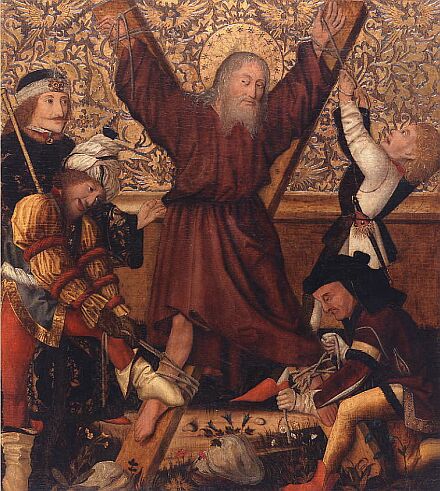
Apart from various zoological creatures, Frankenstein and Boris Karloff turned up in an installation at the Botanical Gardens, and Vlad Tepes lent a helping hand to the crucifixion of St. Andrew in the medieval section of the Unteres Belvedere. And, of course, Fuseli's Nightmare could famously be seen in Sigmund Freud's waiting room in BerggasseErnest Jones, who gave Freud the Nightmare black and white reproduction, was the author of On the Nightmare which includes a chapter on vampires. Considering how influential and recognized Freud was in my own country as well as in so many other places, I was surprised to learn that Freudianism had little impact in Austria until decades after WWII.


Otherwise it was a holiday not too dissimilar to that of other tourists. I saw the Hundertwasserhaus and a few other sights, and I certainly feel that I had enough Schlagobers for some time.


In central Vienna - as in many other large cities - a number of people try to amuse and entertain tourists and shoppers, including the guy in the photo above who appears to defy gravity. This to me shows that, perhaps, almost anything is possible in this city? Vienna is a pleasant place to stay, people are polite, and I haven't encountered any scams like the ones that you find in e.g. Rome and Paris.


Sunday, 24 July 2011

A reminder

Having, of course, spent a good deal of time over the past couple of days following the shocking and tragic events in Norway, late last evening I watched the video that the terrorist Breivik put online to accompany his voluminous manifesto before committing his terrorist bombing and mass murder.

The point of view on current European affairs and Breivik’s own ‘solution’ is in itself both extreme and perverse. But I could not help feeling a bit extra uncomfortable by seeing slides devoted to Vlad Tepes and the Ottoman siege of Vienna in 1683.

These are, as readers of this blog will know, historical subjects that have been touched on in connection with the theme of this blog, here as well as elsewhere. The Dracula: Woiwode und Vampir exhibition that I myself attended in Bucharest last year also dealt with the Türkenkriege, the struggles between Christian rulers and the Ottomans. In a post on that exhibition, I myself mentioned that this struggle ‘is an interesting way of linking the otherwise disparate subjects of a Valachian Voivod and the ‘undead’ corpses that caught the attention of many people in the 18th century.’

With Breivik’s appropriation of this struggle and related historical subjects, I cannot help but feel disconcerted. Seeing the image of Vlad Tepes, so well-known from many books, in his slides makes me feel that he has in some way tainted this image.

Of course, there is nothing new about staging current affairs in terms of a historical framework, and I am sure that others will feel that he has tainted other images and subjects. Also there is no doubt that the image of Vlad Tepes was a picture of real horror and evil hundreds of years ago, but with Breivik’s use of it, it has now become associated with current day violence and cruelty.

And this is not all - and I apologise if this subject makes my reader nauseous - but a quick search in Breivik’s manifesto shows that he has also decided to use the Tepes name for a kind of weapon that he cruelly names: ‘Tepes revenge – Defensive Steel Impaler’. ‘The name is taken from Romanias most famous historical Crusader, Vlad Tepes, who impaled tens of thousands of Muslim invaders in the Balkans,’ Breivik explains. “… he was a real master of STAGING the cruelty to obtain maximum effect,” he says of Vlad Tepes, “He was the greatest master of imagology, hundreds of years before this science to be discovered and theorised.”

Obviously the Norwegian terrorist has aimed at providing images for his own crusade, and I am afraid that in some unsettling and perverse way he has succeeded. At least, I am myself afraid that it will take me some time to shake off the uncomfortable association between the image of Vlad Tepes and the bombing and mass murders in Norway.

On the other hand, this uncomfortable feeling can serve as a reminder of the tragedy that happened in a neighbouring country, formerly actually a part of my own country. And as a reminder that self-styled ‘crusaders’ everywhere may appropriate history and images for their own purposes.

And as I am sure we all need to think about the tragic events that have happened in Norway and to consider what we can do to prevent them from being repeated in the future, it is after all not for the worst to have something to remind us of them.


Thursday, 21 July 2011

Serbian vampires close-up!

This Serbian documentary provides an exceptional look at some of the places related to vampire history and legends in Serbia, including Kisiljevo and Medvedja. As I do not understand the language, I cannot tell you much about what they are actually saying, but names of places and persons, like e.g. Petar Blagojevic (i.e. 'Peter Plogojowitz'), are easy to recognize. Part two also includes some (split screen) clips from the old Leptirica film.

It is pretty ridiculous to see a guy trying to locate the grave of Blagojevic using a pendulum, and I had to smile when I saw Flückinger portrayed as an old man writing the Visum & Repertum. But I find it very nice to see Serbians reclaiming the vampire. After all this is where it started. Without the vampires - or at least the villagers worried about vampires - of Kisiljevo and Medvedja we would hardly be talking about vampires today.


The 'first' vampire

Anthony Hogg, in a comment to a recent post, asks: Who was the first vampire? Giure Grando, Peter Plogojowitz, or perhaps the vampires mentioned in Mercure Galant as quoted by Calmet.

As I wrote in an earlier post, there is a museum dedicated to Giure (or: Jure) Grando, commemorating him as the first vampire. As it says here: 'Jure Grando (1656) was the first classical Vampire to be mentioned in documented records.' Still, I would myself refer to Peter Plogojewitz (or however you prefer to spell his name) as the 'first' vampire, because that term is used in Provisor Frombald's report from Kisiljevo.

As for bloodsucking, well, most of these revenants tend to either strangle or by other means affect the living, and blood itself generally first turns up on the corpses that are exhumed, and it is then interpreted as blood drawn from the unfortunate victims of the revenant. But some kind of bloodsucking is actually mentioned in connection with the Mercure Galant article on the Polish Upiertz that Hogg also refers to in his comment. Still, the term 'vampire' is apparently not used, although Calmet claims that the articles 'parlent des oupires, vampires ou revenants'. There appears to be an excerpt from the 1693 issue in question on the web site of this author of a book on vampires, i.e. here, and it actually says that this Demon draws blood from the body of a living person or of cattle.

A Google search, of course, provides a number of other answers like Cain, Lilith, Vlad Tepes, George Bush...

Tuesday, 19 July 2011

Last minute

Haven't decided where to go this summer? Or are you just planning a trip later this year or next year?

If you need a bit of inspiration, then this German site might help you out, at least if you like a bit of the horrific. I happened to find it when I read about this Horor bar in Cesky Krumlov, the town known from e.g. the Vampir Prinzessin documentary. At least, it looks like a pretty unique place to have a drink :-)

The woman behind this 'Gothic' site has, apparently, visited a number of other places that might interest readers of this blog, e.g. in Prague, Vienna or Cachtice. Just click on her Gothic Reisetipps for more information.

Reading about her lifestyle, I am reminded that I was recently interviewed by a guy who thought that being interested in vampires and revenants had to be a kind of lifestyle. I hope I convinced him that my interest in magia posthuma and similar subjects does not reflect in my tastes in life in general. :-)


Video via Outside Prague.

Sunday, 17 July 2011

Breaking with the Baroque


'By the middle of the eighteenth century, there were signs that the appeal of graphic violence in Catholic Baroque culture was waning. Popular culture never lost its fascination with violence and crime, and the decrease in the number of public executions within the Habsburg realms cannot be taken as evidence that the public was less interested in these spectacles, rather, it demonstrated that the central government was starting to take a different view of public displays of physical punishment. What had changed was the sense of simultaneous distancing and identification with the sufferer that had characterized the Baroque encounter with violence. The distancing had originally made it possible to view animal baiting, or even the execution of a criminal, without the on-lookers experiencing any stirrings of empathy toward the sufferers, but curiosity or pleasure instead. Yet the pious Catholic also identified with the sufferings of saint or martyr because of the different moral context in which the torments were inflicted. Suffering of ordinary mortals or of saints, like the suffering of Jesus, could produce positive results for the sufferer or for others. Suffering blocked out the less important day-to-day world, and a meditation on denial and suffering invited the participant to enter another world where closeness to God was the reward for the act of distancing oneself from the material. The promoters of the Enlightenment did not share this view, but were much more concerned with the possibilities of happiness being achieved through less painful and non-supernatural means.

The breakdown of this seeming fusion of what appear to be polar opposites, empathy and distancing, was further fostered by a more dispassionate and analytical view of the body, in particular, the human body. The anatomical Wachsenpräparaten created in the 1780s for the Josephinum, the surgical institute established in Vienna by Joseph II, are the clearest demonstration of the break with the Baroque in the Habsburg world. Although their postures and the tasseled pillows on which some of them are displayed are reminiscent of the waxen figures in Baroque reliquaries, these figures are guardians of a mystery with no theological or moral implications. They are instead aids to instruction at a state-supported school that teaches a practical skill imparted by a scientist rather than a priest, where no clergy are employed and whose every detail bears the mark of enlightened despotism.'

According to Dr. Paul Shore, St. Louis University, in The Eagle and the Cross: Jesuits in Late Baroque Prague (Saint Louis: Institute of Jesuit Sources, 2002), p. 50-1.

Friday, 15 July 2011

Unusual news from Poland

Leon, in a comment here, points to a news story from AFP via Yahoo News. I suppose the examination of current interest in vampirism has little to do with vampires per se, but may have to do with concern over the popular fascination with vampires, just like the Catholic Church has been concerned over the fascination for Harry Potter and Dan Brown's books:

Excorcists meet in Poland, tackle vampires

Vampires, the devil's deceit and mental illness are among the hot topics for some 300 exorcists who flocked to Poland this week from as far away as Africa and India for a week-long congress.

Held at Poland's Roman Catholic Jasna Gora monastery, home to the venerated Black Madonna icon, this year's congress "examines the current fashion for vampirism in Europe and the world-over, schizophrenia and other mental disorders as well as the devil's deceit during exorcism," according to the monastery's radio station.

Also attending are "priests and lay people who work with exorcists or who are themselves practitioners in cases which do not involve possession but rather other forms of harassment by evil spirits," Polish exorcist, Father Andrzej Grefkowicz was quoted as saying.

Hailing from India, world-renowned exorcist Father Rufus Pereira as well as chief exorcist of the Archdiocese of Vienna Larry Hogan are among the participants, the radio reported. The unusual meeting is held once every two years.

The Jasna Gora monastery's venerated Black Madonna icon is believed by many Poles to work miracles.

Legend has it that it was painted by the apostle Saint Luke on a table top from the home of the Holy Family, according to the Jasna Gora website. Records suggest the icon arrived in Poland during the 14th century.

With around 90 percent of the population declaring themselves Roman Catholic, Poland remains one of Europe's most devout countries.


Monday, 11 July 2011

Death in Venice

Writing about vampires in Venice a couple of months ago, I could only feature part of the Doctor Who documentary Death in Venice. In the meantime I have found the complete one elsewhere, and although it is mainly a making of featurette, it does include a bit of information on the bubonic plague in Venice - and a short reference to the archaeological find that made the headlines as a 'vampire' a couple of years ago.

Doctor Who Confidential 5x06 - Death in Venice
Related Posts Plugin for WordPress, Blogger...