Showing posts with label Henry More. Show all posts

Saturday, 7 January 2012

Los vampiros

'Is this worth purchasing?' is a question I have asked myself many times over the years, when a new book title on vampires and related subjects turned up. Fortunately, with the internet one can sometimes find a reasonable amount of reviews and other information, but in many cases you are left to make a decision on the basis of almost no information at all. For that reason, over the years I have tried to write a bit about various books that might have some value for people with an interest in the subject of vampirism and posthumous magic along the lines of this blog.

Jordi Ardanuy is a physicist and vampire expert who has written extensively in Catalan and Spanish. Much of what he has written on the subject is available on the internet, cf. e.g. the web site of Cercle V, but I have been intrigued to see his book Los vampiros ¡vaya timo! published by Laetoli in 2009 in a series on superstition, pseudoscience and antisicence called ¡Vaya timo! aimed at teenagers and other younger readers. Other books in the series deal with e.g. witchcraft, tarot and psychoanalysis.


Ardanuy's book is short, containing only about 130 pages, and is no doubt easily read if you know Spanish. The first chapter deals with Lilith, lamiae, ghosts, incubi and efialtes, and the second contains annotated translations from Henry More and Valvasor on the shoemaker from Silesia, Johannes Cuntius, and Giure Grando. Chapters 3, 4 and 5 deal with the famous Serbian vampire cases, the 18th century debate on vampires, Van Swieten's commentaries, also drawing lines ahead to e.g. the vampire beliefs and traits in 19th century New England. Finally, chapters 6 and 7 are concerned with the fictional vampire and the modern conception of vampires.

So, overall it looks like it contains standard information the subject that can be found elsewhere. The main exception is probably a few pages dealing with the critical reaction of the Spanish benedictine monk Benito Jéronimo Feijoo to Dom Calmet's work on revenants and vampires. Although not frequently mentioned in books on vampires, Feijoo's critique of Calmet is touched upon in e.g. Fernando Vidal's paper Ghosts, the economy of religion, and the laws of princes. Dom Calmet's Treatise on the apparitions of spirits in Gespenster und Politik, edited by Claire Gantet and Fabrice d'Almeida (Wilhelm Fink, 2007).

Ardanuy's list of recommended further reading is brief, mentioning works by Paul Barber, Jan Bondeson (a Spanish translation of his book on premature burial, Buried Alive), Robert Eighteen-Bisang and Elizabeth Miller, and Jean Marigny, including only one Spanish book: Vampiros y hombres lobo by Erberto Petoia.
Wednesday, 2 March 2011

Telling a hawk from a handsaw

'In his famous work An Antidote Against Atheism : or, An Appeal to the Natural Faculties of the Mind of Man, whether there be not a God, 1653 (second edition with Appendix, 1655), the great Cambridge Platonist Henry More relates the following, which are probably the first histories to be recorded concerning Vampires by an English author since the Chroniclers of the twelfth century.'

This way Montague Summers introduces these 'histories' of 'Vampires' from More's work in chapter III of The Vampire in Europe, and one can even find a portrait of More. Before him, Dudley Wright in Vampires and Vampirism claimed that 'Dr Henry More, in his Antidote against Atheism, argues for the reality of vampires', even though we know that More would never have heard of the word vampire.

Nevertheless, apparitions and spirits played a role in his work which essentially aimed at proving the existence of God: 'The grand truth which wee are now to bee imployed about, is the proving that there is a God; And I made choice of this subject as very seasonable for the times wee are in, and are coming on, wherein Divine Providence granting a more large release from Superstition, and permitting a freer presuall of matters of Religion, then in former Ages, the Tempter would take advantage where hee may, to carry men captive out of one darke prison into another, out of Superstition into Atheisme it self.' (Book One, 1)

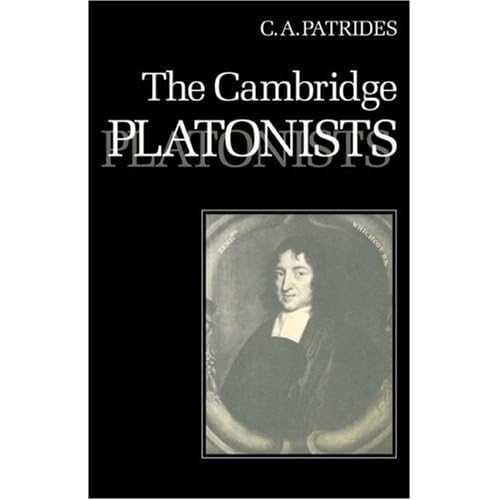
It is in Book Three of his Antidote that he handles the subject of apparitions, witches, the pied piper and various examples of magic and sorcery. Interestingly, in the modern reprint of some extracts of the book in The Cambridge Platonists edited by C. A. Patrides and published by Cambridge Univ. Press in 1969, only the chapter headings of the third book are printed. Obviously, Patrides finds it hard to take this chapter seriously:

'It is however necesarry', writes Patrides in the introduction, 'to remember that even as More was rising to the apex of his philosophical endeavours, he was also falling into belief in spiritualism, occultism, witchcraft. His indulgence in these perversities sets him quite apart from the other Cambridge Platonists, in a manner distressingly reminiscent of Iamblichus' deviation from Neoplatonism through his practice of theurgy. Admittedly More made an effort to explain his uncritical fondness for the occult. He wished to awaken all 'benummed and lethargic Mindes' to an awarenes that 'there are other intelligent Beings besides those that are clad in heavy Earth or Clay'. But he also thought that such an effort was doomed to failure unless one first established the existence of witches. Is not the denial of witches tantamount to a denial of spirits, which is bound to lead to a denial of God? 'No Spirit,' said More, 'no God.' We are reminded of Sir Thomas Browne:

I have ever beleeved, and dow now know, that there are Witches; they that doubt of these, doe not onely deny them, but Spirits; and are obliquely and upon consequence a sort not of Infidels, but Atheists.

More's actual demonstratoin of this thesis is certainly unnerving. In both the entire third book of
An Antidote against Atheism (1653) and throughout The Immortality of the Soul (1659) he introduced whatever might be comprehended under the 'one generall terme of Apparitions', including for example such 'extraordinary effects' as 'speakings', knockings, opening of doores when they were fast shut, sudden lights in the midst of a room floating in the aire, and then passing and vanishing...' Henry More, I fear could not always tell a hawk from a handsaw.' (p. 32)

In any case, considering the aim of Montague Summers: presenting witchcraft as a reality as viewed from his particular religious point of view, one may understand why he was much more interested in these obscurer aspects of More's book than Patrides.
Related Posts Plugin for WordPress, Blogger...