Showing posts with label vampire fiction. Show all posts

Sunday, 22 June 2014

The Gothic Imagination


2014 marks the 250th anniversary of Horace Walpole's The Castle of Otranto, usually celebrated as the first Gothic novel. The British Library will be celebrating the anniversary with an exhibition that opens on October 3 this year: Terror and Wonder: The Gothic Imagination will be the most comprehensive exhibition on the subject in the UK so far:

'Beginning with Horace Walpole’s The Castle of Otranto, this wide-ranging exhibition explores our enduring fascination with the mysterious, the terrifying and the awe-inspiring. It also examines the long shadow the Gothic imagination has cast across film, art, music, fashion, culture and our daily lives.

Gothic literature began as a challenge to the rational certainties of the Enlightenment. By exploring the harsh romance of the medieval past with its castles and abbeys, its wild landscapes and fascination with the supernatural, Gothic writers placed imagination firmly at the heart of their work.

Through over 200 rare exhibits including manuscripts, paintings, film clips and posters, Terror and Wonder explores all aspects of the Gothic world. Iconic works, including Mary Shelley’s
Frankenstein, Bram Stoker’s Dracula, the sinister fairy tales of Angela Carter and the modern horrors of Clive Barker highlight the ways in which contemporary fears have been addressed by successive generations of Gothic writers. Paintings, films and even a vampire-slaying kit add colour and drama to the story.

Terror and Wonder promises to be beautiful, dark, inspiring and haunting. Step into this world, if you dare.'


The British Library web site already contains a theme on the subject, including, of course, a page on Dracula and vampire literature (incidentally, they also have a page on Emily Gerard's The Land beyond the Forest). They have also made a youtube video on the Gothic in which Professor John Bowen discusses Gothic motifs while wandering around Horace Walpole's Strawberry Hill House.

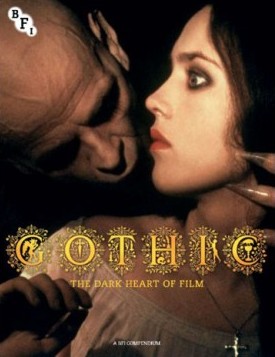
This exhibition follows hot on the heels of a Gothic film festival, Gothic: The Dark Heart of Film, arranged by the British Film Institute (BFI) in 2013. The BFI published a compendium, which is actually a delightful introduction to the world of Gothic film, its landscapes, architecture and inhabitants. In fact, this is probably one of the rare instances you will see me recommending a book on Gothic fiction on this blog, but the thematic approach to the subject as well as the host of experts who have contributed to it makes it a real treat, even for people with a more casual interest in the genre.

So the book includes essays on the relation between Gothic cinema and literature, architecture and art, with Martin Myrone, author of a nice book on Fuseli and contributor to the Tate exhibition on Gothic Nightmares back in 2006, noting that 'the relationship between the canon of Gothic literature of the 'classic' phase (c. 1760-1830) and the visual imagery of the same date is far from simple: the relationship of this early Gothic art and writing to modern cinema no more so.' Still, he later on concedes that 'nonetheless, there are parallels and resonances between Gothic literature of the 'classic' phase and precisely contemporary visual art, and between these and modern cinema,' accompanying his essay with a number of examples of these homologies, of which the most famous is, of course, Fuseli's Nightmare (see the Gothic Nightmares catalogue from Tate for numerous examples).

However many experts have contributed to the conpendium, they still are unable to solve the conundrum of pinning down what the Gothic 'genre' actually is. Myrone states that it is 'now often understood as, by definition, a trans-medial, genre-defying, migratory and polluting phenomenon, we should not expect homologies between Gothic productions in different media and eras need be predictable, explicit or orderly.' The paradox of how relatively easy it is to describe the Gothic 'landscape', while it seems almost impossible to define it, is what makes the compendium - cf. the title's nod to Joseph Conrad - a 'Grand Tour of the Gothic,' as Sir Christopher Frayling says in his foreword.

Sunday, 2 February 2014

In Styria ...

'In Styria ...' Irishman Sheridan Le Fanu set his Carmilla in Styria, part of current day Austria. A current exhibition at the GrazMuseum in Graz in Styria now explores the role of Styria in vampire literature, the development of the media vampire, and what it is all about.

Le Fanu appears to have read an 1836 travel book, Schloss Hainfeld, or a Winter in Lower Styria by Basil Hall, and probably found the description of a pre-industrial and romantic part of Europe an appropriate setting for his vampire novella. By the time Bram Stoker was working on Dracula, he also chose Styria as the home of the vampire count, before deciding to place Count Dracula's castle in Transylvania. The curators of the GrazMuseum believe that at the end of the nineteenth century the construction of a backwards, threatening, and superstitious East Europe had moved further to the Southeast, making Styria a region less likely for a vampire story. Stoker, however, as we know, still retained Styria as a location in his short story Dracula's Guest.

The exhibition, Carmilla, der Vampir und wir (Carmilla, the vampire and us), sees the fictional vampire of Le Fanu and Stoker not only as an extension of the Romantic vampire figure, but rather as a reaction to the industrialization that changed the face of many West European countries throughout the nineteenth century. This is, of course, evident in the conflict between East and West in Dracula, but as industries, media, and the globalization has developed and transforms even remote places, the vampire becomes (in the view of the curators) more a mirror image of the problems that humans face in an everchanging world more and more out of contact with its history and roots. At the same time the vampire of fiction, just like humans, faces his (or her) own existential crisis.

The exhibition at the GrazMuseum appears to explore such themes rather than the vampire's roots in folk beliefs. It consists of five rooms, glimpses of which can be seen in a clip from Austrian TV, from which a few shots are shown below. It is open until Halloween this year, and a publication related to the exhibition will be available later this year.


Saturday, 11 May 2013

TV Fangdom

TV Fangdom, a conference on television vampires, takes place on June 7-8 at the University of Northampton. Although not exactly in the vein of this blog, there are a couple of talks on the programme that could be interesting and fun to listen to, like Zhana Popova from the University of Sofia on Vampires among Housewives and Mothers in Post-totalitarian Bulgaria and Maria Mellins from St Mary's University College on Fangtasia London: The True Blood Franchise and Vampire Lifestyle. More information on the conference website.

According to Dr. Lorna Jowett from the University of Northampton, who teaches horror and vampire fiction, 'The TV Fangdom conference aims to put the university on the map as a location where exciting media research is happening, to encourage research in all areas of television studies. We want to demonstrate to our own students, at all levels, that we have a dynamic research community and environment.'

Thanks to Jordi Ardanuy for mentioning the conference.

Wednesday, 24 April 2013

Kiss of the Butterfly in Print


'An exciting read ... A well-crafted mix of fact and fiction ... fascinating ... I can highly recommend Kiss of the Butterfly,' were parts of my review of James Lyon's novel. Now Kiss of the Butterfly is no longer only available as an e-book, but is now available as an illustrated paperback from e.g. Amazon.


Sunday, 7 April 2013

Die Gräfin der Wölfe


A debut novel by German author Isabella Falk, Die Gräfin der Wölfe concerns the princess Amalia von Falkenstein, a character inspired by the life of the so-called 'vampire princess', Eleonore von Schwarzenberg, who was the subject of a documentary a few years ago. Born in 1682, Amalia von Falkenstein lives in a time of belief in witches and vampires. Although the daughter of a prince, the fates are against her, and in her quest to become more fertile, she begins to drink the milk of wolves. Local superstition, fear and hatred, however, all lead to her being accused of and finally diagnosed as suffering from vampirism.

Die Gräfin der Wölfe is published by Bookshouse as paperback, e-book and app:

'Die lebenslustige und intelligente Prinzessin Amalia von Falkenstein, geboren 1682, lebt in einer Zeit, die geprägt ist von Hexenglauben und aufkommender Vampirhysterie. Die Tochter des Fürsten von Torgelow ist mit einem unglückseligen Makel geschlagen, doch obwohl sie deshalb unter ihrem Stand heiraten muss, ist sie glücklich über ihre Vermählung mit dem Grafen von Falkenstein. Voller Vorfreude auf ihr neues Leben zieht sie mit ihm auf seine Burg. Der Einzug durch das Dorf wirft dunkle Schatten auf ihre junge Liebe. Ein missgestaltetes Kind wird geboren, kaum dass der Graf und Amalia die kleine Gemeinde passiert haben. Die abergläubigen Dörfler geben der neuen Gräfin die Schuld. Amalias Stand wird immer schwerer, und als sie beginnt, die Milch von Wölfen zu trinken, um ihre Fruchtbarkeit zu steigern, ist es um die Loyalität der Dorfbewohner vollends geschehen. Aberglaube, Gehässigkeit, Furcht und mangelndes Mitgefühl reißen Amalia in tiefe Verzweiflung. Schließlich diagnostiziert der langjährige Hofarzt ihres Gemahls auch noch die teuflische Krankheit: Vampirismus!'


Wednesday, 27 March 2013

Ruthweniana

One of a set of 50 trading cards published by
Acid Rain Studios in 1992 titled: Vampires
Throughout History 
(from Giovannini's book)
'IT happened that in the midst of the dissipations attendant upon a London winter, there appeared at the various parties of the leaders of the ton a nobleman, more remarkable for his singularities, than for his rank. He gazed upon the mirth around him, as if he could not participate therein. Apparently, the light laughter of the fair only attracted his attention, that he might by a look quell it, and throw fear into those breasts where thoughtlessness reigned. Those who felt this sensation of awe, could not explain whence it arose: some attributed it to the dead grey eye, which, fixing upon the object's face, did not seem to penetrate, and at one glance to pierce through to the inward workings of the heart; but fell upon the cheek with a leaden ray that weighed upon the skin it could not pass. His peculiarities caused him to be invited to every house; all wished to see him, and those who had been accustomed to violent excitement, and now felt the weight of ennui, were pleased at having something in their presence capable of engaging their attention.'

Lord Ruthven certainly attracted the intention of not only polite society, but the public in general in the 19th century. Initially no doubt aided by the attribution of the tale to the notorious Lord Byron, the vampiric Lord and his effect on particularly women eventually took on a strange life of its own: in print, on the stage and set to music.

Much has been written about Polidori's tale, the sensation that it created and its role in developing the aristocratic vampire into Count Dracula, but I cannot recall seeing a work solely created to the subject of Lord Ruthven, until I picked up Fabio Giovannini's Lord Ruthwen il Vampiro in Italy. Ruthwen, and not Ruthven, it says, because the major part of the book consists of a translation of Charles Nodier's Lord Ruthwen ou Les Vampires published in 1820 and attributed to 'C.B.' (Cyprien Bérard). Giovannini has, however, also included a translation of Polidori's original tale, but what attracted to me the book was the 'Ruthweniana': the information about Lord Ruthwen/Ruthven's adventures in various guises and media, not only in 19th century, but also in films and comics of more recent years. And I certainly was unaware of the 'true' Lord Ruthvens: Patrick Ruthven (c. 1520-1566) and William Ruthven (d. 1541-1584), cf. also Clan Ruthven.

Giavonnini also includes bibliographic information about Polidori's The Vampyre and a colourful series of portraits of thirty of Lord Ruthwen's descendants from Sir Francis Varney and Count Dracula to Edward Cullen and Count Domingo Vrolok. Lord Ruthwen il Vampiro then no doubt will appeal both to those seeking vampire thrills and for the afficionados of the genre. Required, of course, that one can fully understand and enjoy the Italian tongue.

For Nodier's novel in French, check Google books or Florent Montaclair's Le vampire dans la littérature romantique francaise 1820-1868: Textes et documents (2010). English translations of Nodier and other relevant texts should be available in Frank J. Morlock's Lord Ruthven the Vampire (2004).


Monday, 25 March 2013

From Ovid to Fred Vargas

From Ovid to Vargas, the March issue of the French Le Magazine Littéraire minutely traces the metamorphoses of the vampire over more than forty, lavishly illustrated pages of articles by Claude Lecouteux, Jean Marigny, Daniel Sangsue, Jacques Sirgent and a host of other writers and scholars. Mostly concerned with the development of the fictional vampire, there is also room for historical and mythological aspects of the topic. Lecouteux writes about the vampire from Kisiljevo to Sozopol, and Maialen Berasategui outlines the 18th century vampire debate. The issue also contains a theme on Romanian authors and some extracts from Søren Kierkegaard’s recently published journals.

A thorough review of the vampiric contents can be found on vampirisme.com.

Saturday, 16 February 2013

Waking the German Undead


The development of the literary vampire from John William Polidori’s The Vampyre over Varney the Vampire and Carmilla to Bram Stoker’s Dracula is well-known. This development highlights the vampire as an English language phenomenon, but this is, perhaps, due to lack of knowledge of the German language vampire fiction of the nineteenth century. According to Oliver Kotowski, this view probably stems from both Stefan Hock and Montague Summers, the latter claiming that ‘in Germany sensational fiction was long largely influenced by Polidori’, but it is a view that underestimates the number of vampire stories actually written during the nineteenth century.

Kotowski collects a dozen of these stories in his recent anthology Lasst die Toten ruhen: Deutsche Vampirgeschichten aus dem 19. Jahrhundert (Atlantis Verlag, 368 pages, paperback and hardcover at 14.90 € and 19.90 € respectively). Spanning the whole century, the stories are stylistically different, and Kotowski also includes two stories from parts of Eastern Europe that were available in German at the time.

Some texts are relatively well-known, e.g. Hoffmann’s Cyprians Erzählung, while others see their first modern reprint in this volume. Ernst Benjamin Salomo Raupach’s Lasst die Toten ruhen is among the latter, although it has been frequently reprinted in English as Wake Not The Dead where it is usually attributed to Johann Ludwig Tieck. An appendix reprints another story that is popular in English, The Mysterious Stranger, but as the original in German is so far unknown, Kotowski here has translated it from the English short story.

Each story is accompanied by biographical and bibliographical information as well as an afterword on the story and its use of the vampire motif. At the end of the book is a short summary of tendences in the German vampire literature of the nineteenth century and a bibliography.

Sunday, 2 September 2012

Kiss of the Butterfly


‘Something has torn apart the once-proud Yugoslavia with ease and is feasting on it’s life essence.’

In 1991 when the Yugoslav Wars were beginning to take place, Steven Roberts, a student and teaching assistant of Professor Marko Slatina in San Diego, California, is travelling to Serbia on a mysterious ethnography grant. Steven’s scholarship involves studying a large amount of books and archival material on history, folklore and ethnography. Some of it concerns Societas Draconis, the Order of the Dragon, but most of it turns out be about vampires. Studying at the National Library in Belgrade, he e.g. reads of a vampire case on the Dalmatian island of Pasman in 1403 and of vampire investigations in Dubrovnik in the 18th century.

‘The research was tedious, and his eyes grew tired easily because of the poor lighting. Sometimes he felt he could read no more. Gradually, he uncovered small pieces of what increasingly seemed to be a much larger puzzle. Some came from historical documents, while others came from collections of folk tales recorded by ethnographers… Ducic, Novak, Zovko, Klaic, Liepopili, Karadzic … the names blurred together. Everywhere he turned he found Serbian newspaper accounts of people who were arrested and tried for opening up graves and driving stakes through the hearts of suspected vampires. He had particular problems with one 15th century document written in the Glagolithic alphabet, a precursor to Cyrillic that resembled mangled bicycles, trapezoids and triangles. It took him the better part of three days to read a two page document.’

Steven is astounded by the numerous references to vampires, and their similarities. He notes that ‘these vampires were unlike anything he had ever heard of and bore scant resemblance to film versions of Dracula,’ but the amount of material prompts him to write Professor Slatina that: ‘I suspect there might have once been some phenomenon that led to the establishments of these myths. In fact, there are days when I wonder if vampires might actually have once existed.’

Other threats are, however, more imminent than vampires. In the winter of 1991-92, the secret police in Belgrade is naturally interested in an American staying in Belgrade, and when Steven finds some interesting articles by Tihomir Djordevic on vampires, strange things happen. Apart from the well-known article from 1953, Vampir i druga bica u nasem narodnom verovanju i predanju (Vampires and other beings in our folk beliefs and traditions), ‘a veritable catalogue of vampirism, scientifically organized and categorized with instructions’, Steven discovers a rare article titled The Twelve Mighty Vampires in Legend and Fact. He asks the librarian if she can help photocopy it, but the next day the librarian is ill and replaced by another librarian who refuses to let him see the article. As Steven later learns, only 100 copies were printed, and it had been placed on a restricted list prior to publication by the Yugoslavian secret police, UDBA.

Steven, however, asks a bookseller in Sremski Karlovci, south of Novi Sad, to help him get hold of a copy, while travelling with friends to Petrovaradin and Novi Sad. At the Matica Srpska library he finds more information on vampires, in particular in the work of Stefan Novakovic, ‘the scholar who had found the original Flückinger documents about the Austrian Army vampire-hunting missions in Serbia.’ Novakovic had, apparently, found more information concerning the activities of Flückinger and other Austrians. Steven also finds information relating to the subject in the archives at the Fortress in Petrovaradin which leads him and his friends on a guided tour of the underground of that Fortress.

I am not going to disclose more of the exciting plot, but obviously Steven encounters an unexpected world in Serbia. Here evil is not an abstract term: ‘In America, if I were to talk about evil as being real they would laugh me out of the university. Yet everybody I speak with here talks of evil as if it exists and is a palpable presence.’

Source: Wikimedia
And the past and the present are intertwined. The novel sets out with Vlad III, Prince of Wallachia, following the Driva River upstream between Serbia and Bosnia in February 1476, heading to Srebrenica in connection with the Battle of Sabac. In 1991 Srebrenica is again to play a role in history. Vampire folklore, the Order of the Dragon, events in 18th Century Serbia and the conflict on the Balkans in the early 1990’s all become the backdrop of a conflict that transcends centuries.

A conflict that is related to the topic of Steven’s research, vampires that are in many ways very different from those Steven had heard of in California. They are shape-shifters, but typically turn into butterflies or moths, as in the Serbian folklore, the human spirit leaves the body in the form of a butterfly.

Kiss of the Butterfly is certainly an exciting read. The backdrop of Serbia on the brink of war, the minutiae of history, geography and customs, combined with a well-crafted mix of fact in fiction in the findings of Steven’s vampire research makes it a fascinating read as well. I recommend that readers have their smartphone or computer at hand when reading it, because it will prove handy to look up places and things on maps and in dictionaries while following Steven’s exploits. Eventually, you may find inspiration for future reading and travelling.

In short, I can highly recommend James Lyon’s Kiss of the Butterfly.

Kiss of the Butterfly is available as an e-book from Amazon.

Professor Marko Slatina: 'I am interested in real vampires, Balkan vampires, and they existed long before Dracula. The answers to the questions I have posed bear no resemblance to popular imagination. To find your answers you must undertake solid, academic research. You must comb through Balkan folklore, history and ethnography. You must find what the people who actually experienced vampires have to say. Find out how peasants, priests and soldiers fought against these dreaded creatures and what they had to do to vanquish them.'

James M. B. Lyon has over 30 years experience with the Balkans and the lands of former Yugoslavia: Bosnia and Herzegovina, Croatia, Kosovo, Macedonia, Montenegro, Serbia and Slovenia. Although he calls San Diego home, he has lived and studied in Boston, Florida, Germany, the Soviet Union, and England. He has a Ph.D. in Balkan History from UCLA and has lived in the Balkans for more than 18 years, during which time he has been involved in international peacekeeping efforts and Non-Governmental Organizations, and worked as a business consultant. A well-known political analyst, at present, he divides his time between Belgrade, Sarajevo and the Dalmatian coast.

Sunday, 5 August 2012

Archaeology as romanticism and ideology


When I initially read about the uncovering and quick exhibition of the ’vampire skeleton’ in Bulgaria, I was reminded of some of the bog body finds here in Denmark. Public interest in seeing the so-called ‘Grauballe Man’ was so extensive, that the authorities decided to put him on display quickly, and the 19th century ‘Haraldskær Woman’ was romantically identified with Queen Gunhild who according to the Jomsvikinga Saga was drowned in a bog by order of King Harald Bluetooth.

Today we are instead used to archaeologists spending a very long time preserving and studying their finds before they are described in papers and exhibited. And we are, I think, generally suspicious of interpretations that smack too much of romanticism or ideology. Archaeological finds have all too frequently been exploited for political purposes, or ideology and politics have served as a motivational factor intrinsic to the discipline, pre-determining interpretational possibilities and distinguishing between the relevant and the irrelevant.

The relationship between politics and archaeology is the focus of an anthology published by Routledge in 1998: Archaeology Under Fire: Nationalism, politics and heritage in the Eastern Mediterranean and Middle East edited by Lynn Meskell. Chapter 4 is of particular interest here as it concerns Bulgarian Archaeology: ideology, sociopolitics and the exotic. It is written by Douglass W. Bailey, an expert on the later prehistory of South Eastern Europe, author of Balkan Prehistory: Exclusion, Incorporation and Identity (2000) and Professor at San Francisco State University, cf. the video at the end of this post.

Based on his own work in Bulgaria as well as discussions with Bulgarian archaeologists, Bailey not only analyses Bulgarian archaeology and the Western attitude towards it, but suggests ways in which to develop it. Following Todorova’s well-known 1997 book Imagining the Balkans, Bailey notes that not only do Westerners consider Bulgaria and its archaeology exotic, ‘the history of modern Bulgaria is one of auto-exoticism’:

‘Bulgarian auto-exoticism has entailed efforts to create a modern nation-state by illuminating its distance (ethnic, historical, linguistic) from other states as well as to eliminate any internal alternative pockets of cultural or ethnic exoticism (thus the internal campaigns of forced resettlement and name-changing of 'non--Bulgarian' Bulgarians).’

Here I cannot help thinking of the Dracula tourism promoted by Romania which certainly exploits an exotic interest in the country to attract tourists, while at the same time it creates an identity, exemplified by the Crama Dracula restaurant that I recently visited in Barcelona. One should, however, also recall that Vlad Tepes was employed as a national hero by Nicolae Ceauşescu, a historic figure whose personality and deeds was not something distant, but part of a glorious past that was important to consider in modern day Romania. So, obviously the auto-exoticism that Bailey describes is much more than a scheme to attract tourists who cater for the exotic:

'From the West, the discipline [of Bulgarian archaeology] appears to exist solely to glorify the ethos of a magnificent past through a fascination with the art and culture of extinct peoples. From this perspective it is confirmed as a discipline born in the spirit (and the period) of modernism: it seeks to study the primitive in its past and it relegates matters of causal explanation to the epiphenomena of descriptive ideas of cultural progress.

Thus, Bulgarian archaeology itself considers its object of study (i.e. the past) as exotic. In this sense, the more mundane elements of the material record hold little interest: common practice on excavations is to discard coarse-ware pottery without concern or quantification. The emphasis of research remains firmly centred on the most sensational and emotive sectors of the archaeological record (i.e. burials, figurines, metal-work, fortresses and fine-ware pottery). Most surprisingly, perhaps, the tradition of Bulgarian archaeology-as-romanticism has remained in place through the post-1989 period of the region-wide opening of intellectual borders, research resources and collaborative strategies.’

But this archaeology-as-romanticism is not imposed by some extraneous political or ideological factor; it is intrinsic to the discipline, but also to the structure of the academic sciences and the political institutions of Bulgarian society. To Bailey Bulgarian archaeology essentially is itself an ideology.

‘Following M. Todorova, I suggest that Bulgarian archaeology itself is an active socio-politics and ideology: it is not a passive tool of socio-political, nationalist, totalitarian, or other state--level political structures. Bulgarian archaeology's long-established position as a socio-political ideology is one of the conditions which makes it appear exotic to Western eyes.’

This active ideology, however, does not confine itself to (re)creating national histories and ethnic identities, it has a powerful role in a society in which the past arbitrates the present:

‘As an historical subject and thus as active socio-political ideology, Bulgarian archaeology occupies an unrivalled position as justifier and legitimator. In this sense, the past is an arbiter of the present and those who can read the past are arbiters of justice and, as such, possess considerable power. The ideology of the past as arbitration is not limited to the recreation of national histories and prehistories: it drives a social logic through the reality of all elements of daily life. A particularly strong recent manifestation of this logic was the enthusiastic (and in most cases successful) drive by Bulgarian families, in the early 1990s, to reclaim property confiscated by the communists during their forty-five years in power. Property reclamation rested on the simple principle that proof of ownership in the past justified the right to regain ownership in the present. The past arbitrates the present.’


But, if Bulgarian archaeology is in fact an ideology, then its professional practitioners must themselves be considered ideologues:

‘The case that Bulgarian archaeologists are ideologues rests on several important facts. The first is a long-standing link between politicians and members of the scientific and cultural intelligentsia. The second link connects two separate roles which Bulgarian archaeologists play: on the one hand they are scientific field-workers; on the other they are custodians and, as mentioned above, arbiters of the nation's past. These links raise (and suggest answers to) important questions about the power of archaeological data and its interpretation. In turn they raise a debate surrounding the personnel of Bulgarian archaeology, most particularly the question of who is allowed (as opposed to who is qualified) to study the past. Furthermore, it is through an examination of the practitioners of archaeology that one comes to understand the unchanging condition of archaeological interpretation in Bulgaria. Such an understanding is especially enlightening in the absence of either processual or post-modern developments in Bulgarian archaeologies.’

Bailey traces the linkage between science and politics back in time to the creation of the Bulgarian Academy of Sciences (BAN) a century ago in July 1912 as a centralised organisation based on a law formalising the connection between BAN and the government. This centralisation was further reinforced during the Communist era, and today it is still a member institution of BAN that grants permission to carry out field work in Bulgaria. The close link between the government and academia and intelligentsia is reflected in the number of academics and intellectuals who have and still do occupy important political offices, like e.g. the Director of the Bulgarian National Museum of History, Bozhidar Dimitrov.


Bailey however rejects any naïve and condescending depreciation of Bulgarian archaeology as ‘a retarded stage of development in the evolution of archaeological theory,’ as it does not only assume a Western righteousness of method, but also a lack of appreciation and understanding of the background of the contemporary Bulgarian discipline. Whereas the quest of a processual approach to archaeology (aka new archaeology) is for an objectivity separate from politics, the Bulgarian approach to archaeology can by definition not be separated from politics. So explanations do not ideally follow strictly from the given data, but are pre-determined by a centralised ideology: ‘often archaeological research entails little more than recovering more and more data which can be assigned to pre-determined chronological and social stages.’

Bailey discusses ways to ‘de-exoticise’ Bulgarian archaeology, and suggests that Western archaeologists ‘treat colleagues as peers and offer them the respect of critical comment on their work, their methods and the social consequences of their doctrines. To do otherwise is to abrogate any responsibility for the impact which archaeology has on the reality of modern existence in Bulgaria or in any place that archaeology is practised. The time to accept that responsibility is now when, as a discipline, Bulgarian archaeology drifts without proper financial ballast, having been orphaned from a long-exploitative family.’

Now this is, of course, Bailey's analysis, but from what I can gather from reviews and the information I have seen concerning his work, I have found it relevant to write about it here. It supports the notion that Bulgarian archaeology has a tendency to favour more sensational finds, possibly from an intrinsic reasons, but at the same time aiming at attracting not only attention from a wider audience, but also more funding, either directly from the government or indirectly from tourists who are perhaps not interested in the Bulgarian history in general, but who are willing to spend money to see a 'vampire skeleton' or to go on pilgrimage to the site of the (supposed) human remains of John the Baptist.

As for the skeletons themselves, the news stories about the 'vampire skeletons' have not only been imprecise, but have presented us with very little concrete information. For that reason I have so far mainly quoted the news stories instead of trying to discuss something that I feel I have only a vague idea about. But it is obvious that a) Bulgaria has now firmly placed itself as an area of 'vampire interest', and b) the archaeological finds are now to the public part of 'vampire lore'. Whatever that precisely is, but I suppose that films, novels and roleplaying games will be inspired by the Sozopol skeletons. At least, it probably has a little more to do with revenants and vampires than the most recent vampire blockbuster, Abraham Lincoln: Vampire Hunter.

Monday, 9 July 2012

The new vampires


However popular zombies - or rather the zombies of cinema and comic books - have become over the past years, what with e.g. The Walking Dead, I sincerely doubt that their appeal will ever replace that of vampires. As zombies usually behave like brainless automata, who would ever want to become a zombie, whereas it appears that many people find the undead life of the (fictional) vampire intriguing and enticing.

Photo taken from Season Four of True Blood.

Wednesday, 6 June 2012

Bringing the vampire back home...

'And that was how it was throughout Transylvania and Hungary and Bulgaria, and through all those countries where the peasants know that the living dead walk, and the legends of the vampires abound. In every village where we did encounter the vampire, it was the same.

"A mindless corpse?" the boy asked.

"Always," said the vampire. "When we found these creatures at all. I remember a handful at most. Sometimes we only watched them from a distance, all too familiar with their wagging, bovine heads, their haggard shoulders, their rotted, ragged clothing. In one hamlet it was a woman, only dead for perhaps a few months; the villagers had glimpsed her and knew her by name. It was she who gave us the only hope we were to experience after the monster in Transylvania, and that hope came to nothing. She fled from us through the forest and we ran after her, reaching out for her long black hair. Her white burial gown was soaked with dried blood, her fingers caked with the dirt of the grave. And her eyes ... they were mindless, empty, two pools that reflected the moon. No secrets, no truths, only despair."'

Anne Rice let her vampires meet 'the European vampire, the creature of the Old World,' only to find that it was a mindless corpse, devoid of the qualities that characterized her vampires from New Orleans, no doubt in particular those romantic qualities that has made an incredible number of readers gravitate to her Interview with the Vampire since its publication in 1976. Obviously, the village vampire was not an enticing subject, whereas more or less aristocratic and artistic anti-heroes and stories of alternate races whetted the appetite of readers, leading us on to the vampires of Twilight, all but annulling the essential characteristics of the vampire.

Popular fiction, however, has always had a fancy for adding some historical ingredients, and the supposed 'vampire' skeleton found in Venice has sparked an interest in exploring that connection. As mentioned previously, an episode of the Dr. Who series, Vampires of Venice, was set there, and I recently had opportunity to watch it. Unfortunately, it is strictly for kids only, providing nothing of interest to anyone interested in vampires - apart from the setting of a vampire story (ahem, they are actually aliens) in Venice (something that incidentally was also the case of Nosferatu a Venezia, sort of a sequel to Werner Herzog's Nosferatu).

The Venice connection has also inspired James Becker to write a riveting novel, The Nosferatu Scroll, the fourth in a series about British police detective Chris Bronson and his wife, the archaeologist Angelia Lewis. The novel combines vampiric skeletons in Venice with the notions behind the Vampir Prinzessin documentary, but ultimately, the story is simply an exciting horror and crime novel, not very dissimilar to a mix of Fred Vargas and Dan Brown, providing no particular insights into vampire history. It contains an author's note on vampires and the inspiration for the novel, including a photo of the brick in mouth skull from the Nuovo Lazzaretto. I am, however, sure that readers will be intrigued by the many locations in Venice that are visited in the novel, like the island of Poveglia. Certainly suggestions for thanatourism, if someone has an inclination for that.

The Vampyrus Serviensis is explored in a handful of novels. I have recently reviewed Un lieu incertain by Fred Vargas and Fear and Servant by Mirjana Novakovic, but the same subject has inspired Kinder des Judas by Markus Heitz, which includes historical persons like Glaser and Flückinger, and Totenbraut by Nina Blazon which is set in another part of Serbia but at the time of the famous Serbian vampire cases in Kisiljevo and Medvedja. Both authors, like James Becker, include some notes on their historical inspiration at the end of their novels, but Blazon has added some more information on her web site, and Heitz has published a popular book on vampires.

Whether we can in fact speak of a new trend in vampire fiction is, I think, hard to say, but perhaps more novels will be inspired by archaeological discoveries and the actual historical information we have, bringing the fiction vampire somewhat closer to its roots? That would require a bit of work on behalf of the novelists, but then Markus Heitz writes that he had so much fun out of creating a vampire novel in a historical setting that he might revisit the theme in the future.

I myself have no aspirations as a fictional author, although I once suggested how a novel à la Dan Brown could include some clues to vampires in Vienna, but I think that another source of inspiration for future vampire fiction could be travelogues, e.g. like those by Mary Edith Durham, a British woman travelling around the Balkans in the early 20th century. Like earlier travellers through the region, she learned about the local customs and beliefs, including those concerning vampires, and she wrote a number of books and articles about her experiences. I am sure that also here is a good deal of ideas to inspire novelists, bringing 'the European vampire, the creature of the Old World' further back home.

Sunday, 15 April 2012

We had thought that vampires were extinct

’… One of the most curious legacies ever bequeathed to anybody is perhaps that of £1000 left by the late Mrs Olivia Flint, of Pittsburg, to her doctor: Mrs Flint was very fond of novel reading, and, although very ill, began to read Bram Stoker’s thrilling romance, ”Dracula.” So interested did the dying woman become in it, that when she had read a chapter or two, she turned to her nurse, and, asking for pen and ink, wrote a few words to the effect that if Dr Allardyce could keep her alive long enough for her to finish the tale he was to receive a legacy of £1000. Mrs Flint lived for several hours after the last words had been read.’

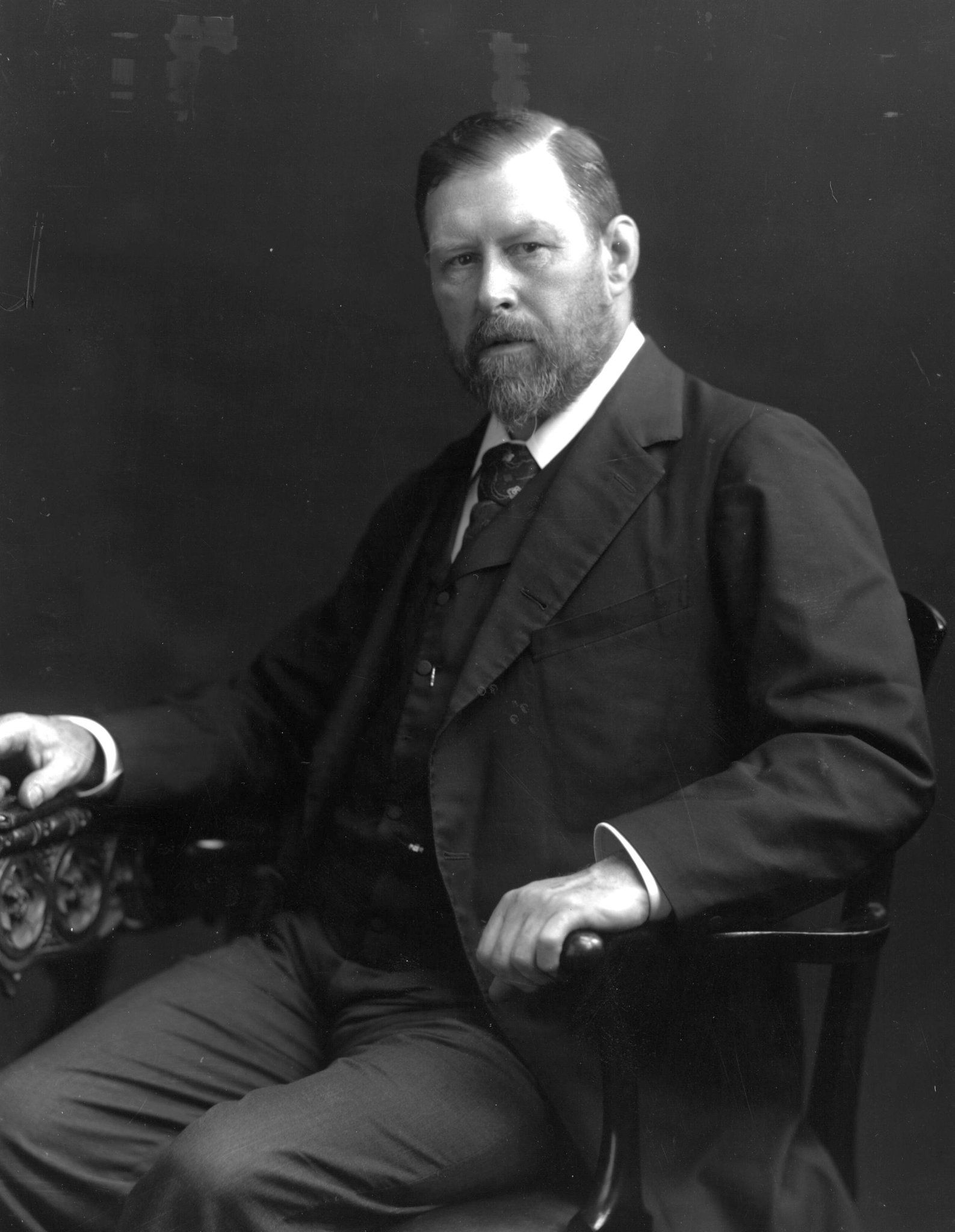
This, an excerpt from the Marlborough Express Nov 2 1909, is one of the more curious examples of the early reception of Bram Stoker’s Dracula that have now been collected in a slim volume, Bram Stoker’s Dracula: The Critical Feast. An annotated reference of early reviews and reactions, 1897-1913, compiled and annotated, with an introduction, by John Edgar Browning (Apocryphile Press, 179 pages, $18.95).

Aiming at both dispelling the misconception that Dracula received a mixing critical reception and providing literary scholars and the public with the documentation, Browning compiles 91 examples of reviews and letters, along with book covers and ads, from the English languaged part of the world where most of the initial editions were published. Only two translations appeared in Stoker’s lifetime, and a ‘bibliographical afterword’ by J. Gordon Melton presents of a list of non-English editions of Dracula.

The tale of a ‘human vampire’, as many reviewers call Count Dracula, is generally favourably received, and apparently made the blood of many critics curl. ‘We had thought that vampires were extinct,’ notes the Saturday Review of Politics, Literature, Science and Art, ‘but Mr. Bram Stoker has set himself to prove to us the contrary. Or rather he has recreated them with considerable ingenuity and a distinct gift for story-writing of the blood-curdling order.’ ‘There are a hundred nightmares in “Dracula,” and each is more uncanny than the last,’ writes St. James’ Gazette, while a reviewer in The Daily Mail is reminded of the author of a number of gothic novels: ‘It is said of Mrs. Radcliffe that, when writing her now almost forgotten romances, she shut herself up in absolute seclusion, and fed upon raw beef, in order to give her work the desired atmosphere of gloom, tragedy and terror. If one had no assurance to the contrary, one might well suppose that a similar method and regimen had been adopted by Mr. Bram Stoker while writing his new novel Dracula.’


Some critics found that the transition of the vampire from the more gothic Transylvanian setting to contemporary London did not work so well.‘Vampires need a Transylvanian background to be convincing,’ wrote The Academy: A Weekly Review of Literature, Science, and Art, adding: ‘The witches in “Macbeth” would not be effective in Oxford-Street.’ Still, there was no doubt that Dracula’s castle is not a place to visit, in the words of The Glasgow Herald: ‘Henceforth we shall wreathe ourselves in garlic when opportunity offers, and firmly decline all invitations to visit out-of-the-way clients in castles in the South-East of Europe. Dracula is a first rate book of adventure.’

What will strike modern day readers as odd, is that some critics saw Dracula as a werewolf book. ‘Mr. Bram Stoker, in his remarkable novel “Dracula”, has gone to the old legends of the were-wolf for the inspiration of his story,’ writes The Speaker, calling the novel ‘the first introduction of the were-wolf to English soil.’ Similarly, The Daily Telegraph finds that Bram Stoker illustrates and modernises ‘a revival of a mediaeval superstition, the old legend of the “were-wolf”,’ and traces this ‘old legend’ and its literature more closely, as the critic asks: ‘What has Mr. Bram Stoker been reading?’

Indeed, what has Stoker been reading? Today, we tend to forget how small the existing ‘canon’ of vampire literature in the English language was when Stoker wrote the novel. In fact, the deluge of books on the subject only dates back to the 1960’s or 1970’s, and the 'classics' by Ernest Jones, Dudley Wright and Montague Summers were all published after Stoker’s death. So in the 1890’s, one might have found the translations of Dom Calmet, Herbert Mayo’s letters, and a bit here and there, including the Rev. Sabine Baring-Gould’s The Book of Werewolves, Being an Account of a Terrible Superstition from 1865, which is in fact mentioned by the reviewers of both The Daily Telegraph and The Stage, the latter apparently finding some pleasure in describing the horrors of the novel:

‘Those who know the Rev. S. Baring Gould’s little volume on the Were-Wolf, a theme also touched on here and there by Kipling, may possibly not be repelled by the grisly details of two beautiful and virtuous women having the veins in their throats sucked by the red lips, and lacerated by the gleaming white teeth of this centuries-old Transylvanian warrior and statesman, who often appears as a gaunt wolf and a huge bat.’

In his notes, Browning writes that the convention of seeing vampires transform into wolves ‘was to fin de siècle readers relatively unfamiliar – practically an innovation at the hands of Stoker.’ His other vampiric innovations are humourously commented on by Longman’s Magazine, when reviewing an inexpensive reissue in 1901: ‘The rules of vampirizing, as indicated by Mr. Stoker, are too numerous and too elaborate. One does not see why the leading vampire, Count Dracula, could not bolt out of the box where was finally run to earth by a solicitor named Jonathan. If he could fly about as a bat, why did he crawl down walls head foremost? The rules of the game of Vampire ought to be printed in appendix: at present the pastime is as difficult as Bridge.’ The reviewer then lays down eight chief rules like e.g. this sixth rule: ‘No vampire can vamp a person protected by garlic.’


Fortunately, an interview with Stoker himself was published in The British Weekly, allowing him to comment on both his sources and the vampire belief itself. Asked, ‘Is there any historical basis for the legend?’ he answers:

‘It rested, I imagine, on some such case as this. A person may have fallen into a death-like trance and been buried before the time. Afterwards the body may have been dug up and found alive, and from this a horror seized upon the people, and in their ignorance they imagined that a vampire was about. The more hysterical, through excess of fear, might themselves fall into trances in the same way; and so the story grew that one vampire might enslave many others and make them like himself. Even in the single villages it was believed that there might be many such creatures. When once the panic seized the population, their only thought was to escape.’

He apparently thought that the vampire belief was particularly prevalent in certain parts of Styria (where he originally set Dracula), and added, that ‘the legend is common to many countries, to China, Iceland, Germany, Saxony, Turkey, the Cersonese, Russia, Poland, Italy, France, and England, besides all the Tartar communities.’ Two sources are mentioned in the interview: Baring-Gould’s book and Emily Gerard’s Essays on Roumanian Superstitions.

Interestingly, not many reviewers go into detail regarding the subject of vampires. The National Observer, and British Review of Politics, Economics, Literature, Science, and Art, briefly mentions that ‘More awful even than the ghoul of the Arabian Nights is the Slavonic superstition of the human vampire, which, dead to all intent and purposes during the day, is supposed to prowl around by night and gorge itself with the blood of living man,’ adding that ‘this fearful legend, which flourished in Eastern Europe a century ago, and still finds credence among the ignorant.’ The Liverpool Mercury claims that it is ‘An old Eastern superstition, still having weight in Hungary.’

On the whole, the only reviewer to deal with ‘vampiredom’ in more detail is actually the one writing for the Australian Argus in 1897, who states that ‘Vampires – the “living dead,” whose corpses cannot decay, but who have the power of rising from their graves at night to batten upon the blood of human beings – are the Vroucolakas of the Greeks,' and then goes on to mention that 'They have been treated of by an old German writer, Michael Raufft (sic!), in his learned book “De Masticatione Mortuorum in Tumulis,” by the Frenchman Calmet, and by many another grave-faced sifter of mediæval superstitions,' before supplying more information about 'these unpleasant noctural prowlers.'

Upon Stoker’s death one hundred years ago on April 20 1912 , The Outlook found reason to note that ‘The lamented death of the author should direct fresh attention to the most imaginative creation of his pen. For weird force and picturesque horror Dracula deserves to rank with the classics of morbidity.’

For that reason, as well as for the novel's role in keeping ‘vampiredom’ alive and well in modern popular culture, the centenary of Stoker's death is good reason to read or re-acquaint oneself with the novel. For those interested in getting a better understanding of the literary reception of this, the single most important piece of vampire fiction, John Edgar Browning’s reference book is highly recommended.

Finally, a few words regarding the bibliography of translations: It is quite a daunting task to compile a complete and faultless bibliography of this task, and judging by the Scandinavian language editions mentioned, it is not a completely or a fully correct list. The Danish translations are all listed under the title ‘Drakula,’ but have actually all been titled Dracula, and I doubt that the list of adaptations is complete. The list of Swedish editions is, unfortunately, incomplete, and it is not correct that the first English translation of the preface to the Icelandic translation was published in 1993.

Sometime in the mid-Eighties, I was in contact with Richard Dalby, author of the first Stoker bibliography (published by the aptly named Dracula Press in 1983), and supplied him with information on the translation and copies of the preface. He subsequently had it translated and published by Guild Publishing in 1986 in a one-volume edition of both Dracula and The Lair of the White Worm, this also being the first time the latter novel was reprinted in its original length, as it had been absolutely butchered in all previous reprints.

Wednesday, 14 March 2012

Fear and Servant

During the winter of 1736-37, the Devil travelled to Belgrade, Serbia, with his Serbian servant, Novak, to investigate rumours about vampires. At the same time, an Austrian commission was on their way to Belgrade to find out if vampires really exist.

However, the vampires they encounter - if they can in fact be considered vampires - are not exactly what one might expect, neither from the actual vampire cases of the period or from modern Western vampire fiction.

In fact, the whole story is as far from an attempt at recreating the period as it is a piece of ordinary vampire fiction. Rather, Mirjana Novakovic' Fear and Servant is a literary fantasy mixing history with literature, no doubt inspired by Mikhail Bulgakov's The Master & Margarita and Milovan Glisic's novel about the vampire Sava Savanovic, Posle devedeset godina from 1880. In the mix are numerous references to e.g. Melville, Shakespeare, Baum, and even the Rolling Stones (whose Sympathy for the Devil itself is perhaps inspired by Bulgakov's novel about the Devil visiting the Soviet Union).

The story is narrated by the Devil using the nom de plume Otto von Hausburg, and Princess Maria Augusta of Thurn and Taxis, the wife of Carl Alexander, Duke of Württemberg, who played his role in distributing the information about the investigation of purported vampirism in Medvedja in Serbia (cf. Hamberger, Mortuus non mordet, p. 111).

A reader in Nis in Serbia recently kindly mentioned that the novel, originally published in 2000, had been translated into English and published by Geopoetika in 2009 in a series of Serbian Prose in Translation. Obviously, Fear and Servant is not your typical vampire novel, nor is it a novel that provides much information of use for vampire research, but it is a very enjoyable and well-written novel, and as a literary experience certainly far more rewarding spending time on than Fred Vargas's Un lieu incertain.

The novel has been reprinted several times in Serbia, was awarded the Isidora Sekulic Award and a play based on it was performed in 2003 at the Kalemegdan Fortress in Belgrade where parts of the action takes place. As mentioned in an earlier post, the novel was translated into French in 2006.


Sunday, 4 March 2012

'Vampire, see Serbia'

'Vampire, see Serbia', is what you find if you look up the word Vampyr in Dr. Christian Wilhelm Hufeland's encyclopedia on apparent death, Der Scheintod, oder Sammlung der wichtigsten Thatsachen und Bemerckungen darüber, from 1808.

The entry on Serbia, which incidentally follows an entry on the apparently dead eating themselves (das Selbstverzehren der Scheintodten: 'Man hat Beispiele von Todten, welche im Sarge sich selbst zu verzehren angefangen haben sollen...'), actually carries the title: 'Servien's Scheintodten-Ereignisse', the incidents involving apparently dead persons in Serbia. The entry concerns the incidents in Medvedja in the winter of 1731-2, although here erroneously dated 1733. Hufeland states that Emperor Charles VI asked Dr. Beyer to write an analysis of the matter, which however has not been published, but was probably suppressed by the Church ('Dieses ist aber, so sehr das Publicum auch darauf wartete, niemals öffentlich bekannt gemacht und warscheinlich durch den Kaiserlichen Beichtsvater, nach dessen Sinne es nicht ausgefallen seyn mochte, unterdrückt worden').

Hufeland finds that the vampires were in fact persons who became afflicted with some local disease and were presumed dead, and consequently  prematurely buried. Well, all things considered, it is not exactly a satisfactory theory, but that is the reason why Serbia and vampires are included in Hufeland's book.

But Hufeland is not the only one to identify Serbia with vampirism, and vice versa. In a recent book, Vampire Nation: Violence as Cultural Imaginary (Duke University Press, 2011), Professor of Slavic and Comparative Literature at the University of Winsconsin, Tomislav Z. Longinovic, writes:

'Until the Bulldozer Revolution in October 2000, global media networks and the public relations industry profiled 'the serbs' as avatars of post-communist violence in the Balkans. Despite the burden of all too real war crimes committed during the 1990s in the name of collective survival of their own territorial identity, global media excessively emphasized 'the serbs' as the incarnation of an exemplary and exceptional form of evil not proper to Europe, a vision that gradually excluded this imaginary assemblage from the sphere of civilization. Despite the fact that 'the serbs' belong geographically to the very core of Europe, symbolically and territorially, their borderline position was constructed as a projection of the Eurocentric fantasy about a cruel Orient in Europe.' (p. 5-6)

'The perception of pathological fixation of Eastern Europe in general and of the Balkans in particular, on the "old centuries" voiced by Stoker at the end of the nineteenth century through the persona of Dracula* is symptomatic of a cultural vision based on an interesting intersection of local and global discourses of violence. The past and its bloody memories define a refusal to yield to modernity imputed to the countries of the Balkan region, whose resistance to civilization and its laws are naturalized as inherently evil to oppose the advances of the Enlightenment and its technologies of mediation. The narrative projected onto the vampire as a beast within, enslaved to the undying, bloody past, serves as a national fetish underlying the repressed origins of Europe proper.

A small nation such as 'the serbs' is by definition led by a mysterious, degenerate leader who is ready to sacrifice others and commit bloodshed only to prolong his political power. During the 1990s, this vision of the other Europe reinforced an imaginary relationship that extended the vampire metaphor from the realm of the Gothic period's horror genre to the mundane practice of global politics, strategically deploying violence to advance civilization and the rule of law in the Wild East of Europe. The signifier that will forever sink into historical oblivion - Yugoslavia, the proper name of the country that was erased to deny the striving of culturally heterogeneous populations to live in a common state - has been assaulted by differentialist logic of the "clash of civilization" to enforce local insecurity by bringing about a collective return to the ideology of the vampire nation.

Stoker's Dracula, which founded the literary discourse of the Gothic imaginary, appears as the incarnation of those old centuries that refuse to fade away in the face of modernizing Europe. This imaginary, sparked by a belated Romantic mourning for the glory of the past boundaries of Europe, uses violence with the automatism of the beast who has no other choice but to feed itself on the blood of others. This hungry being is always engendered in zones of intense cultural and linguistic hybridization and simultaneously is imbued with the pathos of a race submerged in the narratives of its own past and viewed as a herald of a cruel modernity at hand.

Many "national" histories written and taught in the Balkans and in the rest of "Oriental" Europe are saturated with a celebration of violence that is monumentalized as just revenge and sacrifice offered to the glory of cultural life and survival. Small nationalisms contain this imaginary economy; they appear colorful but ostensibly irrational, steeped in gore despite enlightened intentions and dominated by discourses of masculine injury that claim the victim's right to feed on the blood of others as the only way to sustain survival.' (p. 19-20)


'The discourse of stolen blood reveals how the imaginary lens crafted by Stoker persists in the West as a cultural filter that defines alterity: Eastern Europe is a location where sex and violence know no limits. The image produced in British popular culture at the end of the nineteenth century has traveled to the end of the twentieth century to establish political discourses that the U.S.-led West sustains when it deals with new yet old types of revenant nationalism: the specter of 'the serbs' as the global vampires who deserve a well-guided stake of democracy.

This Gothic vision defines the boundaries of proper identity and its civilizatoinal other within Europe, a location where bad but sharp teeth, carnage, and fornication abound. The other Europe is an extension of the notorious count's ruined castle, where excessive passions and "old centuries" conspire to halt the progress and enlightenment proper only to the superior technology of the West. One of the most symptomatic returns of this Gothic vision is the mediated emergence of 'the serbs' as a phantasm of a vampire community governed by an excess of malignant historical imagination that is alien to the values of Europe and the "civilized world."

Firmly rooted in political and cultural ideals inherited from the best European traditions of nationalism and liberalism, 'the serbs' share military rationality and territorial logic of the nation-state with Europe proper. In fact, the Yugoslav tragedies of the 1990s are a legacy of the violence that formed the foundation of modern Europe: the political and cultural ideals made flesh and blood in the uncanny law binding the nation-state. The temporal disjunction between the "other" Europe steeped in old centuries of its historical imagination and the hypermodern amnesia of the U.S.-led West is at the root of this interpellated subjectivity structuring the Gothic emergence of 'the serbs'.' (p. 10)

Europe according to USA, from Mapping Stereortypes

'The extraordinary success of Twilight among youth in the United States appears as a global symptom of chronic hunger for attention from others and a craving for freedom that, paradoxically, shrinks under an invisible yet omnipresent force based on consumption and concealed forms of violence inherent in the developed modes of the current economy. Images of vampires have persisted in popular culture as a remnant of that undying demand for the extraordinary established by the Romantics and reveal, with symptomatic ambiguity, ever more powerful yet abstinent revenants who can control their craving for the blood of the ones they love. The disgusting, corpse-like appearance of the vampire has been sublimated into beauty in Goth subcultures, lending esthetic currency to the love of death that is overcome by the ever increasing levels of consumption demanded from ordinary humans.

In fact, the global media gaze that has discovered the cradle of European violence among 'the serbs' continues to act as a stake to put other vampire nations out for good. The skill of the vampire slayer equals that of the exterminator, acting with rational violence against the irrational one of the nations deemed below civilization's dividing line. The imaginary of minor and peripheral cultures of southeastern Europe has been interpellated by the political discourse based on that gaze to produce a variety of strategies of resistance to both domestic and foreign attempts at appropriation. While 'the serbs' face up to the unflattering task of confronting the real crimes committed in their name, the sublimation of the vampire on the global entertainment scene points to the displacement of Balkan topoi to account for the return of imperial desire to its rightful source.' (p. 186-7)

'In the global landscape where the force of capital naturalizes its existence to appear as the omnipotent and invisible source of death-in-life, the vampire perhaps remains the only true face of a being lost in the speculations of Western metaphysics. Its imaginary journey from the undead creature of Balkan folklore to the antihero of Hollywood blockbusters tells the story of our post-human future, shared by the most peripheral of European cultures and the political and economic centers of the West, to account for the increasing acceptance of humanity's transformation since mass ideologies of emancipation failed in 1989. The status of the vampire in popular culture suggests that the naturalized state of predation inherent in the global order of consumption marks a transition of humanity to a new stage of development in which it gradually accepts and covertly celebrates the violence whose origins remain hidden by the ruins of Dracula's castle. The notion of the nation as an effect of bourgeois liberalism that originated in the philosophy of the Enlightenment has given birth to a vampire whose current transformations manifest a dawn of a different subjectivity, detaching itself from the nation to enter the global stage of free play, and offer a model identification that transcends humanism.

The vampire as a theoretical hybrid between political science and psychoanalysis offers a kind of lay philosophy that transcends both the model of the machine and that of the animal commonly utilized by theoreticians of the post-human. The power of this hybrid to incarnate the subjectivity to come builds on the conventions that, in previous centuries, posited the vampire as the opponent of the common human subject. The precognition inherent in the imaginary flights of popular culture speaks the truth about a political unconscious that has found its incarnation in both the phantasm of 'the serbs' as a vampire nation and the vampire as a new model for the global order of being - an order that is all too (post)human.' (p. 188-9)

I have only dipped into this complex, and I think it fair to say: far from easy to read book, so in the words of another blogger I will be cautious when commenting on Vampire Nation: 'I will let others more knowledgeable than I opine on how successfully Longinović applies critical theory to historical analysis. In any case his book makes a provocative addition to the literature on the Yugoslav wars.'

The popular and globalized vampire of Western fiction is, of course, probably as popular in Serbia as in so many other parts of the world, so there is even a Vampires Serbia magazine containing photos of the stars from Twilight and other vampire films and TV series. We love Twilight, we love True Blood, and we love The Vampire Diaries in Serbia as well.

*) Longinovic refers to Jonathan Harker's diary in Stoker's Dracula where Harker while in Dracula's castle writes: 'It is the nineteenth century up-to-date with a vengeance. And yet, unless my senses deceive me, the old centuries had, and have powers of their own which mere "modernity" cannot kill.'
Related Posts Plugin for WordPress, Blogger...