 The Fantastic Vampire: Studies in the Children of the Night (Greenwood Press, 1997) is a pretty expensive book that I have had the opportunity to borrow. It has nothing of particular value for the historical study of Magia Posthuma, as it is mainly about Bram Stoker and various themes related to the vampire in film, fiction and popular culture. However, I found Elizabeth Miller's discussion of Stoker's 1901 abridged edition of Dracula interesting, and there are a few other papers on Stoker that might be worth reading. The editor, James Craig Holte, writes about Christopher Lee and the Hammer Dracula films, and Raymond T. McNally reviews a few classic examples of 'Irish gothic'. The table of contents and an excerpt are available at amazon.
Sunday, 15 July 2007
The Fantastic Vampire
The Fantastic Vampire: Studies in the Children of the Night (Greenwood Press, 1997) is a pretty expensive book that I have had the opportunity to borrow. It has nothing of particular value for the historical study of Magia Posthuma, as it is mainly about Bram Stoker and various themes related to the vampire in film, fiction and popular culture. However, I found Elizabeth Miller's discussion of Stoker's 1901 abridged edition of Dracula interesting, and there are a few other papers on Stoker that might be worth reading. The editor, James Craig Holte, writes about Christopher Lee and the Hammer Dracula films, and Raymond T. McNally reviews a few classic examples of 'Irish gothic'. The table of contents and an excerpt are available at amazon.

Tuesday, 10 July 2007
Abhandlung des Daseyns der Gespenster
I recently referred to Mayer's Abhandlung des Daseyns der Gespenster, nebst einem Anhange vom Vampyrismus published in Augsburg in 1768, because it contains a German translation of van Swieten's commentaries on vampirism and Magia Posthuma. Interestingly, two reviews of this book can be found online in the digital version of Allgemeine deutsche Bibliotek as part of the online Schriften der Erklärung at the web site of the
Universitätsbibliothek Bielefeld. The reviews are from 1770 and 1771 and have very little to say about van Swieten's commentaries, but are worth reading for their general thoughts on the subjects of "Gespenster".
Universitätsbibliothek Bielefeld. The reviews are from 1770 and 1771 and have very little to say about van Swieten's commentaries, but are worth reading for their general thoughts on the subjects of "Gespenster".
Monday, 9 July 2007
An der Türckischen Granitz III
So how close was Medvedja actually to the "Granitz"? My own best source for material on the geography of Serbia as occupied by the Habsburgs is the old Serbien unter der kaiserlichen Regierung 1717-1739 by Langer published in Mittheilungen der K. K. Kriegs-Archivs Neue Folge III. Band in 1889. For some reason most of the books I have been able to get hold of concerning the "Militärgrenze" contain little material on the Serbian area, so for many purposes I have had to content myself with the information in Langer's paper. Fortunately, it is very interesting, and the appendices are very useful for establishing the whereabouts of the places mentioned in some of the old vampire related documents, including "Kisilova" and "Medved".
However, a map of the area can be found on German Wikipedia in an entry concerning the treaty of Passarowitz (Požarevac). Below I have linked to the map, which is from a 1900 German historical atlas, and you will notice that in this map the Turkish border is drawn somewhat south of the Zapadna Morava river, where Medvedja is situated.

As a curiosity here is an extract from a ca. 1720 map of Serbia and the surrounding areas attributed to J. B. Homann which is currently for sale on ebay at the price of € 320.

However, a map of the area can be found on German Wikipedia in an entry concerning the treaty of Passarowitz (Požarevac). Below I have linked to the map, which is from a 1900 German historical atlas, and you will notice that in this map the Turkish border is drawn somewhat south of the Zapadna Morava river, where Medvedja is situated.

As a curiosity here is an extract from a ca. 1720 map of Serbia and the surrounding areas attributed to J. B. Homann which is currently for sale on ebay at the price of € 320.

Previous posts on the subject: Granitz I & Granitz II.
The Phantom World

Apropos antiquarian book sellers, a first edition of the American edition of Calmet's The Phantom World translated by Henry Christmas is currently for sale on ebay to US citizens. It looks very nice, and the bidding starts at $ 99. The paperback reprint from Wordsworth is of course available at a much lower price, currently from £ 5.00.
Sunday, 8 July 2007
An der Türckischen Granitz II
Curiously, I stumbled upon this blog called Languagehat that quotes one of my posts for a discussion of the etymology of the German word "Grenze". It is in fact pretty interesting, so go and read it. Languagehat is interested in the location of Medvedja (Medveđa), and it should be pretty easy to find on a reasonably good map of Serbia, as it is located along the Zapadna Morava between Kraljevo and Kruševac, very close to Velika Drenova and Trstenik. Below is a map from Wikipedia of the area. There are two other places called Medvedja which are sometimes confused with the one relevant to the history of vampires!

Van Swieten's Vampyrismus (almost) on line

The Italian translation of Gerard van Swieten's notes on vampires have recently been made available on books.google.com. Unfortunately, access to the book is restricted, which means that you can search in the text but only view it in 'snippet view'. As yet there is no easy way to buy access to the text, so you have to find a copy that you can buy, if you need to study the text.

The 18th century German translation is unfortunately only available from the few libraries that own a copy of the original book which contains van Swieten's text as an appendix.
For the benefit of those unfamiliar with it, below I present a scan of the front page of the 1768 German translation. In fact, wealthy people can currently obtain a copy of the original book, Andreas Ulrich Mayer's Abhandlung des Daseyns der Gespenster nebst einem Anhange vom Vampirismus for the sum of € 1.250,00 at the Italian antiquarian book seller Libriantichi.it!

Mozart related trivia
Oh well, June passed by quickly and there were so many other things on my mind, that I didn't get around to writing much in this blog. Perhaps there will be time for a few more entries this month? Certainly, I keep searching for new material and studying various sources for information on the Magia Posthuma, so the lack of new posts only reflects that I have had to concentrate on other matters than writing Magia Posthuma posts.
Anyway, here is a bit of trivia that can relate Wolfgang Amadeus Mozart (1756-1791) to persons who are somehow relevant to the history of Magia Posthuma.
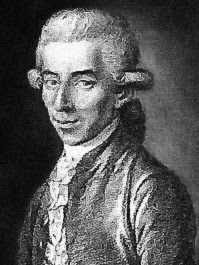
Viewers of Amadeus may have noticed a sensible character at the court of Emperor Joseph II called Baron van Swieten who is played by Jonathan Moore in the film version. This van Swieten was the son of Gerard van Swieten whose name should be well known to readers of this blog because he played a key role in establishing the Austrian law against Magia Posthuma put forth by Maria Theresa. Joseph II himself was, of course, the son of Maria Theresa.
 The baron van Swieten was a patron of many composers in Vienna of that day, including Haydn and Mozart. His full name was Gottfried van Swieten, and he lived from 1733 to 1803. His name and legacy is commemorated today by e.g. The Van Swieten Society. The photo above is from Amadeus with van Swieten in the background and F. Murray Abraham as Salieri in the foreground.
 Another link between Magia Posthuma and Mozart is Ignaz von Born (1742-1791) who was an Austrian mineralogist. He traveled through Banat, parts of present day south western Romania, researching mining and mineralogy, and wrote letters about his findings in 1770. The letters were published in 1774 as Briefe über Mineralogische Gegenstände. Some of the letters describe the habits and culture of the people living in the area. Here von Born includes a short description of burial practices carried out to prevent the dead from returning as vampires:
"Man scharrt ihn [den Todten] ein, setzt ihm ein Kreutz und einen großen Stein zum Kopfe, damit er kein Blutsäuger (Vampyr) werde, gießet Wein und räuchert um das Grab, um die Unholden und Zauberer zu vertreiben, und dann geht man nach Hause." (They scratch the corpse and put a cross on him and a big stone on his head to prevent him from becoming a bloodsucker (vampire), pour wine and burn incense around the grave to drive away witches and sorcerers, and then they go home.)
Like Mozart, von Born was a freemason and is usually considered to be the inspiration for the character Sarastro in Mozart's famous opera The Magic Flute.
On his travels Mozart also visited places that play a role in the history of the Magia Posthuma, e.g. Olomouc (Olmütz), where 11 year old Mozart got infected with smallpox in 1767, just 12 years after Viennese court physicians investigated a case of Magia Posthuma in the vicinity. It was also at Olomouc that Karl Ferdinand von Schertz published his Magia Posthuma.
So Mozart obviously lived an age when vampires were not quite a terror from the past. In fact, it seems that an author of popular fiction even has imagined Mozart as a vampire. In I, Vampire by Michael Romkey, not only Mozart turns out to be a vampire, the same goes for Cesare Borgia and Hitler!

Anyway, here is a bit of trivia that can relate Wolfgang Amadeus Mozart (1756-1791) to persons who are somehow relevant to the history of Magia Posthuma.
Viewers of Amadeus may have noticed a sensible character at the court of Emperor Joseph II called Baron van Swieten who is played by Jonathan Moore in the film version. This van Swieten was the son of Gerard van Swieten whose name should be well known to readers of this blog because he played a key role in establishing the Austrian law against Magia Posthuma put forth by Maria Theresa. Joseph II himself was, of course, the son of Maria Theresa.
 The baron van Swieten was a patron of many composers in Vienna of that day, including Haydn and Mozart. His full name was Gottfried van Swieten, and he lived from 1733 to 1803. His name and legacy is commemorated today by e.g. The Van Swieten Society. The photo above is from Amadeus with van Swieten in the background and F. Murray Abraham as Salieri in the foreground.
 Another link between Magia Posthuma and Mozart is Ignaz von Born (1742-1791) who was an Austrian mineralogist. He traveled through Banat, parts of present day south western Romania, researching mining and mineralogy, and wrote letters about his findings in 1770. The letters were published in 1774 as Briefe über Mineralogische Gegenstände. Some of the letters describe the habits and culture of the people living in the area. Here von Born includes a short description of burial practices carried out to prevent the dead from returning as vampires:
"Man scharrt ihn [den Todten] ein, setzt ihm ein Kreutz und einen großen Stein zum Kopfe, damit er kein Blutsäuger (Vampyr) werde, gießet Wein und räuchert um das Grab, um die Unholden und Zauberer zu vertreiben, und dann geht man nach Hause." (They scratch the corpse and put a cross on him and a big stone on his head to prevent him from becoming a bloodsucker (vampire), pour wine and burn incense around the grave to drive away witches and sorcerers, and then they go home.)
Like Mozart, von Born was a freemason and is usually considered to be the inspiration for the character Sarastro in Mozart's famous opera The Magic Flute.
On his travels Mozart also visited places that play a role in the history of the Magia Posthuma, e.g. Olomouc (Olmütz), where 11 year old Mozart got infected with smallpox in 1767, just 12 years after Viennese court physicians investigated a case of Magia Posthuma in the vicinity. It was also at Olomouc that Karl Ferdinand von Schertz published his Magia Posthuma.
So Mozart obviously lived an age when vampires were not quite a terror from the past. In fact, it seems that an author of popular fiction even has imagined Mozart as a vampire. In I, Vampire by Michael Romkey, not only Mozart turns out to be a vampire, the same goes for Cesare Borgia and Hitler!

Sunday, 24 June 2007
The vampiric city
The illustration below is from a curious book called Real Cities: Modernity, Space and the Phantasmagorias of City Life (Sage Publications, 2005) by Steve Pile who is a Reader in Cultural Geography at The Open University in the United Kingdom. Pile is concerned with other aspects of a city than its buildings, streets, and traffic, but rather the city's "personality" or what he calls "the sheer expressiveness and passion of its life":
"What is real, then, about cities is as much emotional as physical, as much visible as invisible, as much slow moving as ever speeding up, as much coincidence as connection. In this light, it is best to think of this book as an exploration of urban phantasmagoric experiences, rather than as somehow laying bare the hidden 'Real' of city life. But how to do this? My approach to these questions relies on a combination of early Freudian psychoanalysis and Walter Benjamin's critical theory. This approach discloses the significance of dreams, magic, vampires and ghosts for the emotional work of city life. Dream, magic, vampires and ghosts are significant in other ways too. They reveal aspects of the lived experiences of cities, of urban social processes, and also of the spatial and temporal constitution of city life." (p. 3)
 So we are obviosly far away from our usual subject of the Magia Posthuma, but Real Cities is one of those books that you might end up taking a look at when looking for literature on vampires and the Magia Posthuma. In this case you will find a chapter on "The Vampiric City in which blood flows free" dealing with the origins of the vampire in the 18th century, Stoker's Dracula, pontianaks, and the vampires of Anne Rice in New Orleans. The other chapters deal with e.g. voodoo and hauntings.
If you are interested in how far the popular mythology of vampires can be stretched to think about modern life, this could be a book for you. If you are interested in the vampire cases, you will find that the author takes most of his material on this subject from Christopher Frayling, so you will not need to go out of your way to get hold of this book.
"What is real, then, about cities is as much emotional as physical, as much visible as invisible, as much slow moving as ever speeding up, as much coincidence as connection. In this light, it is best to think of this book as an exploration of urban phantasmagoric experiences, rather than as somehow laying bare the hidden 'Real' of city life. But how to do this? My approach to these questions relies on a combination of early Freudian psychoanalysis and Walter Benjamin's critical theory. This approach discloses the significance of dreams, magic, vampires and ghosts for the emotional work of city life. Dream, magic, vampires and ghosts are significant in other ways too. They reveal aspects of the lived experiences of cities, of urban social processes, and also of the spatial and temporal constitution of city life." (p. 3)
 So we are obviosly far away from our usual subject of the Magia Posthuma, but Real Cities is one of those books that you might end up taking a look at when looking for literature on vampires and the Magia Posthuma. In this case you will find a chapter on "The Vampiric City in which blood flows free" dealing with the origins of the vampire in the 18th century, Stoker's Dracula, pontianaks, and the vampires of Anne Rice in New Orleans. The other chapters deal with e.g. voodoo and hauntings.
If you are interested in how far the popular mythology of vampires can be stretched to think about modern life, this could be a book for you. If you are interested in the vampire cases, you will find that the author takes most of his material on this subject from Christopher Frayling, so you will not need to go out of your way to get hold of this book.
Tuesday, 12 June 2007
Strange histories
"In 1723, a team of doctors examined corpses disinterred from a Serbian graveyard, and decided that several of them were vampires. A number of the bodies were swollen and red-faced. The corpse of one woman was 'quite complete and undecayed': her lungs, liver and spleen were as 'fresh as they would be in a healthy person,' and new fingernails had formed on one of her hands. For modern pathologists and eighteenth-century physicians alike, it appears that the facts do not speak for themselves. The physical evidence of death may not change, but what it means depends largely on the intellectual context in which it is placed."
This passage from Darren Oldridge's Strange Histories (Routledge, 2007) obviously concerns the exhumation and autopsy of the 20 year old Stana at Medvedja in 1732 (not 1723). Although it is one of only a few direct references to vampires, the book does contain a lot of material directly or indirectly relevant to anyone interested in Magia Posthuma. It is however very much a book on the role of history and the historian. Oldridge, a lecturer in history from University College Worcester, who is also known as the editor of The Witchcraft Reader, aims to show the reader how history can help to give us another view of our own beliefs and common sense. Our predecessors were, even at their most bizarre, in fact rational and common sensical in their thoughts and views of the world. But their cultural context was unlike ours, and for that reason they interpreted facts unlike we do, they asked other questions, and found their answers using the information they had.
This passage from Darren Oldridge's Strange Histories (Routledge, 2007) obviously concerns the exhumation and autopsy of the 20 year old Stana at Medvedja in 1732 (not 1723). Although it is one of only a few direct references to vampires, the book does contain a lot of material directly or indirectly relevant to anyone interested in Magia Posthuma. It is however very much a book on the role of history and the historian. Oldridge, a lecturer in history from University College Worcester, who is also known as the editor of The Witchcraft Reader, aims to show the reader how history can help to give us another view of our own beliefs and common sense. Our predecessors were, even at their most bizarre, in fact rational and common sensical in their thoughts and views of the world. But their cultural context was unlike ours, and for that reason they interpreted facts unlike we do, they asked other questions, and found their answers using the information they had.

Oldridge underscores this by analysing the arguments and thoughts that led people in the middle ages and in the renaissance to accuse people of witchcraft and to believe in the existence of revenants and werewolves. The book contains numerous examples that show how logical and very concrete the matters were dealt with by the experts of that day and age. In some cases theologians even drew conclusions that the modern day reader will agree on, but for very different reasons and with very different arguments that led to other - 'strange' - conclusions.
The reader interested in vampires and Magia Posthuma will probably enjoy Oldridge's explanation of Catholic and Protestant views on the theology of revenants. In general, the book is well written for the lay reader who has no prior knowledge of the subject. There are notes at the end of the book for anyone interested in looking more into the subject.
Saturday, 2 June 2007
First month
A month has elapsed since I bid welcome to this blog. I have deliberately done nothing to promote the blog, because I wanted to make sure there was some content before doing so. I was also curious to see if anyone would find the blog while googling for information on the subject of Magia Posthuma, but as I have received no feedback, it seems that I shall have to be patient.
Anyway, this blog has turned out to be a collection of posts about a variety of subjects that are somehow related to my interest in the vampire cases and debate of the 18th century. It is still quite exhibitionistic for me to write posts like this, because I expose both my ‘weird’ interests and my abilities and inabilities in writing English. Also, I must admit that I am cautious about giving away too many details about the subject, because I have spent long time in investigating some things, and I have other plans for making this information available. However, if I continue blogging, I will publish more facts and theories, and I hope that there are in fact people out there who are interested in filling in the lacunae!
Anyway, this blog has turned out to be a collection of posts about a variety of subjects that are somehow related to my interest in the vampire cases and debate of the 18th century. It is still quite exhibitionistic for me to write posts like this, because I expose both my ‘weird’ interests and my abilities and inabilities in writing English. Also, I must admit that I am cautious about giving away too many details about the subject, because I have spent long time in investigating some things, and I have other plans for making this information available. However, if I continue blogging, I will publish more facts and theories, and I hope that there are in fact people out there who are interested in filling in the lacunae!
Subscribe to:
Posts (Atom)
