Thursday, 3 February 2011

Schaurig Schön or Horribly Beautiful

If you happen to be in Vienna this winter or spring, this exhibition of monstrosities at the Kunsthistorisches Museum might be of some interest:

'Schaurig Schön - Ungeheuerliches in der Kunst

Die dritte Ausstellung aus der Reihe INTERMEZZO ist Mischwesen, Dämonen und anderen Fabelwesen gewidmet. Der unglaubliche Erfolg moderner Mythen wie Harry Potter oder Der Herr der Ringe zeigt, wie relevant und allgegenwärtig diese Wesen bis heute sind. Aber Drachen und Einhörner, Greifen und Sphingen blicken auf eine oft Jahrtausende alte Geschichte zurück. Anhand von ausgewählten Objekten aus den Sammlungen des KHM – aus der Ägyptisch-Orientalischen Sammlung, der Antikensammlung, der Kunstkammer, der Hofjagd- und Rüstkammer, der Sammlung alter Musikinstrumente, der Gemäldegalerie, dem Münzkabinett und der Bibliothek – werden die Geschichte(n) und der Bedeutungswandel, den viele der mythischen Gestalten im Lauf der Jahrtausende durchgemacht haben, nachgezeichnet. Antike Vasen und Bronzen sind neben prunkvollen Rüstungsteilen der Renaissance, Tapisserien, musikalischen Instrumenten, Elfenbeinschnitzereien und mittelalterlichen Goldschmiedekunstwerken zu sehen, Automaten und altägyptische Sphingen neben Gemälden von Hugo van der Goes, Raffael, Rubens, Crespi und Moretto da Brescia, das Horn des legendären Einhorns findet sich neben einem barocken Teufelchen im Glas. Es gibt also „Ungeheuerliches“ zu entdecken und so manches zu lernen, von dem man eigentlich dachte, man wisse es schon.'


In English (here):

'Horribly Beautiful. Monstrosities in Art

The third INTERMEZZO show, our series of in-house exhibitions, is dedicated to monsters, demons and other mythical creatures. The tremendous success of modern myths such as Harry Potter or The Lord of the Rings documents how relevant and ubiquitous these creatures remain today. But dragons and unicorns, griffins and sphinxes look back on a thousand-year-old history. With the help of a selection of works from the KHM’s different collections – the Ancient Egyptian Collection, the Collection of Greek and Roman Antiquities, the Kunstkammer, the Collection of Historical Arms and Armour, the Collection of Musical Instruments, the Picture Gallery, the Coin Collection, and the Library – the exhibition will focus on the history and the change in meaning of these mythical creatures.

Greek vases and ancient bronzes will be on show next to magnificent Renaissance armour, tapestries, musical instruments, ivories and mediaeval goldsmith works, automatons and Ancient Egyptian sphinxes next to paintings by Hugo van der Goes, Raphael, Rubens, Crespi and Moretto da Brescia, the horn of the legendary unicorn next to a baroque demon in a glass. There is much to discover that is monstrously fair and much to learn that we thought we already knew.'

Sunday, 30 January 2011

Vampire tourism


View Larger Map

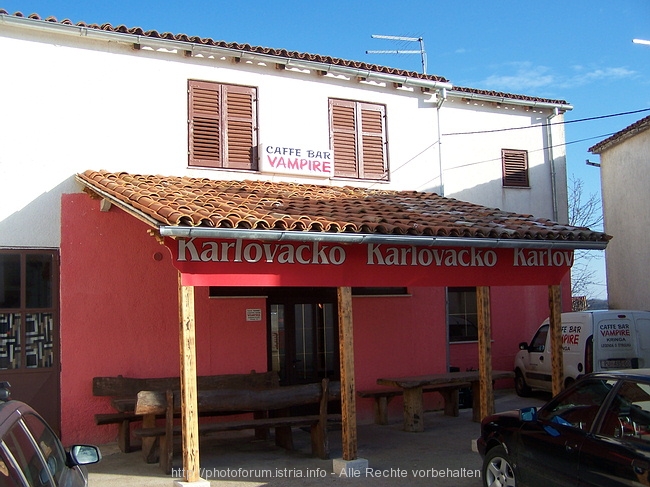
If you are considering where to go on holiday this summer, why not go to Kringa in Croatia?

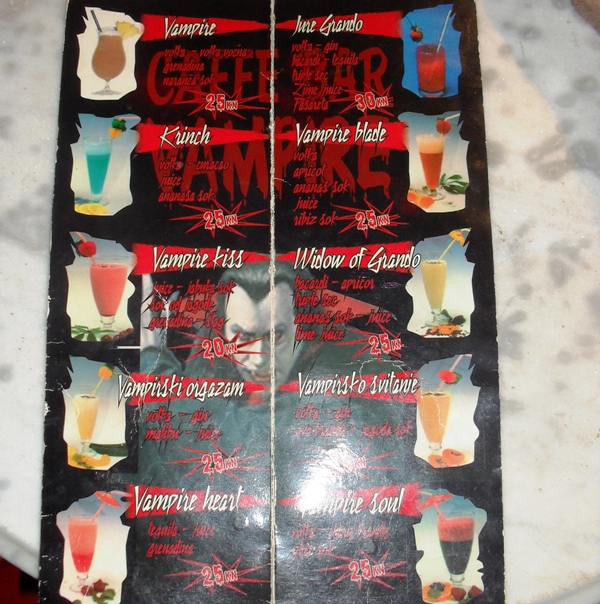
In recent years this village has embraced the legacy of its local 'vampire', Jure Grando (often spelled: Giure Grando), made famous by Johann Weichard von Valvasor. You can visit a museum dedicated to him, Muzej Jure Grando, have a 'vampire menu' at the Tavern Danijeli before going to the Vampire Café for 'vampire cocktails'. And you can even stay at the Villa Jure Grando, which claims to be 'well stocked with garlic and holy water'!

Jure Grando supposedly haunted the village from his death in 1656 and until his corpse was decapitated in 1672. Valvasor writes:

'Im 1672ten Jahr hat man gleichfalls / zu Krhing in Isterreich / dem begrabenen Leichnam deß Giure Grando einen Pfahl durch den Leib zu treiben / sich bemühet; weil aber der Pfahl in den Leib nicht hineindringen wollen / ihm den Kopff abgeschnitten. Solches verwegenen Stückleins haben sich Ihrer Etliche unterfangen: nemlich der Micolo Nyena, der Stipan Milasich, der Miho Raderich, Mattio Chericatin, Nicolo Macina, Jure Macina, Juira Sorsich, Martino Udereicich, und Micula Crairær. Dem ersten aber ist da Hertz entfallen / also / daß er / den todten Körper anzugreiffen / allzu verzagt worden. Worauf sich der Andre drüber hergemacht / und den Kopff herabgescnitten ; und der Dritte das Krucifix dabey gehalten. Wie dann diese alle drey noch am Leben seynd. Wovon wir unten / in dem Buch / darinn von den Crainerischen Städten / gehandelt wird / einen umständlichern Bericht / bey Beschreibung deß Marckts Kreinck / thun wollen: weil sich unterschiedliche sehr merckwürdige Sachen dabey ereignet haben / die wir allhie auslassen / und an diesem Ort nur den Handel bloß berühren.'


'Vampire epidemic'

As shown in an old post on the Visum et Repertum, a copy was sent from Vienna to the Danish government early in 1732. This document and others documenting supernatural beliefs in the archives in Copenhagen are briefly described in this 'web exhibition'. The exhibition is, unfortunately, only in Danish.

Saturday, 29 January 2011

Reading von Schertz

Most of you probably have not had the chance to read a book by Carl Ferdinand von Schertz, but now it is possible on Google Books. OK, you may not be particularly interested in the subject of the book, but here is a chance to get a feel for the man and his interests besides the subject of the book that he is best known for, Magia Posthuma.

Mährisches Landes-Wappen published in Nuremberg in 1699, i.e. prior to Magia Posthuma, is a book on Moravian coats of arms with considerations on e.g. the etymology and spelling of the name of Moravia (which takes it name from the Morava River).

Heraldry may not be your subject, but you may wonder if that little portrait on the title page could bear any semblance to that of the author? Looking at other books from the same publisher or printer might answer that question.

Monday, 24 January 2011

An anti-vampire

In a recent book, Necrophilia: Forensic and Medico-legal Aspects by Anil Aggrawal (CRC Press), one can find this 'point to ponder':

'A necrophile may be called the very opposite of the legendary vampire. While the term vampire generally refers to a dead person (usually referred to as the "undead") disturbing the living, the necrophile is a living person disturbing the dead! In this sense, a necrophile may be referred to as an anti-vampire.' (p. 4)

I am not sure what the purpose of this observation is, but obviously anyone who 'disturbs the dead', even for various non-sexual reasons, must qualify as an 'anti-vampire'. And logically, I must conclude that I like everyone else who, as far as I am aware of, are not involved in disturbing the dead, can now say: I am not an anti-vampire...

Sunday, 23 January 2011

Out in March

I have still to post a few reviews of recent books which I hope to have ready soon. In the meantime I can mention that Norbert Borrman's Vampirismus is published in a new edition this March. I have actually never had a copy of the book in my hands, but apparently it is widely read.

What looks somewhat more interesting is a new book by photographer Gerald Axelrod tracing the life and myth of Elizabeth Bathory. Like his earlier book on Dracula, this one is likely to contain numerous photos, this time from places in Slovakia, Austria and Hungary:

'Sie ist zwar nicht so berühmt wie Dracula, hat es aber immerhin zu Titeln wie „Gräfin Dracula“ und „The World Champion Lady Vampyr of All Time“ gebracht. Die höchste Ehre wurde ihr aber zweifellos durch den Eintrag im Guinness-Buch der Rekorde von 1988 zuteil: Mit 650 Opfern gilt sie als die größte Serienmörderin aller Zeiten! Die Rede ist von Elisabeth Báthory (1560–1614), auch bekannt als Blutgräfin.

Ihre Bekanntheit verdankt sie allerdings nicht den Morden, die sie tatsächlich verübt hat, sondern einer Legende: Sie habe im Blut der Jungfrauen gebadet, um ewige Jugend und Schönheit zu erlangen! Aber handelt es sich dabei wirklich nur um eine Legende oder steckt ein Körnchen Wahrheit in den Blutbädern? Anhand der neuesten historischen Forschungen wollen wir das Leben der Blutgräfin rekonstruieren und die vielen Mythen, die sich um die grausame „Lady Dracula“ ranken, einer kritischen Prüfung unterziehen.

Dieses Buch begibt sich auf Spurensuche nach den Quellen und Originaldokumenten, die den Jesuitenpater László Turóczi und zahlreiche weitere Autoren zu ihren Werken über die Blutgräfin inspiriert haben. Es zeichnet das Leben der Elisabeth Báthory nach und zeigt in beeindruckenden Aufnahmen die Orte ihres Wirkens in der Slowakei, Österreich und Ungarn. Und jenseits der Legendenbildung werden die Versuche, die Abgründe ihrer Psyche mittels der modernen Psychologie zu beleuchten, dargestellt.'


Friday, 21 January 2011

Medvedja anno 1738

Changes in my personal life may allow me to spend a bit more time on this blog. Well, I better not make any promises, but there is a chance that I can devote more time to the subject of 'magia posthuma'. So, let me kick off this new year with a part of a map from 1738 of Serbia that shows the site of the most famous vampire case, Medvedja, near the Zapadna Morava river in central Serbia. Unfortunately, this scan of the map is not in high resolution, but in the figure below you can see the village at the top. The map below it shows the surrounding area of the Jagodiner District.


The same map also shows the Ramm District, the site of the first attested vampire case in Kisiljevo in 1725. Maybe I will return to that in a future post.

Sunday, 2 January 2011

Swieten's Vampyrismus as paperback

'Wo sind die Gesetze, welchen einen solchen Auspruch rechftertigen? Man bekennet, es seyen keine Gesetze vorhanden, hingegen zieht man zur Rechfertigung ganz kaltsinnig an: es sey also der Gebrauch.'

I recall having to wait some time and pay a lot of money to get a microfilm copy of the Abhandlung des Daseyns der Gespenster (Augsburg, 1768) some years ago, because I wanted to read the Gerard van Swieten's appended remarks on vampires. I later found them included on the Vampir Prinzessin DVD and reprinted in the 100 Jahre Dracula issue of Maske und Kothurn (41. Jahrgang Heft 1-2) edited by Rainer M. Köppl and published in 1998.
Now, a paperback of the text has been published by Europaïscher Hochschulverlag. 40 pages for € 16.90, it is certainly much cheaper to obtain than the prints I made from a microfilm. But cheaper still is the Wikisource edition of the whole book that I link to in the right hand panel.

Of particular interest is the Italian edition of Swieten's text reprinted by S. F. Flaccovio Editore in 1988. It contains an essay on I Vampiri di Maria Teresa by Pietro Violante, as well as of Italian translations of some of her decrees on superstitious acts. It is actually still available at the price of € 9.30.

You can take a look inside the new book on German Amazon.

Friday, 31 December 2010

Happy New Year!

With only a few hours left of 2010, it is quite obvious that I have not been very active on this blog during the past year. I must confess that other activities have taken up most of my attention, and there is no reason to expect that this will change in 2011. This blog suffers from it, not only because of lack of time on my part, but also because my everyday activities leave me little time and energy for reading and absorbing myself in the subject of this blog. That is also why I have been so slow at reviewing some of the recent books, not least those by Florian Kührer and Nicolaus Equiamicus.

Looking back on 2010, however, there is no doubt that the most important new book is Vampire: Von damals bis(s) heute by Euqiamicus because of its accessible and comprehensive history of vampire cases from the famous ones of the early 18th century and into the 21st century. I will shortly be writing more on the book, but this is really the one single recent book to get hold of, if you are interested in vampire history.

Other noteworthy books from 2010 are Kührer's that I did get to write about, and Erik Butler's Metamorphoses of the Vampire in Literature and Film.

For me personally, the 'vampire' highlight of 2010 was travelling to Bucharest to see the exhibition on Dracula and vampires at the National Museum of Art of Romania.

Apropos of Romania, I also got to watch the movie Strigoi at a one off screening here in Denmark. It is very unusual and quite entertaining, so worth seeking out. It will be available on DVD here shortly.

No plans are yet set for 2011, but no doubt something will come up.

I wish everyone a happy new year!

Sunday, 12 December 2010

Vampires: Myths of the Past and the Future

With thanks to Jordi Ardanuy, I am able to mention this forthcoming conference at the University of London:

Vampires: Myths of the Past and the Future
An interdisciplinary conference organised by Simon Bacon, The London Consortium in collaboration with the Centre for the Study of Cultural Memory, Institute of Germanic & Romance Studies, University of London


Deadline for submissions: 30 April 2011
Conference dates: 2nd – 4th November 2011
Venue: Institute of Germanic & Romance Studies, School of Advanced Study, University of London

Myths of vampires and the undead are as old as civilisation itself, wherever humans gather these ‘dark reflections’ are sure to follow. Whether as hungry spirits, avenging furies or as the disgruntled dearly departed, they have been used to signify the monstrous other and the consequences of social transgression. Embodying the result of a life lived beyond patriarchal protective proscription that quickly changes from dream to nightmare and from fairy tale to ghost story.

However their manifold and multifarious manifestation also provides a point of opposition and resistance, one that subverts majority narrative and gives agency to the disenfranchised and oppressed within society. This is seen most clearly in the late twentieth century where, in a plethora of filmic and literary texts, amidst a growing ‘sympathy for the devil’ the vampire is constructed as a site of personal and social transition. Here alternative narratives (e.g. feminist, ethnic, post-colonial discourses etc) find expression and ways in which to configure their own identity within, or in opposition to, the dominant cultural parameters revealing hybridity as the catalyst for future myth making.

In the course of the past century the vampire has undergone many transformations which now see them as a separate evolutionary species, both genetically and cybernetically, signifying all that late capitalist society admires and desires thus completing its change from an abhorational figure to an aspirational one; the vampire is no longer the myth of a murky superstitious past but that of a bright new future and one that will last forever.

This interdisciplinary conference will look at the various ways the vampire has been used in the past and present to construct narratives of possible futures, both positive and negative, that facilitate both individual and collective, either in the face of hegemonic discourse or in the continuance of its ideological meta-narratives.

Keynote speakers include:

Stacey Abbott
Catherine Spooner
Milly Williamson

We invite papers from a wide variety of disciplines and approaches such as: anthropology, art history, cultural studies, film studies, history, literary studies, philosophy, psychology, theology, etc.

Possible themes include but are not limited to:

• Myths, fairy tales and urban legends
• Cross cultural colonisation; vampiric appropriation and reappropriation
• Cinema, Manga/ Anime and gaming
• Fandom, lifestyle, ‘real’ vampires and identity configuration
• Minority discourse and the transcultural vampire
• Genetics, cybernetics and the post human
• Blood memory, vampiric memory and the immortal archive
• Dracula vs. Nosferatu; Urban vs. Rural
• Globalisation, corporations and ‘Dark’ societies
• Immortality, transcendence and cyberspace
• Old World/ New World and vampiric migration
• From stakes to crosses to sunlight
• Blood Relations and the vampiric family
• Abjection, psychoanalysis and transitional objects

Papers will also be considered on any related themes. Abstracts of 300 words should be submitted to Simon Bacon at vampiremyths1@googlemail.com no later than April 30th 2011.
Related Posts Plugin for WordPress, Blogger...