'The Qingming Festival is an opportunity for celebrants to remember and honour their ancestors at grave sites. Young and old pray before the ancestors, sweep the tombs and offer food, tea, wine, chopsticks, joss paper accessories, and/or libations to the ancestors. The rites have a long tradition in Asia, especially among farmers. Some people carry willow branches with them on Qingming, or put willow branches on their gates and/or front doors. They believe that willow branches help ward off the evil spirit that wanders on Qingming.'
On several occasions, particularly on the periphery of the Habsburg Empire during the 17th and 18th centuries, dead people were suspected of being revenants or vampires, and consequently dug up and destroyed. Some contemporary authors named this phenomenon Magia Posthuma. This blog is dedicated to understanding what happened and why.
Thursday, 21 April 2011
A stone's throw away
'The Qingming Festival is an opportunity for celebrants to remember and honour their ancestors at grave sites. Young and old pray before the ancestors, sweep the tombs and offer food, tea, wine, chopsticks, joss paper accessories, and/or libations to the ancestors. The rites have a long tradition in Asia, especially among farmers. Some people carry willow branches with them on Qingming, or put willow branches on their gates and/or front doors. They believe that willow branches help ward off the evil spirit that wanders on Qingming.'
Monday, 18 April 2011
The Vaccination Vampire
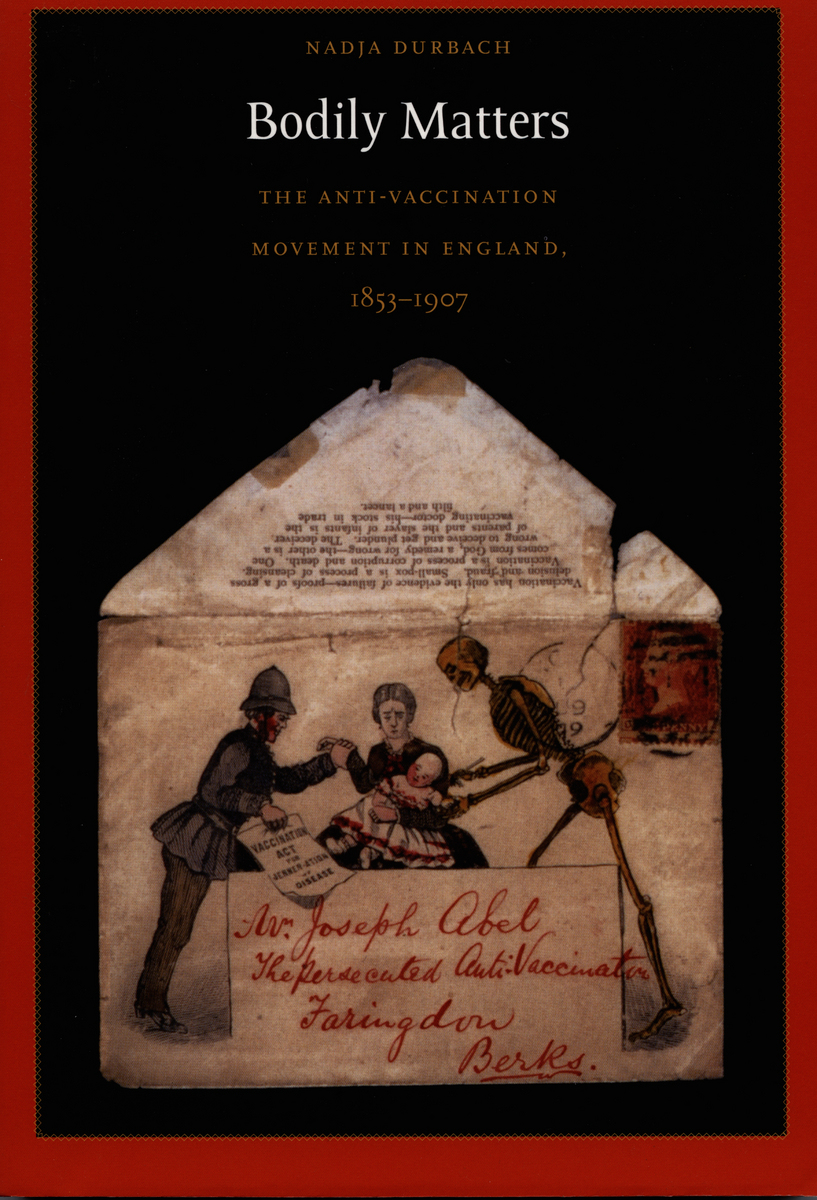
James John Garth Wilkinson (1812-99) was an opponent of vaccination, as Nadja Durbach describes in her study Bodily Matters: The Anti-Vaccination Movement in Negland 1853-1907 (Duke Univ. Press, 2005):
'The poor, claimed Wilkinson, are all “imbrued in each other’s taints”; vaccination “mingles in a communism of blood the taints of the community.” Since blood was transmitted through “hundreds of thousands of beings” by way of arm-to-arm vaccination, every “hereditary sewer opens up into every nursery; nay, into each infant’s very heart,” Wilkinson warned. The sewer, which carried the waste of society and which had connotations of sexual pollution, was infecting the child, who was supposed to be pure and innocent, untainted by physical and moral corruption. Since vaccination had passed blood from arm to arm to arm, no matter how healty a child seemed, each vaccinated infant was a repository for the diseases of the entire community. Each person’s blood was no longer his own, Wilkinson suggested, for each individual shared in the diseases with which the “residuum” infected the social body. Vaccination, its critics maintained, was thus a dangerous form of “body-mixing.”' (p. 130-1)
In 1881 Wilkinson published a handbill titled The Vaccination Vampire with the purpose of metaphorically describing vaccination as vampiric:
'The state tracked anti-vaccinators, pursuing them like criminals through the use of a creature that, like the vampire, was specifically trained to track the smell of the blood. Vaccination, Wilkinson further argued, was like a raven perched on “parturient” sheep, waiting to pluck out and devour the eyes of the newborn lambs. It “hover[ed]” over the pregnant woman who waited in the “shadow of its wings,” primed and ready to attack the infant. Winged and hovering, vaccination here figures as both a bird of prey and a vampire haunting the laboring mother. The vampire’s concern is with the blood, but, according to Wilkinson, vaccination disrupted the entire fluid economy of the body. The “Vaccination Vampire” polluted the “pure babe” precisely at the point of its “suckling,” the handbill warned, for the mother’s milk was “blighted” by fear of the “poisoned lancet”; thus, the “Vaccination Vampire” was a source of “universal pollution” and degeneration, for it led to “degradation and extinction.” The “cradle is born to an immediate medical hell,” Wilkinson warned, for the “Vaccination Vampire” “befouls” and “demonizes” and is the “Supreme Quack and grand Apollyon or Destroyer of the Human Race.” Wilkinson’s “Vaccination Vampire” thus epitomized what anti-vaccinators considered an invasive and violating operation.' (p. 138-9)
According to Durbach, from the middle of the 19th century the vampire 'came to symbolize the bloodthirsty doctor':
'Orthodox medicine was seen to be vampiric because of the Galenic tradition of bloodletting. In 1850, the medical botanist Albert Isaiah Coffin declared that, since the doctor asserts that disease is in the blood, he “attacks your veins like a vampire.” In 1885, Wilkinson claimed that medicine was dead “but stirs and rises from its grave as a vampire; and is the night-haunting demon of the end of the Nineteenth Century.” In language that was apocalyptic as well as gothic, Wilkinson both dismissed orthodox medicine as dead and yet feared its reanimated return, for vaccination, he implied, had breathed new life into the medical profession. (p. 139)
Over the next pages of her study, Durbach relates these notions to views of blood transfusion as well as themes from pieces of 19th century vampire fiction like Braddon’s Good Lady Ducayne and Stoker’s Dracula.
'The poor, claimed Wilkinson, are all “imbrued in each other’s taints”; vaccination “mingles in a communism of blood the taints of the community.” Since blood was transmitted through “hundreds of thousands of beings” by way of arm-to-arm vaccination, every “hereditary sewer opens up into every nursery; nay, into each infant’s very heart,” Wilkinson warned. The sewer, which carried the waste of society and which had connotations of sexual pollution, was infecting the child, who was supposed to be pure and innocent, untainted by physical and moral corruption. Since vaccination had passed blood from arm to arm to arm, no matter how healty a child seemed, each vaccinated infant was a repository for the diseases of the entire community. Each person’s blood was no longer his own, Wilkinson suggested, for each individual shared in the diseases with which the “residuum” infected the social body. Vaccination, its critics maintained, was thus a dangerous form of “body-mixing.”' (p. 130-1)
In 1881 Wilkinson published a handbill titled The Vaccination Vampire with the purpose of metaphorically describing vaccination as vampiric:
'The state tracked anti-vaccinators, pursuing them like criminals through the use of a creature that, like the vampire, was specifically trained to track the smell of the blood. Vaccination, Wilkinson further argued, was like a raven perched on “parturient” sheep, waiting to pluck out and devour the eyes of the newborn lambs. It “hover[ed]” over the pregnant woman who waited in the “shadow of its wings,” primed and ready to attack the infant. Winged and hovering, vaccination here figures as both a bird of prey and a vampire haunting the laboring mother. The vampire’s concern is with the blood, but, according to Wilkinson, vaccination disrupted the entire fluid economy of the body. The “Vaccination Vampire” polluted the “pure babe” precisely at the point of its “suckling,” the handbill warned, for the mother’s milk was “blighted” by fear of the “poisoned lancet”; thus, the “Vaccination Vampire” was a source of “universal pollution” and degeneration, for it led to “degradation and extinction.” The “cradle is born to an immediate medical hell,” Wilkinson warned, for the “Vaccination Vampire” “befouls” and “demonizes” and is the “Supreme Quack and grand Apollyon or Destroyer of the Human Race.” Wilkinson’s “Vaccination Vampire” thus epitomized what anti-vaccinators considered an invasive and violating operation.' (p. 138-9)
According to Durbach, from the middle of the 19th century the vampire 'came to symbolize the bloodthirsty doctor':
'Orthodox medicine was seen to be vampiric because of the Galenic tradition of bloodletting. In 1850, the medical botanist Albert Isaiah Coffin declared that, since the doctor asserts that disease is in the blood, he “attacks your veins like a vampire.” In 1885, Wilkinson claimed that medicine was dead “but stirs and rises from its grave as a vampire; and is the night-haunting demon of the end of the Nineteenth Century.” In language that was apocalyptic as well as gothic, Wilkinson both dismissed orthodox medicine as dead and yet feared its reanimated return, for vaccination, he implied, had breathed new life into the medical profession. (p. 139)
Over the next pages of her study, Durbach relates these notions to views of blood transfusion as well as themes from pieces of 19th century vampire fiction like Braddon’s Good Lady Ducayne and Stoker’s Dracula.
Tuesday, 12 April 2011
Dracula Lives!
This evening German TV channel ZDF aired a new documentary, Dracula lebt (Dracula lives), which is fortunately available online here. In German, of course, but worth watching even if you do not understand that language for its scenes from Romania, Vienna, Whitby etc. Elizabeth Miller, Dacre Stoker, Hagen Schaub, Mark Benecke are among the participating experts. A number of photos from the documentary can be found on Der Spiegel's web site.
Saturday, 2 April 2011
Vampirology for Librarians
Eisenhutverlag presents a new book by Dr. jur. Eric W. Steinhauer from Universitätsbibliothek Hagen: Vampyrologie für Bibliotekare, i.e. Vampirology for Librarians. It is subtitled Eine kulturwissenschaftliche Lektüre des Vampirs and is apparently based on a 'Halloween-Lecture' Steinhauer presented at the Humboldt Univesity in Berlin in 2010:'Die Vampyrologie gehört zu den wenig beachteten Lehrgegenständen der Bibliothekswissenschaft. Gleichwohl sind entsprechende Kenntnisse für jeden verantwortungsbewusst handelnden Bibliothekar unverzichtbar. Die vorliegende Einführung vermittelt hier unter besonderer Berücksichtigung der historischen Hintergründe die wesentlichen Grundlagen, damit man später nicht sagen kann, man habe es ja nicht gewußt …'
Sunday, 27 March 2011
The vampire in French romantic literature
The french blog Vampirisme.com that posts reviews of various vampire books, just reviewed a new book on the 18th century literary vampire in France: Le vampire dans la littérature romantique française 1820-1868 by Florent Montaclair. It looks like an interesting study for those interested in the subject and it includes key texts by Polidori, Bérard, Nodier, Scribe, Dumas, Gautier, and Mérimée:Apparu en Europe centrale, le vampire est une figure de l'imaginaire née au XVIIe siècle de la confrontation de l'Occident avec le monde ottoman.L'auteur présente la naissance de ce thème en Europe centrale, puis, comment il a existé un mythe du vampire, comment ce mythe, en perdant sa dimension explicative du réel, est devenu, dans la France du XVIIIe siècle, un objet de l'imaginaire, et enfin, comment, les auteurs romantiques en ont fait un motif littéraire, un jeu sur les formes et les normes.
Friday, 18 March 2011
Aribert Schroeder
The book has this to say about Schroeder:
'Aribert Schroeder, Dr.phil., M.A., Oberstudienrat am Anglistischen Institut der Universität Düsseldorf, studierte Anglistik und Geschichtswissenschaft an den Universitäten Köln und Bonn sowie an der Bucknell University, Lewisburg, PA; 1985/86 Austauschprofessor am English Department der San José State University, San José, CA. Forschungsschwerpunkte: Die Literatur U.S.-amerikanischer ethnischer Minderheiten; die Verstehensproblematik bezogen auf fremdsprachliche Texte; Medienwissenschaft. Veröffentlichungen und Rezensionen in den Schwerpunkten.'
Obviously Schroeder moved on to other subjects after rummaging archives and libraries in search of vampires.
Thursday, 17 March 2011
What if ...
What if Flückinger had not been sent to Medvedja in 1732? Or if the Visum et Repertum had attracted no attention but had just been another report stored at the Hofkammerarhiv in Vienna?As we know, Michael Ranft was so intrigued by reading of the supposed vampire Peter Plogojowitz that he presented his own De masticatione mortuorum later in 1725, but otherwise few people seemed to take note of it.
It did, however, attract a bit of attention at the Academia Naturæ Curios. in Breslau (Wrocław in Poland), the publisher of the so-called Breslauische Sammlungen, a major scientific journal of the early 18th century. Founded by Johann Kanold, it was originally published in Breslau, but later on in Leipzig and Budziszyn (Bautzen).
In 1727 the volume containing information on the Summer quarter of 1725 was published, and among other both enlightening and entertaining articles, e.g. ‘von einem See-Manne’, of a merman, it contains an Article 19: ‘Abentheuerliche Begebenheit mit einem Vermeyntlich wieder gekommenen Todten’. The dead man who was presumed to return was Peter Plogojowitz as referred to in a ‘gazette’ containing the report from Kisiljevo in Northern Serbia: ‘Copia eines Schreibens aus dem Gradisker District in Hungarn M. Aug. 1725’.
The document is followed by an analysis to prove that the incident stems from superstition, oversight and rashness (‘Diß ist abermals eine Begebenheit vom Aberglauben, Inadvertenz, und rachgieriger Ubereilung’), which argues in a forensic fashion that was to be used in several texts on the subject after the incidents at Medvedja in 1732. A short review of Ranft’s original dissertation is also provided, and a reference is given to a previous issue on examples of masticating dead from Poland and Prussia (‘Von dem Polnischen Upiertz oder sich selbst fressenden Todten und der daraus entstandenen Furcht for Pest- und Vieh-Sterben’).
I think it is fair to say that if Glaser and Flückinger had not reported from Medvedja in 1732, this would have been about as much attention the Serbian vampire had received.
Sunday, 6 March 2011
A Vampire Chronology: Von damals bis(s) heute

Although, as I stated recently, changes in my personal life should allow me more time for this blog, and although I have promised to review this book, it has taken me some time to go back to my notes and finish the review I had started writing a couple of months ago. I apologize to the author and anyone else who have been curious to read my comments.
I suppose that over the past few decades the books by Klaus Hamberger, Peter Mario Kreuter, and Hagen Schaub have been the most comprehensive collections of information on vampires. Hamberger, of course, has the advantage that his first volume is an anthology of source texts, whereas Kreuter and Schaub present the vampire in the context of e.g. folklore and archaeology. More recently, Florian Kührer has written succinctly on the whole vampire phenomenon, and we have, of course, the specialist study by Aribert Schroeder from 1973 which, however, lacks the reprints of key texts available in Hamberger’s volume.
Now we can add Nicolaus Equiamicus to the list of authors who provide us with a useful resource for information on vampires. The backbone of the Nicolaus his recent book Vampire Von damals bis(s) heute (U Books, 288 pages, 14.95 €) is a chronological account of vampires based on a great number of sources. This chronology constitutes the first part of the book: ‘Der historische Vampirismus’, which is actually more than half the book.
Beginning with classical antiquity, we are introduced to some of the well-known texts on lamiae and empusae, as well as some information on related entities: the Alb and the Nachtmahr. Various types of revenants are dealt with, including the Nachzehrer, and also regional variants are described, partially based on Bernhard Stern’s Medizin, Aberglaube und Geschlechtsleben in der Türkei (1903). Finally, the scene is set for the famous vampire cases of the 18th century: Serbia 300 years ago: ‘Krieg und Elend – das Leben vor 300 Jahren in Serbien’. Equiamicus treats the cases in detail and follows them up with various other examples from contemporary and recent literature with particular emphasis on the two important cases from the 1750’s in Kapnick and Hermersdorf, respectively.
As we know, the vampire would not remain quiet despite the efforts of Empress Maria Theresa and the Enlightenment philosophers, and Equiamicus includes several interesting examples from the 19th and early 20th century of the ongoing belief in vampires or vampirelike revenants, including those from West Prussia in the 1870’s that are not particularly known in the English language vampire literature. All of them instances of beliefs and practices to protect the living from supposed vampires or revenants not too dissimilar from those that are known from other parts of Europe up to this day. Equiamicus even includes the weird ‘Highgate Vampire’ which is treated succinctly and soberly.
Some of these cases are only known through a few purported facts, whereas others can be supported by more detailed accounts. In several instances, Equiamicus shows his well-known expertise in digging up various old texts to illuminate the subject. He e.g. uses a contemporary article from a magazine called Die Gartenlaube to tell the story of a family from Kantrzyno who in February 1872 dug up the corpse of the family father, cut off his head and placed it face down at the corpse’s feet. This article can be read online here, and I can not help thinking that this would make for an interesting movie :-)
The chronology of vampire cases is then followed by a reasonably thorough review of the vampire debates from the 17th to the 20th century with emphasis on the ‘Leipziger Vampirdebatte’, von Görres and modern medical explanations, including Christian Reiter’s anthrax theory. Of particular interest here is also the couple of pages devoted to von Schertz’s Magia posthuma, which must make Equiamicus’s book the first one to deal with it since Calmet!
The rest of the book is devoted to the vampire in fairy tales and fiction, as well as some of the historical persons popularly related to the subject: Vlad Tepes, Elisabeth Bathory, Peter Kürten etc.
The book is illustrated throughout, mostly in black and white, but also including a section of colour photos, most illustrations being movie stills, including a fair number from Twilight. This seems to contradict the historical aim of the book, but will no doubt attract many younger readers. And honestly, if teenagers and other readers of popular vampire novels will be reading the book, and I think quite a few will – if only to dip into some of the interesting stories – quite a few people will become aware of the historical background to what has ended up as Dracula, Twilight and Buffy, and I think that is quite a laudable goal.
As with some of the best books on the subject, it is always a delight to read a book that is free of the Montague Summers tradition so prevalent in the literature until recently. Methodologically though, Equiamicus is first and foremost a collector of information on vampires, vampire cases and the vampire debates. His emphasis is on these subjects per se rather than on the broader historical context of the beliefs which is the focus of a number of historians (cf. academical anthologies like the Gespenster und Politik book and the Kakanien Revisited online collection of papers). But I am impressed by the lengths Equiamicus has gone to in order to read original documents and books. This means that there is something here for both the novice and the expert, and I must say that I have myself used it a few times to look up information. In my opinion it works well as both an introduction to the subject and as a reference book.
So if you have not bought it yet, do get hold of it. And if you know some young reader with a penchant for vampires, and who can read German, consider this as a gift. Even if the reader may only know a little German, why not give it anyway? There are many good reasons to learn to read German, and vampires is one of them, as the best books on the subject tend to written in that language. And Equiamicus's Vampire Von damals bis(s) heute should whet the appetite for anyone with an interest in vampires.
Wednesday, 2 March 2011
Telling a hawk from a handsaw
'In his famous work An Antidote Against Atheism : or, An Appeal to the Natural Faculties of the Mind of Man, whether there be not a God, 1653 (second edition with Appendix, 1655), the great Cambridge Platonist Henry More relates the following, which are probably the first histories to be recorded concerning Vampires by an English author since the Chroniclers of the twelfth century.'
This way Montague Summers introduces these 'histories' of 'Vampires' from More's work in chapter III of The Vampire in Europe, and one can even find a portrait of More. Before him, Dudley Wright in Vampires and Vampirism claimed that 'Dr Henry More, in his Antidote against Atheism, argues for the reality of vampires', even though we know that More would never have heard of the word vampire.
Nevertheless, apparitions and spirits played a role in his work which essentially aimed at proving the existence of God: 'The grand truth which wee are now to bee imployed about, is the proving that there is a God; And I made choice of this subject as very seasonable for the times wee are in, and are coming on, wherein Divine Providence granting a more large release from Superstition, and permitting a freer presuall of matters of Religion, then in former Ages, the Tempter would take advantage where hee may, to carry men captive out of one darke prison into another, out of Superstition into Atheisme it self.' (Book One, 1)
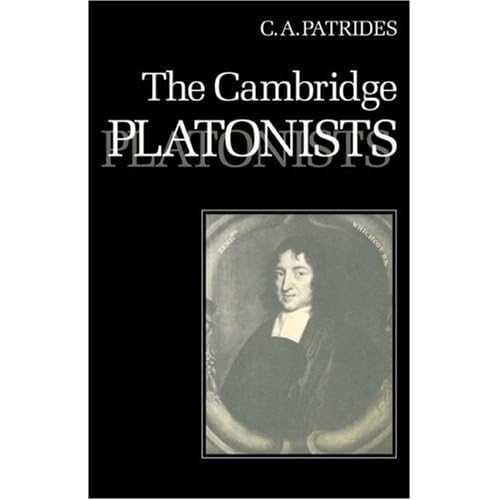
It is in Book Three of his Antidote that he handles the subject of apparitions, witches, the pied piper and various examples of magic and sorcery. Interestingly, in the modern reprint of some extracts of the book in The Cambridge Platonists edited by C. A. Patrides and published by Cambridge Univ. Press in 1969, only the chapter headings of the third book are printed. Obviously, Patrides finds it hard to take this chapter seriously:
'It is however necesarry', writes Patrides in the introduction, 'to remember that even as More was rising to the apex of his philosophical endeavours, he was also falling into belief in spiritualism, occultism, witchcraft. His indulgence in these perversities sets him quite apart from the other Cambridge Platonists, in a manner distressingly reminiscent of Iamblichus' deviation from Neoplatonism through his practice of theurgy. Admittedly More made an effort to explain his uncritical fondness for the occult. He wished to awaken all 'benummed and lethargic Mindes' to an awarenes that 'there are other intelligent Beings besides those that are clad in heavy Earth or Clay'. But he also thought that such an effort was doomed to failure unless one first established the existence of witches. Is not the denial of witches tantamount to a denial of spirits, which is bound to lead to a denial of God? 'No Spirit,' said More, 'no God.' We are reminded of Sir Thomas Browne:
I have ever beleeved, and dow now know, that there are Witches; they that doubt of these, doe not onely deny them, but Spirits; and are obliquely and upon consequence a sort not of Infidels, but Atheists.
More's actual demonstratoin of this thesis is certainly unnerving. In both the entire third book of An Antidote against Atheism (1653) and throughout The Immortality of the Soul (1659) he introduced whatever might be comprehended under the 'one generall terme of Apparitions', including for example such 'extraordinary effects' as 'speakings', knockings, opening of doores when they were fast shut, sudden lights in the midst of a room floating in the aire, and then passing and vanishing...' Henry More, I fear could not always tell a hawk from a handsaw.' (p. 32)
In any case, considering the aim of Montague Summers: presenting witchcraft as a reality as viewed from his particular religious point of view, one may understand why he was much more interested in these obscurer aspects of More's book than Patrides.
This way Montague Summers introduces these 'histories' of 'Vampires' from More's work in chapter III of The Vampire in Europe, and one can even find a portrait of More. Before him, Dudley Wright in Vampires and Vampirism claimed that 'Dr Henry More, in his Antidote against Atheism, argues for the reality of vampires', even though we know that More would never have heard of the word vampire.
Nevertheless, apparitions and spirits played a role in his work which essentially aimed at proving the existence of God: 'The grand truth which wee are now to bee imployed about, is the proving that there is a God; And I made choice of this subject as very seasonable for the times wee are in, and are coming on, wherein Divine Providence granting a more large release from Superstition, and permitting a freer presuall of matters of Religion, then in former Ages, the Tempter would take advantage where hee may, to carry men captive out of one darke prison into another, out of Superstition into Atheisme it self.' (Book One, 1)
It is in Book Three of his Antidote that he handles the subject of apparitions, witches, the pied piper and various examples of magic and sorcery. Interestingly, in the modern reprint of some extracts of the book in The Cambridge Platonists edited by C. A. Patrides and published by Cambridge Univ. Press in 1969, only the chapter headings of the third book are printed. Obviously, Patrides finds it hard to take this chapter seriously:'It is however necesarry', writes Patrides in the introduction, 'to remember that even as More was rising to the apex of his philosophical endeavours, he was also falling into belief in spiritualism, occultism, witchcraft. His indulgence in these perversities sets him quite apart from the other Cambridge Platonists, in a manner distressingly reminiscent of Iamblichus' deviation from Neoplatonism through his practice of theurgy. Admittedly More made an effort to explain his uncritical fondness for the occult. He wished to awaken all 'benummed and lethargic Mindes' to an awarenes that 'there are other intelligent Beings besides those that are clad in heavy Earth or Clay'. But he also thought that such an effort was doomed to failure unless one first established the existence of witches. Is not the denial of witches tantamount to a denial of spirits, which is bound to lead to a denial of God? 'No Spirit,' said More, 'no God.' We are reminded of Sir Thomas Browne:
I have ever beleeved, and dow now know, that there are Witches; they that doubt of these, doe not onely deny them, but Spirits; and are obliquely and upon consequence a sort not of Infidels, but Atheists.
More's actual demonstratoin of this thesis is certainly unnerving. In both the entire third book of An Antidote against Atheism (1653) and throughout The Immortality of the Soul (1659) he introduced whatever might be comprehended under the 'one generall terme of Apparitions', including for example such 'extraordinary effects' as 'speakings', knockings, opening of doores when they were fast shut, sudden lights in the midst of a room floating in the aire, and then passing and vanishing...' Henry More, I fear could not always tell a hawk from a handsaw.' (p. 32)
In any case, considering the aim of Montague Summers: presenting witchcraft as a reality as viewed from his particular religious point of view, one may understand why he was much more interested in these obscurer aspects of More's book than Patrides.
Tuesday, 1 March 2011
Nosferatu predating Gerard
The 'amateur vampirologist' Anthony Hogg has published an article on the word 'nosferatu' in the newsletter Borgo Post published by the Canadian branch of the Transylvanian Society of Dracula. As far as I know, the newsletter is not available online, but Hogg supplies his readers with a scan of the article. Read more on the subject in his blog post.
Subscribe to:
Posts (Atom)